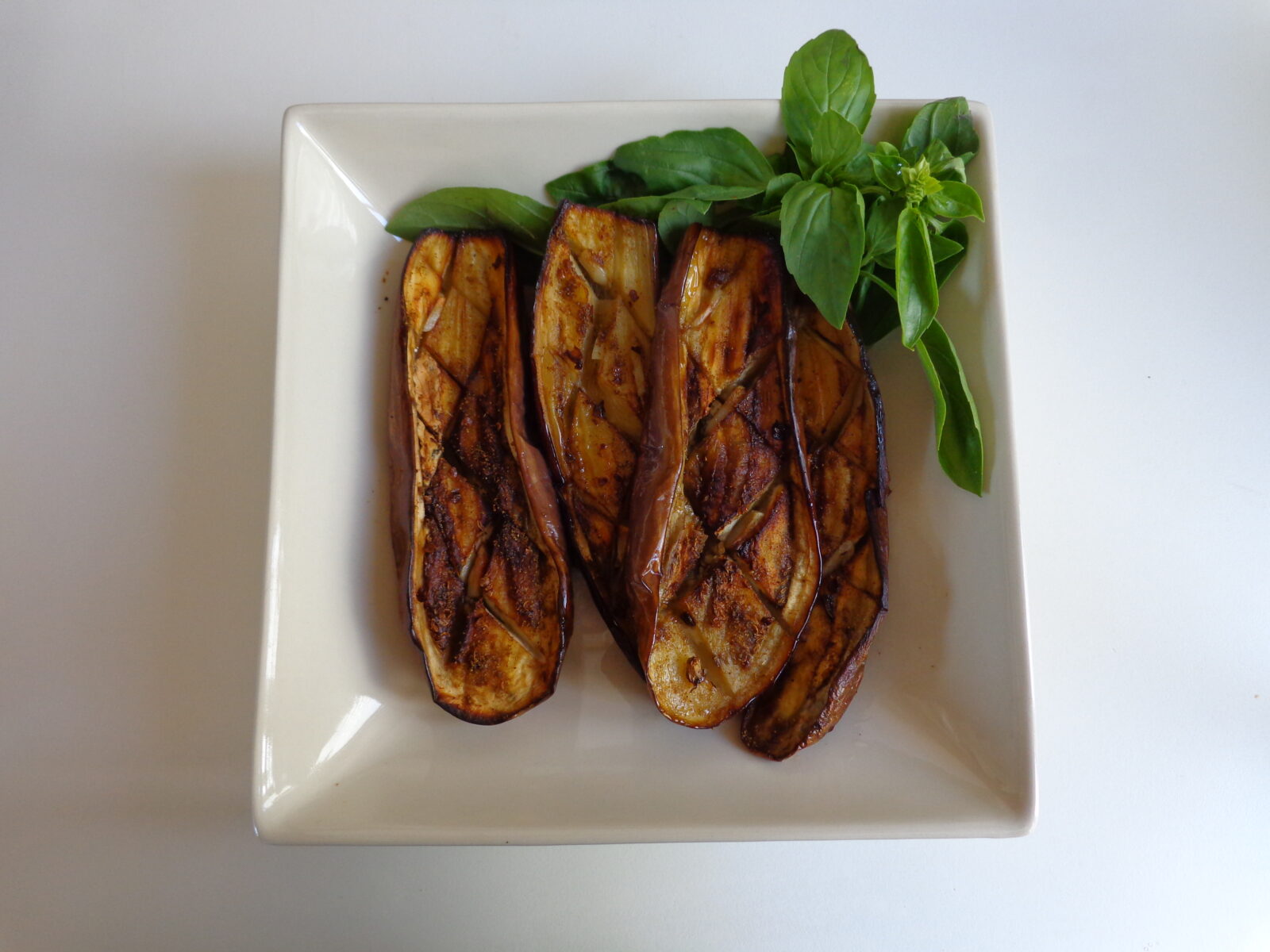
 Planning a dinner party takes a certain amount of organization. You need to think about the menu, do the shopping, buy the wine, set the table and, of course, do the cooking. This all takes time — and when I invited ten friends for dinner last weekend, I found myself cooking for two straight days. Not that anything was all that complicated. But it adds up. Which is why it’s so important always to include a couple of dishes that can be prepared with a minimum of fuss — for example, oven-roasted eggplant with spices and herbs.
Aubergines au four / Oven-roasted eggplant, Mediterranean style
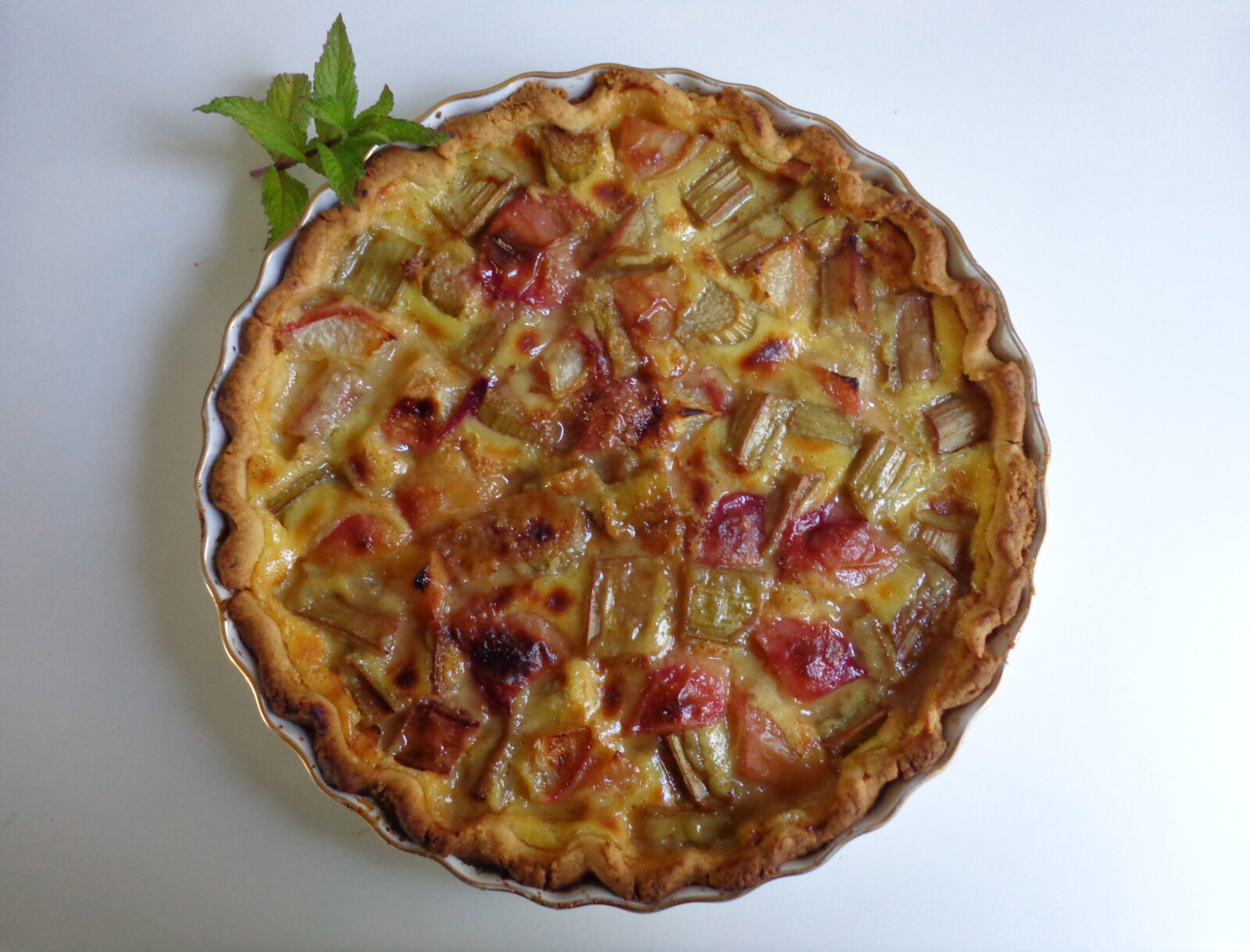
This dish may be served on the side of a main course or, cut into smaller pieces, as a starter, which is how I presented it last Sunday. Here’s the menu. We started with a garlicky salad of mixed greens, thinly sliced smoked breast of duck, the roasted eggplant served at room temperature, chunks of bright orange melon and the large green olives from Provence known as lucques. This was followed by a one-dish main course, poulet au pastis (chicken in a sauce of garlic, finocchio, tomatoes and pastis). The chicken needs to marinate for 24 hours, hence my two days in the kitchen. We went on to an assortment of sheep and goat cheese, provided by my friend Vera, and the dessert was a tart of fresh fruit brought back from my garden in Burgundy — rhubarb, red and black currants, and cherries. An improvisation that worked out fine.
I owe to my mother the art of the dinner party. She was a great entertainer, and evenings with my parents’ friends lasted long into the night, usually with my father pounding out honky-tonk jazz on the piano. Until, at last, he was ready to hit the hay and announced, “That’s all, folks. Time to leave.” Alas, I, too, find myself shepherding friends to the exit when the conversation, the wine and, sometimes, the song, leave me feeling sleepy after hours at the table. And thus to dream, of starry summer nights and the wonderful feeling of having shared a golden moment with people you love. Happy cooking.


 The very thought of this flavor-packed spread evokes gnarled olive groves and thyme growing wild by the side of the road in southern France, where tapenade originated. Ubiquitous in Provence, it is usually made with black olives, but green olives are sometimes used. It may be made with garlic or without, with a dash of cognac or none. You can serve it on toast or as a dip at cocktail hour, and it also works well as a sauce for fish.