Tarte Tatin

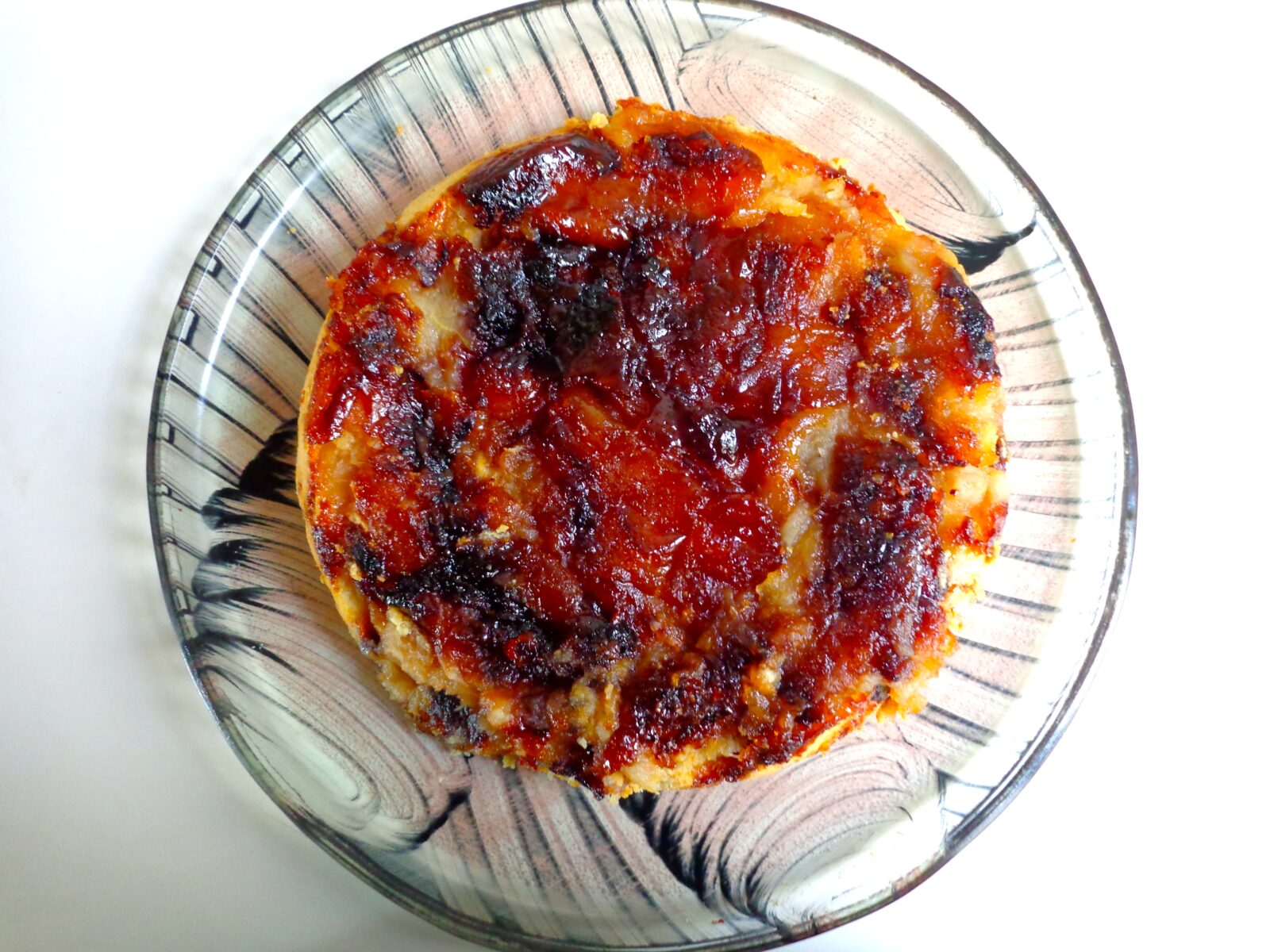
Tatin3This classic French apple tart is said to have been invented about 130 years ago by two sisters, Stéphanie and Caroline Tatin, at the country inn they ran about 100 miles south of Paris. It’s an upside-down tart in which apples caramelized in butter and sugar are covered with dough. When the tart comes out of the oven, it is inverted, with the apples standing regally atop a tender crust. The dessert, allegedly created by accident, is one of France’s favorites.

Tarte Tatin / Tarte Tatin

According to the legend, Stéphanie (Fanny) was in a rush in the kitchen one day, possibly flustered by the attentions of a suitor (the inn was popular with hunters), and put a pan of apples, butter and sugar in the oven without a tart shell. When she realized her mistake, she quickly covered the apples with dough. She inverted the tart before serving it, and her creation proved a huge success. The rest, as they say, is history. Well, maybe.

As it happens, the Hotel Tatin is located in a small town south of Orléans in the Sologne region — where a dessert known as tarte solognote was popular at the time for miles around. It, too, was an upside-down apple tart. So who knows? Were the Tatin sisters geniuses of public relations, or did they really create something new?

Back to the legend: Word of the Tatin sisters’ dessert spread throughout the region and beyond, eventually reaching the owner of Maxim’s in Paris, Louis Vaudable, who came down and had a taste. According to one version, he was so smitten by the tart that he tried to get the secret recipe by getting himself hired by the Tatin sisters to do some gardening, but was found out. Nonetheless he put the dessert on the Maxim’s menu as Tarte des demoiselles Tatin. The problem with this story is that Louis Vaudable, born in 1902, was just four years old when the sisters closed their restaurant in 1906, and his family didn’t purchase Maxim’s until 1932. Never mind. Another famous French gourmet, Curnonsky, known as Le Prince des Gastronomes, popularized the tart when he included a recipe for it in a multivolume book on French cuisine. And the rest is truly history.

As for preparation of the tart, it’s a two-stage process that requires first caramelizing the apples and then baking them with the dough on top. The key is choosing apples that will hold together while cooking, and not turn into applesauce. I have included some apple varieties to choose from in the recipe.

Happy cooking.
Posted in Desserts | Tagged , , , , | Leave a comment

Salade de l’ambassadeur

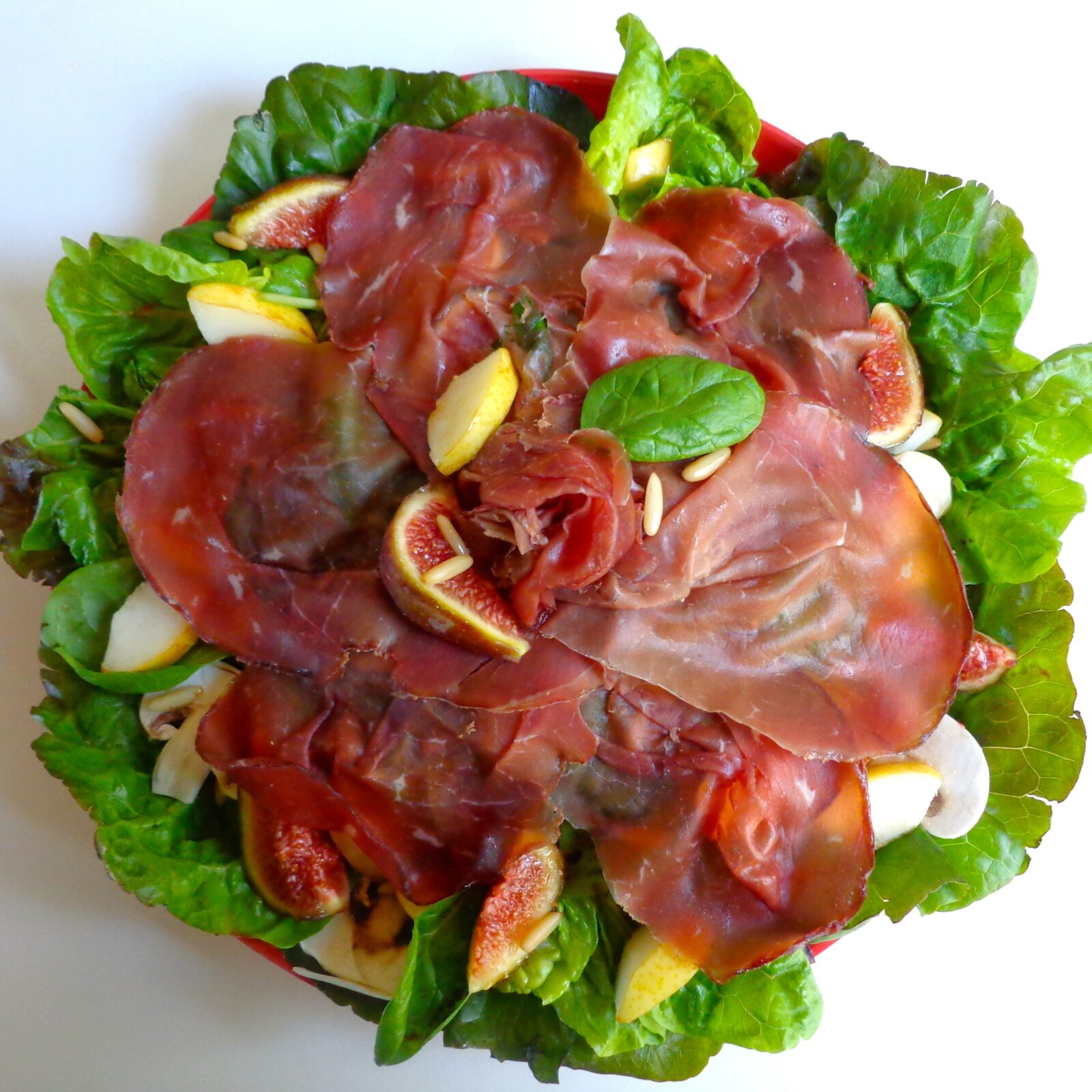
ambassador salad1Late summer, when fruit is bountiful and ripely delicious, is the best time to make this salad of tender greens topped by fresh figs, pears, mushrooms, pine nuts and bresaola (Italian dried beef). The unusual combination is the brainchild of a friend of mine who happens to be a French ambassador, hence the salad’s name. A man not only extremely well traveled but also an excellent chef, he used his talent create this salad for guests recently.

Salade de l’ambassadeur / Salad of bresaola and late summer fruit

The ambassador is Pierre Buhler, currently France’s top envoy to Poland. He previously served as ambassador to Singapore and has also held diplomatic positions in Washington, New York and Moscow (where we met many years ago), as well as serving as a senior analyst of strategic affairs at the Quai d’Orsay, the French Foreign Ministry here in Paris.

Pierre served this salad as the first course of a dinner for eight in Paris. The next courses, which he also prepared, were an Asian-inspired recipe for duck breast marinated in spices and a mirabelle tart emanating from his native Alsace. Fabulous!

The salad is significant enough to stand alone as the main course at lunchtime, followed by cheese and perhaps a dessert. Like all such creations, you can play with it, substituting Parma ham for the bresaola, for example, or using different types of late summer fruit. Pair the salad with a good bottle of wine — dare I suggest a fruity red? — and some crusty bread. You won’t go wrong.

Meantime I’d like to ask you, dear readers, for a little advice. I’ve been invited to speak on a panel in November at a gathering of luminaries from the French world of food. The topic: cultural differences in the art of entertaining. But it’s not about the food! Rather, the different forms hospitality takes in different countries. If you have ideas about this, and specifically what sets American hospitality apart, please let me know via a comment on this post or by writing to me using the site’s Contact form.

Thanks, and happy cooking!

Posted in 3. Salads | Tagged , , , , , , | 2 Comments

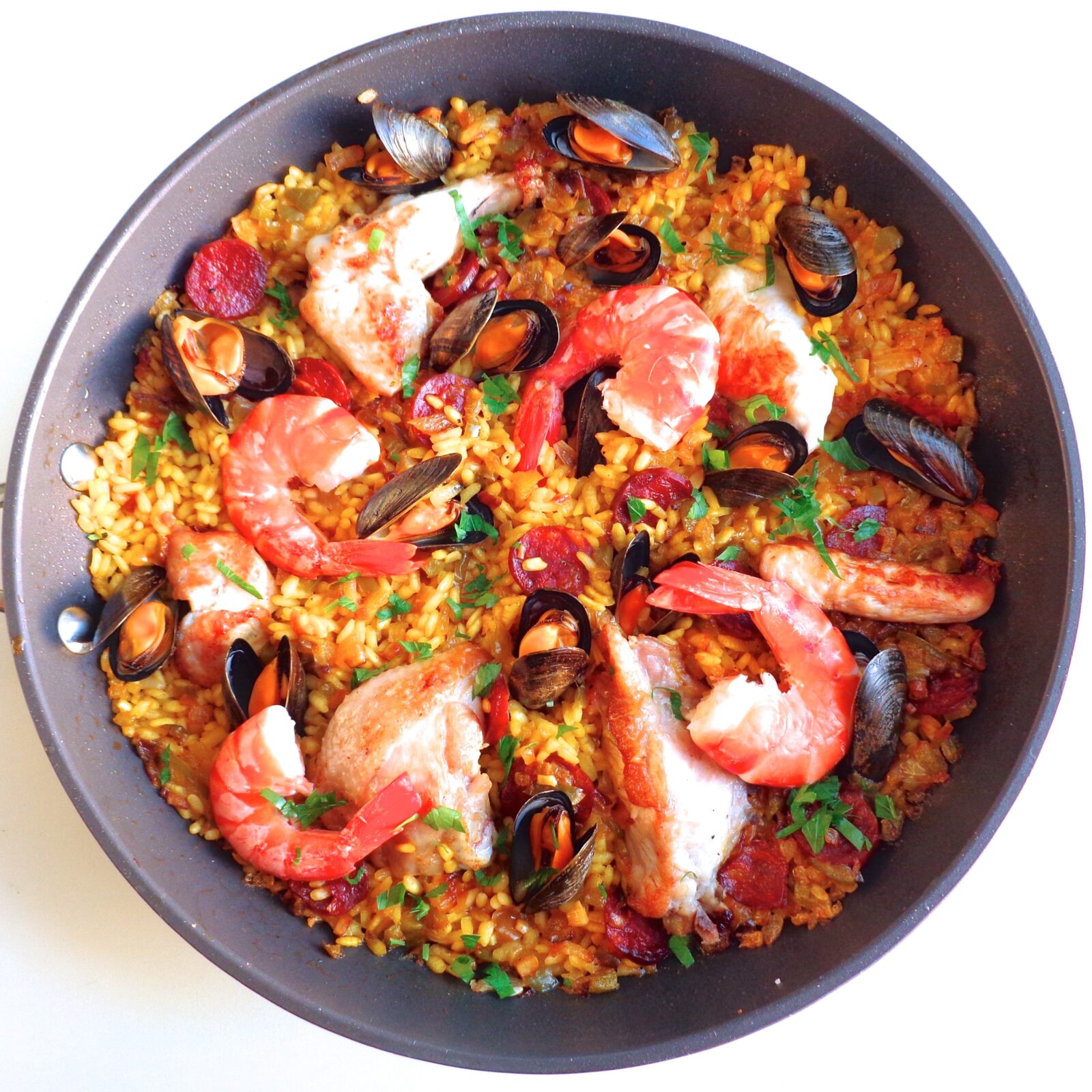
Paëlla poulet, chorizo, moules et gambas

paella4Paella, the immensely popular rice dish from Spain, crossed the border long ago to become one of the favorite dishes of France. It is particularly prevalent in areas north of the Pyrenées, where I had the good fortune to spend a little time this summer. Every bistro and its brother had one type of paella or another on offer — many featuring seafood, as we were by the sea north of Biarritz. One day I decided to make my own paella, using local ingredients.

Paëlla poulet, chorizo, moules et gambas / Paella with chicken, chorizo, mussels and shrimp

It wasn’t the first time — I’d often made paella in Paris. But having access to ultra-fresh mussels, the long local green peppers, smoky chorizo and relatively inexpensive saffron gave it enough of a boost that I was asked to make it again before we headed north at the end of the summer. And now I’ve done it again in Paris, with equally satisfying results, in a version combining chicken, mild chorizo, mussels and large shrimp. It is fun to make, but there are certain tricks that will help ensure success.

First, choose an appropriate kind of rice — round, short-grained rice works best. If Spanish varieties are not available, you can substitute an Italian risotto rice with fine results. Also important is the sofrito, the mixture of tenderly sautéd minced onion, green pepper and garlic that will serve as the base for cooking the rice. Don’t be in a hurry with this — the flavors need time to blend. The rest of the recipe takes care of itself. The chorizo, rice, broth and saffron are added in successive stages. The chicken and seafood, cooked separately, are added at the end.

The wonderful cookbook Moro (Random House, 2001) explains that the Spanish often refer to paella style dishes simply as arroz, the Spanish word for rice. The word is of Arabic origin, for it was the Moors of North Africa who brought rice to Spain in the 8th century. They also brought saffron, a key ingredient. As for paella (pronounced pah-EL-ya or pah-AY-ya in Spain and pah-ay-LA in France), the word shares a root with the French word poêle and refers to the pan in which the is cooked.

There are, of course, many varieties of paella — with an emphasis on surf, turf or a combination. The modern version of the dish arose in Valencia and often features snails and white beans. Earlier versions featured eel and water voles, semi-aquatic rodents also known as water rats… In its paella section, Moro includes recipes for black rice flavored with squid ink, chicken paella with artichokes and sherry, pork paella with chorizo and spinach, and monkfish paella with saffron and fennel seeds.

One ingredient that’s difficult to find in France is smoked Spanish paprika, but this is not a problem if you can find a high-quality Spanish chorizo, which contains enough paprika to lend a delightful smoky flavor to your paella. In any event, this is a dish that cries out for creativity. If you don’t have one of the ingredients, substitute something else or simply leave it out. (The exception is saffron, which is absolutely essential.)

Paella is a great party dish, but it can also be made for just two. Serve it with a green salad and a bottle of wine — hearty red,  chilled white or rosé.

Happy cooking.

Posted in 9. Pasta, Rice, Grains | Tagged , , , , , , , , | 4 Comments

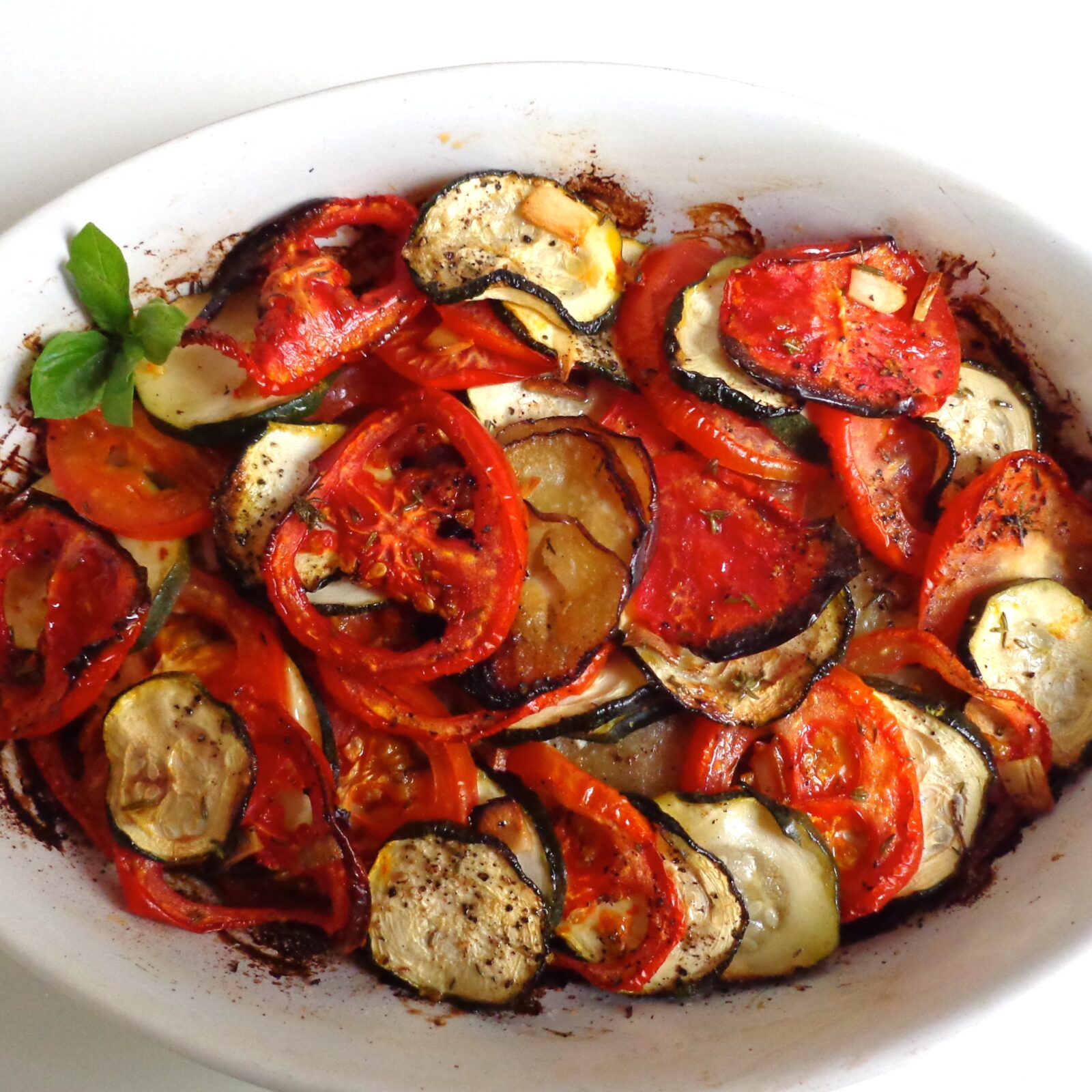
Tian de légumes d’été

tian4The flavors of Provence combine in this dish to create a late summer medley of eggplant, zucchini and tomatoes, sprinkled with olive oil, garlic and thyme and baked to mouth-melting tenderness. But be careful! The aromas emanating from the kitchen are so tantalizing that a taste may be requested before the dish has finished cooking. This would be a mistake, for the magic of a tian is in its slow-baked, unhurried preparation.

Tian de légumes d’été / Summer vegetables, Provence style

But what, exactly, is a tian? I was surprised years ago when I first heard the word (pronounced t’-YAHN), which refers both to the food and the earthenware dish in which it is baked. It’s a word without any particular Provençal resonance, at least to my ear. And, as it turns out, the word shares a common Mediterranean root with the Moroccan stew known as tagine (pronounced ta-ZHEEN), which, similarly, is traditionally cooked in an earthenware pot also known as a tagine. Both words apparently derive from an ancient Greek word, têganon, meaning both a bowl and its contents.

This being said, it is still difficult to define a tian. Varieties exist in many flavors and colors. Goat cheese is often added to the veggies — and in fact, when I was preparing the dish for this post, my daughter erupted in howls of protest because I’d made it without the cheese (I grated some on after taking the photo and rebaked it for a few minutes, terminating the crisis).

Tians may be made with artichoke hearts, Swiss chard, spinach and rice, pumpkin, mushrooms, leeks, broccoli, potatoes, even pasta. Eggplant is probably the most common ingredient. Some recipes add meat or fish to the veggies, resulting in a heartier dish. A tian is usually served as a side dish, but it has enough star power to stand alone as the centerpiece of a light lunch or supper, or a vegetarian or vegan meal.

This is the perfect time of year for making a tian, when tomatoes are at their reddest and ripest, and eggplants and zucchini are still plentiful. You may want to double the recipe, which serves 2, as the dish is so irresistible you may be asked for seconds or thirds!

Now for some news. The cooking workshop in Mallorca, described in my last post, will unfortunately not be taking place after all. The hotel owners have decided that it would be too complicated to organize. I regret this. Many thanks to those of you who signed up, and I will do my best to organize a similar event at some point in the future.

And in the meantime, happy cooking.

Posted in 8. Vegetables | Tagged , , , , , , , , | 1 Comment

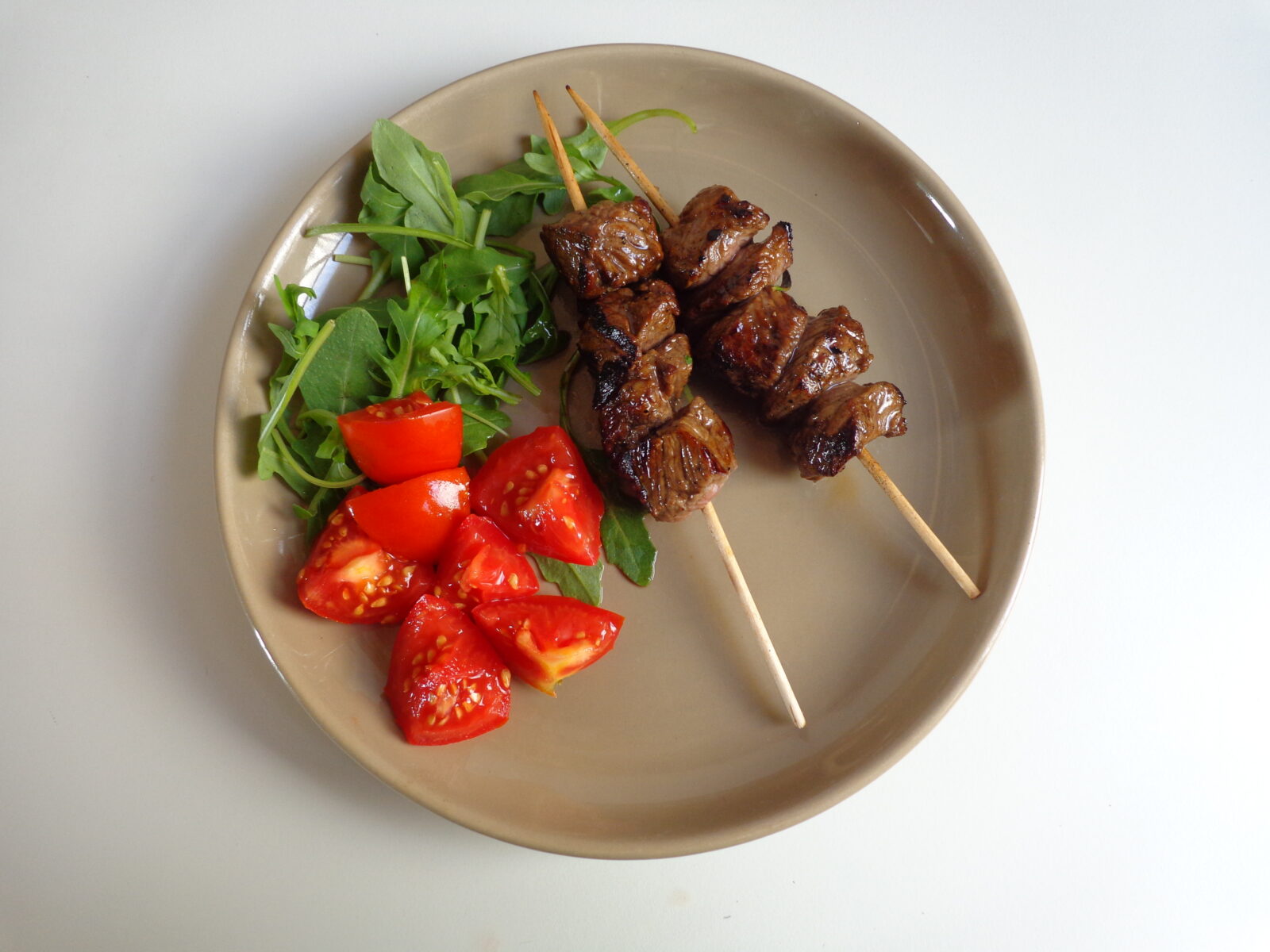
Brochettes d’agneau au romarin

lamb kebabs1Hot summer evenings are the perfect time for outdoor grilling. But what if you don’t have access to a barbecue? Marooned in Paris for most of the summer, I decided to investigate. The solution: lamb kebabs on wooden skewers, marinated in balsamic vinegar, olive oil and rosemary, with a hint of garlic, and grilled in a skillet on the stove top. Presto. It’s an indoor ‘barbecue’.

Brochettes d’agneau au romarin / Lamb kebabs with rosemary

Of course, if you do have access to a barbecue, you can (indeed, you must!) use it to grill the meat, which takes on extra flavor when cooked over the embers. A trick: dip the wooden skewers in water before threading on the lamb, to help prevent them from burning as the meat cooks. These small brochettes (kebabs) add a festive touch to a meal, and they’re fun to prepare — you can get the whole family involved. A perfect summer meal, accompanied by a salad or creative veggies and a bottle of red or rosé.

Mallorca1Now some news from Mallorca. It looks like the Everyday French Chef cooking workshop I mentioned a while back will be going ahead. The dates are April 23-30; the place is The Sea Club, a charming boutique hotel in Cala Ratjada; and the package includes five cooking lessons, breakfast every day, five dinners with wine and the chance to discover a lovely corner of Spain.

From Monday to Friday we will cook from 4-6 p.m., followed by cocktail hour and dinner. Your days will be free to explore the island, go to the beach, take a boat ride, visit picturesque villages, ride a bike, whatever. The price, which of course also includes seven nights at the hotel, is 1800 euros per participant (about $2000 at current exchange rates), with a small additional charge if a participant would like to bring along a partner.

If you are interested in joining this workshop, please send me a quick note via the Contact page on this site. I will be posting a full description of the package within the next 10 days. Places are limited and a few people have already expressed interest, so please don’t delay.

I am very excited about the workshop. This past spring I stayed at The Sea Club with my daughter for a few days and we fell in love with the place. Watch this space…

And happy cooking!

Posted in 7. Meat Dishes | Tagged , , , , , , , , | 2 Comments

Croustillants au chèvre-romarin-miel

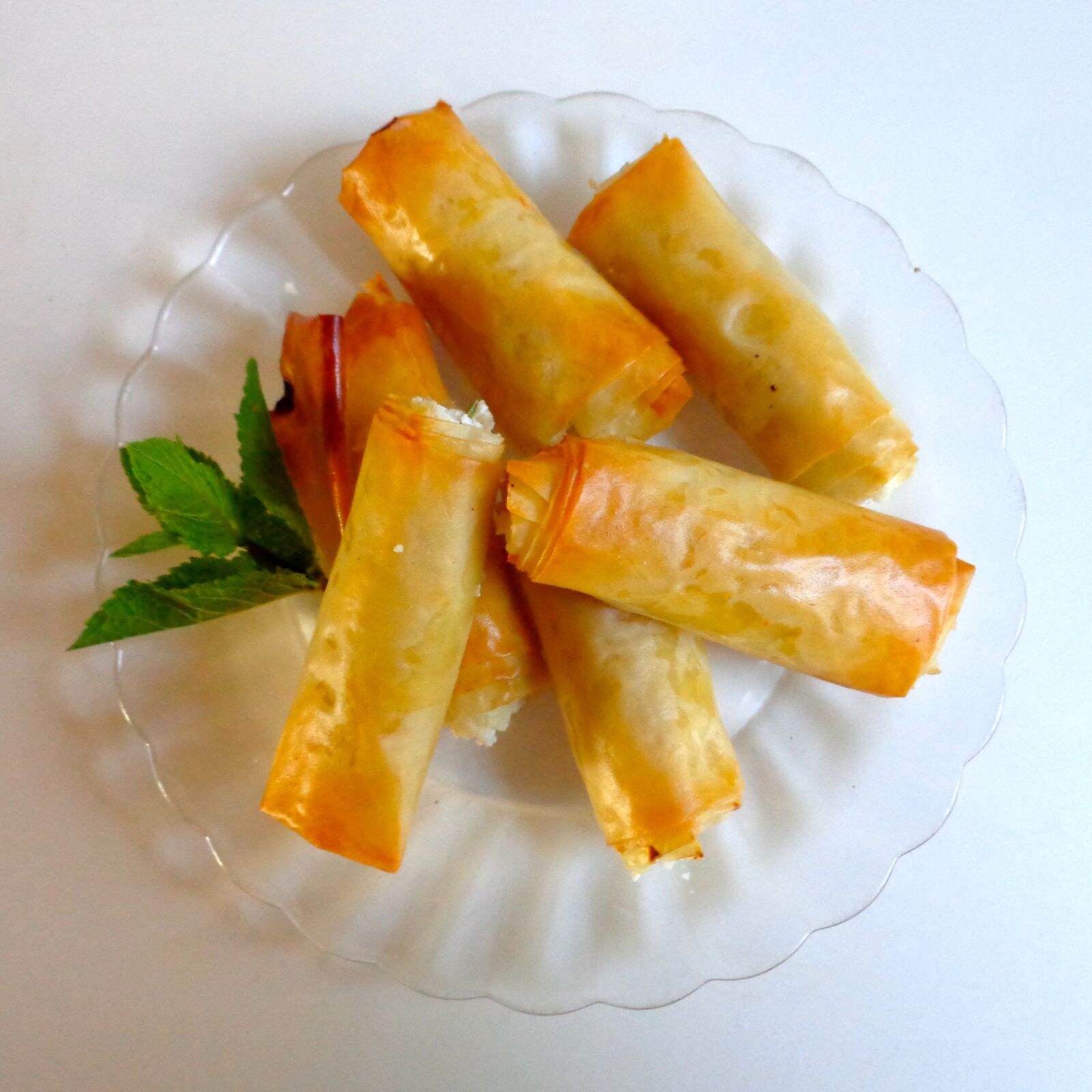
croustillants chevre1This unusual French take on Mediterranean cheese pastries combines rosemary and honey with goat cheese to produce an intoxicating Provençal flavor. Similar pastries, also called cheese fingers or cheese cigarettes, are ubiquitous around the eastern Mediterranean rim. You may find them filled with spinach and feta, ground lamb and cinnamon, etc. This version is both light and satisfying, perfect for a summer’s evening.

Croustillants au chèvre-romarin-miel / Crisp goat cheese pastries with rosemary and honey

And there’s another plus: they’re fun to make. All you need is a roll of filo dough, some olive oil, a pastry brush or paint brush, and the filling. Unroll a filo sheet, paint on a thin layer of oil, add the filling and roll them up. You can get your guests and family involved. Suddenly, everyone’s a sculptor…

I first made these pastries a week ago — yes, it’s an Everyday French Chef invention. My guest enjoyed them, and so did my daughter, who complained vociferously that I hadn’t made enough. On Monday, a couple of cooking students arrived from the States and we made some more. Again, there weren’t enough to satisfy everyone. So my advice is, if these pastries are destined to serve more than two or three, double the recipe.

And happy cooking!

Posted in 1. Starters | 1 Comment

Taboulé

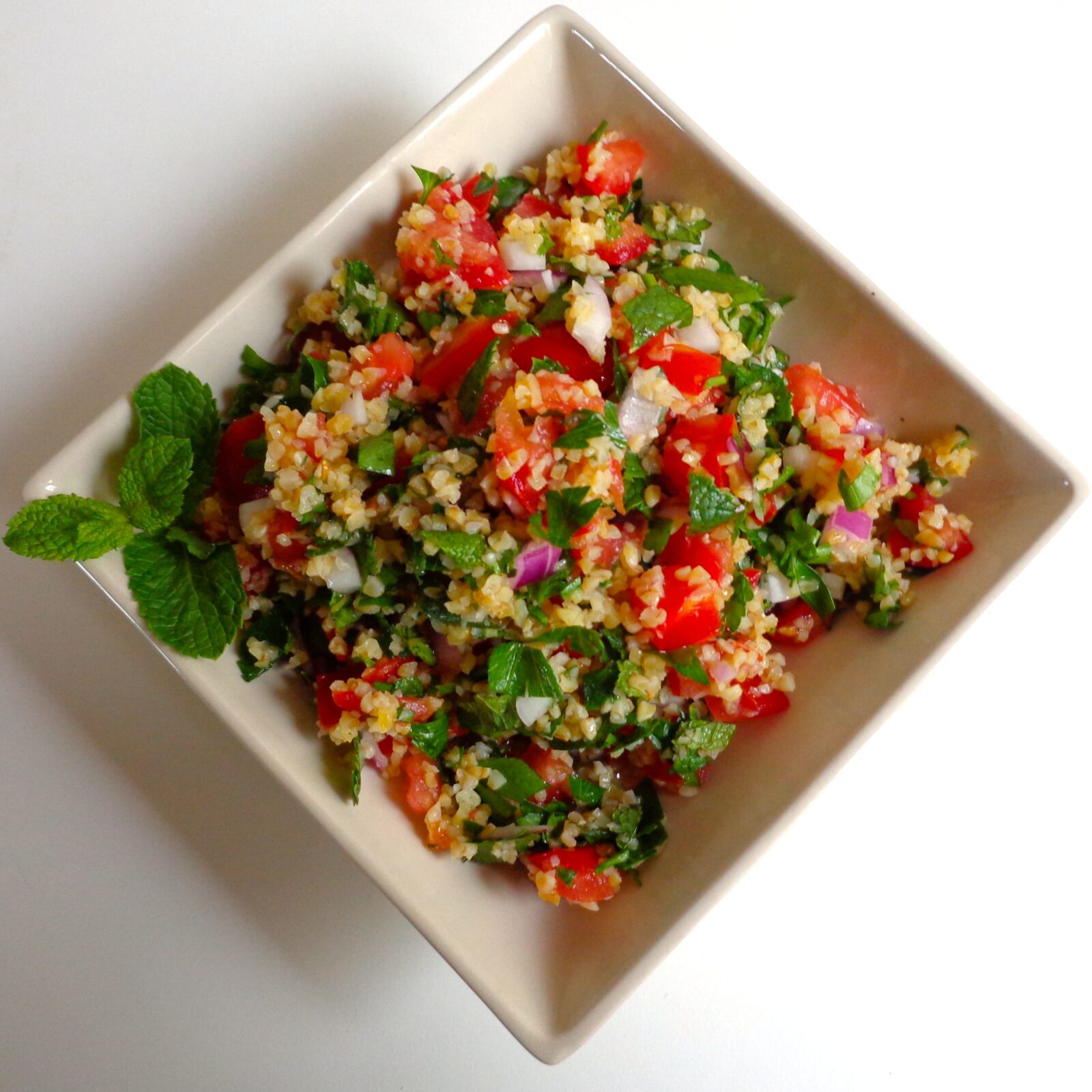
taboule2There are probably as many ways to make tabbouleh salad as there are cooks in the world. The dish hails from the eastern Mediterranean, but has spread to many countries, among them France. When I first arrived here (full disclosure: 40 years ago), the taboulé served in Paris mainly used couscous as a base. But this more traditional recipe uses bulghur, which marries beautifully with the salad’s tomatoes, parsley and mint.

Taboulé / Tabbouleh salad

Even so, this recipe differs from what some might consider true (Lebanese) tabbouleh in that it contains more bulghur than herbs. Chefs like the wonderful Yotam Ottolenghi recommend the opposite — mainly parsley and mint, with just a smattering of bulghur — but I’ve tried it both ways and prefer to use more of the grain to produce a more satisfying salad. You can experiment to find your own favorite mix.

Tabbouleh works well as a lunch dish, as a salad alongside grilled meat or fish, or as part of a buffet assortment of Mediterranean-style foods. You could pair it, for example, with eggplant caviar, Moroccan carrot salad, chick pea salad or a simple mesclun salad with hints of Provence. Whatever you like. It’s the height of summer, the rosé is flowing, we’re at the beach, and I have only one thing to add: Enjoy!

And happy cooking.

Posted in 3. Salads | Tagged , , , , , , , | Leave a comment

Penne au safran, roquette et noix

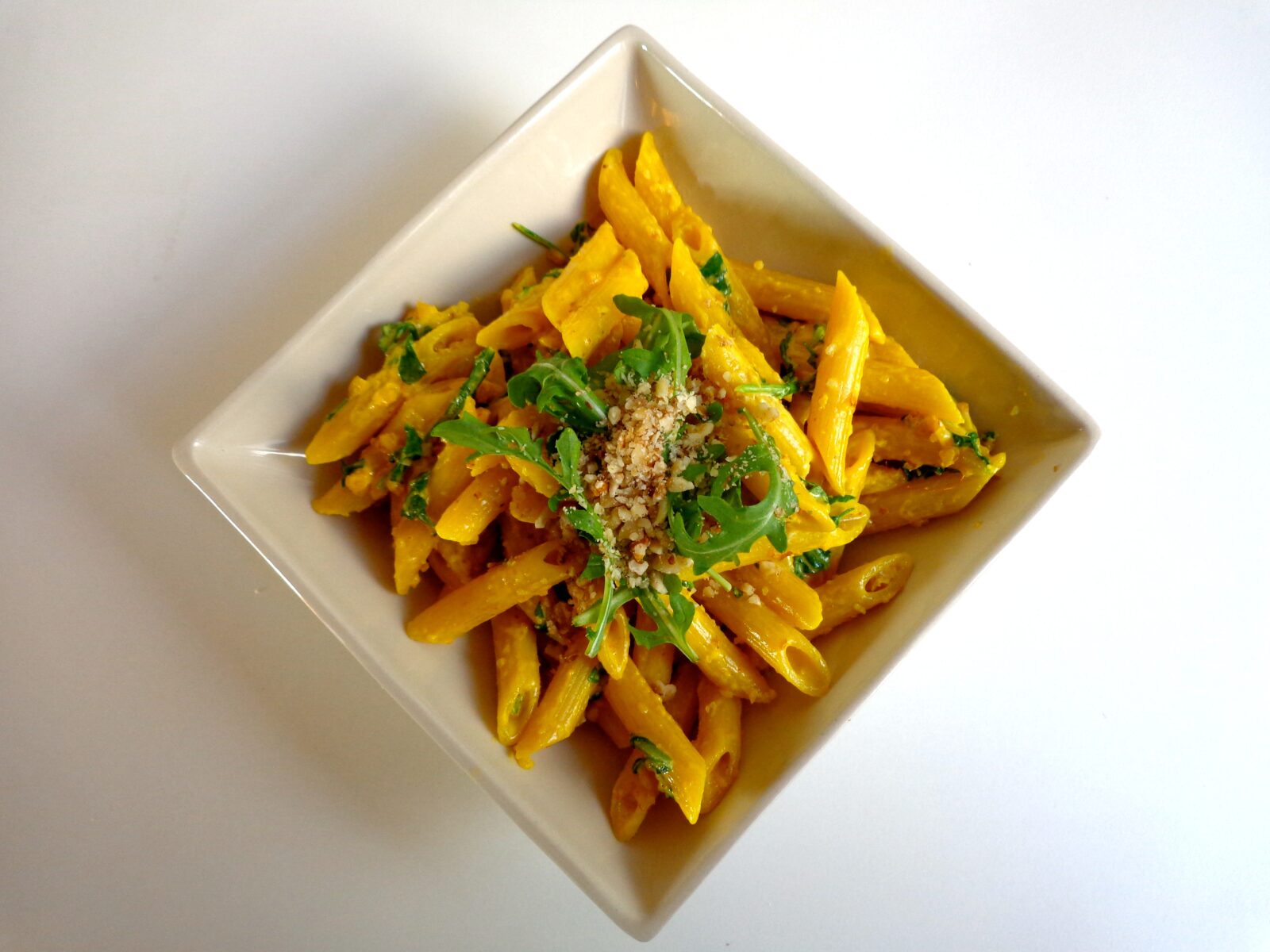
penne saffron2Is it alchemy? Is it art? Each of the four main ingredients in this knock-out dish — saffron, arugula, walnuts and parmesan — has so much personality that one could easily imagine it knocking out the other three. And yet, through some sort of culinary magic, they blend to imbue the pasta with a flavor that is slightly exotic and, as my student Louise would say, simply divine. Add a little cream, a little salt, and presto. A spectacular and unusual dish.

Penne au safran, roquette et noix / Penne with saffron, arugula and walnuts

This pasta works well in the summer, when it can stand alone as a main dish, preceded or followed by tomatoes or greens in salad with plenty of fresh herbs. But it’s also great by the fireside in winter — a warming and satisfying first course, perhaps followed by roasted game or veggies. It hails from the outskirts of Rome, where my friend Tony discovered it in a small roadside stand, virtually a shack. There was no menu — they brought whatever the chef decided to make that day. Once Tony had tasted this pasta he kept going back for more, in hopes that they would bring it again and again…

This week Tony came over to France from London and we took a little day trip to Reims, in Champagne country, only 45 minutes from Paris by train. After visiting the soaring Reims cathedral, where the kings of France were crowned (and for which Marc Chagall created the magnificent stained-glass windows behind the altar), we repaired to a local bistro for lunch. Again, alchemy and art were at work in my first course of ravioli filled with … snails. Very French, very local. This was followed by a bouchée de la reine, or queen’s mouthful — a pastry shell filled with chunks of veal, chicken and locally made ham in a sauce flavored with Champagne. I love sampling local dishes when moving about in France, and may just try to replicate one of the above for this site in due course. By the way, the restaurant was Le Pré Champenois, unpretentious but hardly a roadside eatery.

Other news: Plans for the Mallorca cooking workshop are moving forward and I hope to be able to provide full details in my next post two weeks from now. Briefly, the workshop will be held at a charming boutique hotel from April 23-30. French cooking classes will take place from 4-6 p.m. Monday through Friday — the rest of the time participants will be free to explore the island. Please let me know if you are interested. Five people have already contacted me about taking part, and places are limited.

Happy cooking!

Posted in 9. Pasta, Rice, Grains | Tagged , , , , , , , , | 1 Comment

Clafoutis aux cerises

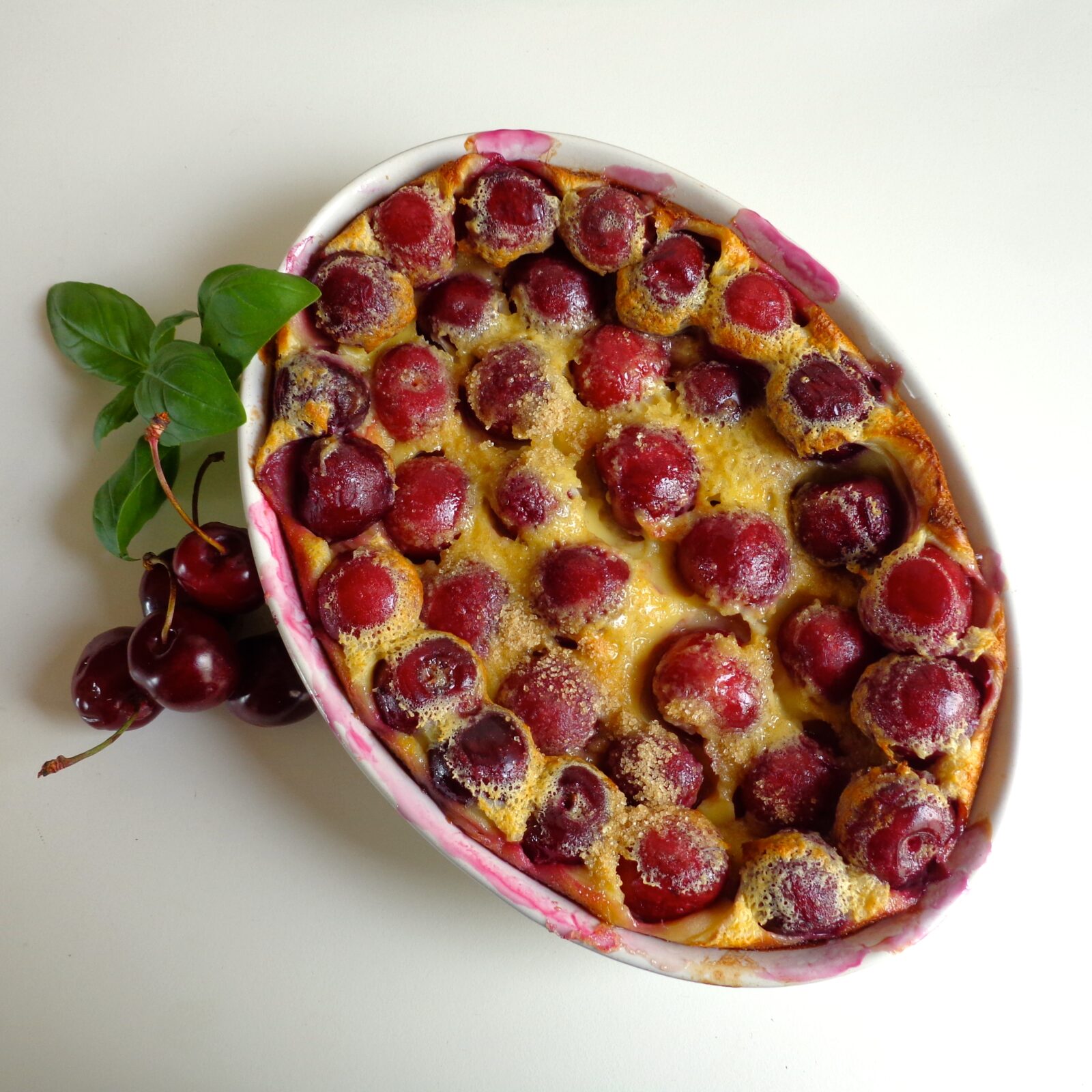
cherry clafoutis2Cherry pie, cherry cobbler, cherry tart, cherry mousse, cherry soup, yes, but cherry clafoutis? Why such an odd word for one of France’s favorite homespun desserts, cherries baked in a batter of eggs, milk and sugar? Clafoutis (pronounced clah-foo-TEE) comes out of the oven all trembly and inviting. It hails from central France, and is a spring/summer staple in this country. Other clafoutis may come and go — there is a recipe for pear clafoutis here — but cherry clafoutis is the princess of this magnificently simple dessert.

Clafoutis aux cerises / Cherry clafoutis

I was curious about the origin of the word so looked it up in my Petit Robert, the prince of French dictionaries. Clafoutis derives from clafir, which in local patois means ‘to fill’. This in turn derives from the Latin phrase clavo figere, which is Greek to me. If any of you Latin scholars out there can shed some light on the meaning, please let us know. According to my Robert, the word became popular in the mid-19th century, which means that this dessert has been around for less than 200 years. Somehow I doubt that. It is a relative of flan, which dates back to the 12th century or earlier. What to do when the cherry tree is suddenly laden with fresh, lush fruit? Too much fruit for eating or even jam-making? Pop the cherries into a flan…

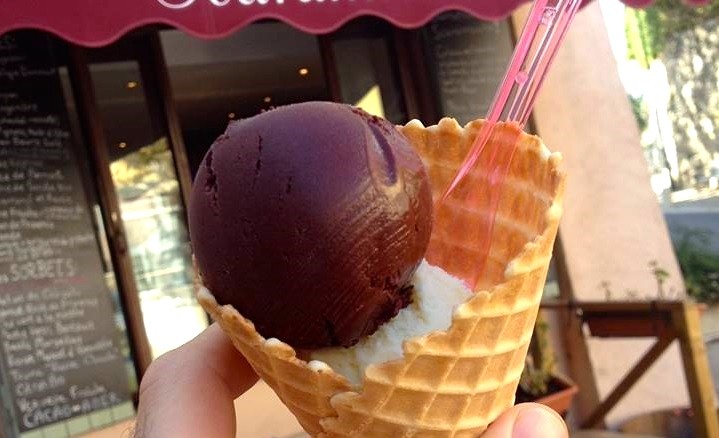
glaces1Now some news from Paris. A few days ago, a French-American couple launched a new ice cream shop named Scaramouche on a little street in Montmartre. The American in question is the writer Elizabeth Bard, author of two delightful memoirs with recipes — Lunch in Paris and the just-released Picnic in Provence — that tell the story of her encounter and love affair with the Frenchman in question, Gwendal Auffret. While living in Provence, they launched an artisanal ice cream making business using only the best ingredients, with a creative range of local flavors (rosemary, olive oil and pine nuts; lavender; geranium petals and crushed pistachios; saffron, etc.) as well as more typical flavors like chocolate and vanilla. In 2013 they opened their first Scaramouche shop, in the village of Cereste, and the next year were named to Trip Advisor’s list of the top 10 ice cream shops in France. This success has propelled them to Paris. If you’d like to stop by for a taste, the shop is at 22 Rue la Vieuville, beneath Sacré Coeur in the 18th arrondissement.

Mallorca1And finally, here’s something so new that I can only give a few details now, with more to come in the weeks ahead. It looks quite likely that I will be teaching a cooking workshop in April at an enchanting boutique hotel on the Spanish island of Mallorca. I am still hammering out the details with the hotel’s British owners, but the tentative plan is to hold the workshop during the week of April 24-May 1. Participants would arrive on a Sunday, have afternoon cooking classes from Monday to Friday, and leave on the following Sunday. During the day, they would be free to explore the island and its fabulous beaches, or to lounge beside the hotel’s lovely pool. The price, which is still being worked out, would be equivalent to the cost of seven nights in a mid-range hotel in Paris, London or New York. Included would be breakfast every day, five dinners with wine, and the five 2-hour cooking lessons with yours truly. Non-participating spouses/partners/friends may come along for a very modest additional price. French cooking on a Spanish island? If you like the idea and think you might come, please let me know via the Contact page. This plan will take off if there is sufficient interest. We can accommodate up to eight students.

Happy cooking!

Posted in Desserts | Tagged , , , , , , | Leave a comment

Pigeon rôti

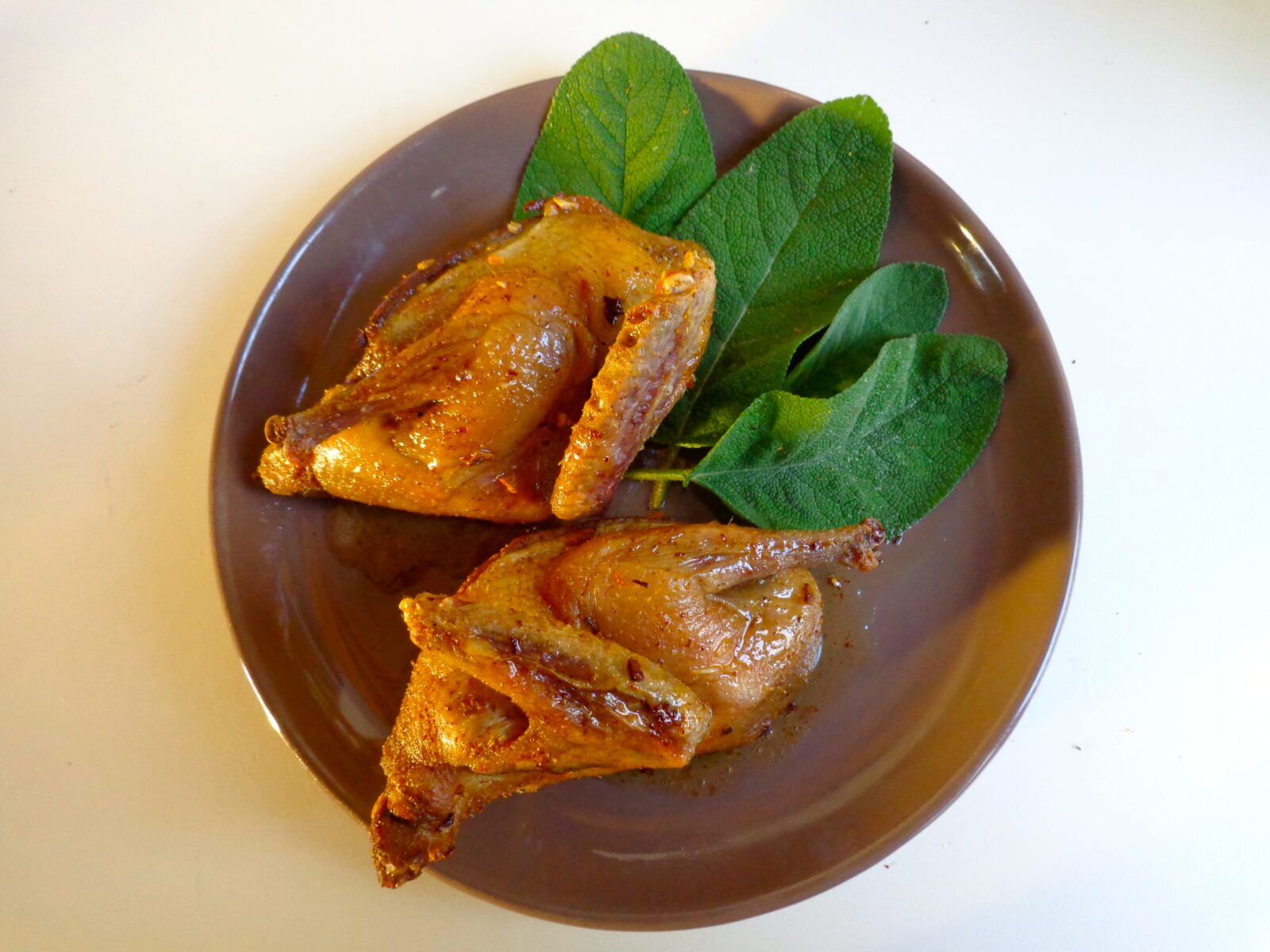
Pigeon4It all started with a sail down the Nile in a felucca. That’s where an Egyptian named Refat took a fancy to me. In short order he invited me and my friends to his place across the river from Luxor. It turned out to be a feast, with colorful salads, unusual grains and a spectacular platter of roast pigeon in the center of the table. Succulent, juicy, lightly spiced, this was a dish to remember. So when I returned to Paris, I tried it out.

Pigeon rôti / Roast pigeon

Pigeons have been raised for centuries in France, where they are considered a delicacy. In the countryside, you will see the occasional picturesque dovecote, built during the Middle Ages by the nobility for raising the birds. And of course, before they were raised, pigeons/doves were plentiful in the woods, where they were hunted. One can imagine that they have been relished here since ancient times — as they were in Egypt and other parts of the Middle East. The Bible notably mentions pigeons as a food raised by the Hebrews.

These days in France, raised pigeons are readily available year round at quality butchers and at farmers’ markets. Here they are often roasted or stewed in a large pot on the stove, and may be accompanied by bacon, mushrooms, garlic, cabbage, or even stuffed with foie gras. I prefer the simpler, Egyptian method of roasting the pigeons in the oven. They are first bathed in a marinade of olive oil, cumin, garlic and black pepper, then roasted at high heat until medium rare. The Egyptians often stuff the pigeons with rice, but again I prefer the simpler way of roasting the birds with no stuffing. I serve them alongside interesting vegetables, salads or wild rice.

This makes a lovely dinner for hot summer nights. The recipe is very quick and it allows you to place something special on your table with a minimum of fuss. Raised pigeons (often called squab) are available these days in many places, although in some countries you may need to mail order them. If you cannot find pigeon, you may substitute a different small bird. Whatever you choose, be sure to select an appropriately wonderful red wine.

Happy cooking!

During the summer, The Everyday French Chef will appear every two weeks instead of weekly. See you next on Friday, June 26.

Posted in 6. Poultry | Tagged , , , , | Leave a comment