 Fresh summer fruit piled into dessert cups with a splash of crème de cassis makes a lovely way to end a meal. Add a smattering of mint leaves, and you have a dish that is both sophisticated and simple to prepare. You can use whatever soft fruit happens to be available. For example, nectarines, fresh figs, raspberries and blueberries, as shown in the photo. Earlier this summer I used cherries, blueberries and peaches, and won applause.
Fruits d’été au cassis / Summer fruit cup with cassis
And now it’s time for a confession. I meant to post this recipe last week on my normal schedule of every other Friday. But I was on vacation in Sète, in the south of France, where the white sand beaches stretch for miles and the living is easy — so easy I forgot all about it. On the other hand, the trip was a culinary adventure as it allowed me to get acquainted with various dishes that are specific to the region, most of them involving seafood.
Sète, which lies southwest of Montpellier, about halfway between Marseille and the Spanish border, is a major Mediterranean fishing port. Canals slice through the town, which has the sea on one side and a huge saltwater pond on the other. Products in abundance in the town’s fabulous markets include octopus, mussels and oysters, and these all feature in the local cuisine.
Sète is perhaps most famous for a dish called teille sètoise — a pie of octopus bathed in a spicy tomato sauce and encased in a doughy crust. The ingredients include saffron and Frontignan, a sweet wine produced in the village down the road. I tried this once and have to admit I am not a huge fan, but the locals seem to love it. There are bakeries scattered around town that make nothing else.
First prize for local cuisine — in my opinion — goes to piste de moules, which is served in small dishes at cocktail hour. My friend Serge, a writer who lives in Sète about six months a year, makes a dynamite version. The mussels are opened over a hot flame, removed from their shells and bathed for a couple of hours in a marinade of olive oil, garlic and hot pepper. He may have a secret ingredient or two but I am still waiting for him to send me the recipe. Watch this space.
The third local specialty I tried was stuffed mussels — stuffed not with the usual breadcrumbs and garlic but with sausage meat! I found the idea peculiar, but was convinced to try them by another friend who goes often to Sète. Well, after tasting them I was less convinced…
These dishes may all be enjoyed at the canalside bars and bistros that make Sète one of the more colorful towns of France’s lovely south. Handsome sailboats, fishing boats and kayaks float past as you raise a glass of Frontignan and enjoy the sunset. On weekends, there is jousting on the canal aboard huge gondola-like vessels, with the aim of each team to push the members of the other team into the drink. It’s all in good fun.
I will try to get back onto my regular schedule by posting another recipe next week. In the meantime, try the fruit cup — seasonal, easy and delicious.
Happy cooking.
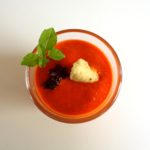 This little gem of a recipe for chilled red pepper soup was inspired by a recent visit to one of my favorite Paris restaurants, Zebulon, where it was served as a surprise “palate teaser”, with a tiny savory biscuit and finely chopped black olives on top. There were only a few spoonfuls in the tiny soup cups, but — wow — did they pack a punch. The flavor is reminiscent of gazpacho, but more sophisticated. When I got home, I had to try to make it.
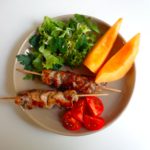 This is the time of year when I’m either in the country stoking up the barbecue or dreaming of being there. At the moment, as Paris swelters through its second heatwave of this young summer, I’m still dreaming. But that won’t prevent me from making grilled chicken on wooden skewers — au contraire. It’s a perfect dish for hot summer weather, even at home, as it can be prepared on the stovetop in a matter of minutes with minimal fuss.
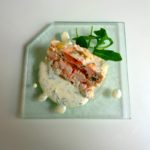 A light start to a meal of a warm summer’s evening is a fish terrine — in this case, a terrine of salmon, shrimp and sea scallops, with a sauce flavored with curry and dill. For years I have enjoyed the fish terrines on offer at Parisian food shops, where they beckon elegantly in multicolor slices. But I only recently began making them. And the good news is that it’s fun. It requires a French technique known as bain-marie.
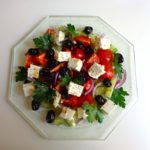 When the weather turns summery, what could be more refreshing than a Greek salad, French style? It’s been so hot here in Paris recently that I’ve made several. All you need is feta, tomatoes, a cucumber, a red onion, some black olives and a little parsley or mint. Unlike the Greek version, salade grecque is generally served in France without sweet peppers or oregano, and with rosé instead of retsina. Call it an Adriatic of the mind.
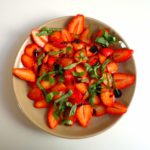 Strawberries with basil and balsamic vinegar, aka strawberry carpaccio, appeared relatively recently on Paris bistro menus. The combination makes a refreshing dessert on warm summer evenings — light, tangy and sophisticated. And the real magic is that it takes about five minutes to prepare. You can also vary the ingredients, adding a few raspberries or replacing the basil with mint. Don’t tell your guests about the balsamic — let them guess.
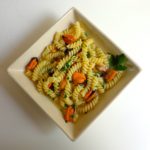 It is surprising, in our globalized world, that we can still travel only a short distance and find ourselves in a whole new foodosphere. I recently had the pleasure of visiting Naples. The first night, at a joint straight out of a Mastroianni-Loren movie, I was served pizza with sausage and friarielli, aka broccoli rabe, which is virtually unfindable in Paris. The last day, I encountered a simple but scrumptious dish of pasta, mussels and pecorino.
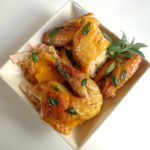 I first encountered this dish a couple of years ago at
 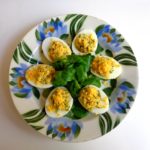 The mimosa tree, its fluffy yellow blossoms a harbinger of spring, has loaned its name not only to a Champagne cocktail but also to the French version of deviled eggs. The eggs are stuffed and topped with of tiny pieces of yolk meant to resemble mimosa flowers. The filling includes parsley or other herbs. It’s a great dish to serve at this time of year — cheery, light and bright. And by the way, it’s also a great way to recycle Easter eggs.
 If you’d like to kick off festivities with
 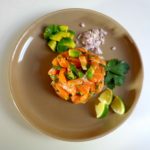 Tomorrow is April Fool’s Day, an event marked in France by pranks known as poissons d’avril, or ‘April fish’. So this seemed an appropriate time to post a fish recipe, all the more so as spring has now sprung with a vengeance in Paris, with warm-weather dishes sprouting on bistro menus like precocious darling buds of May. Salmon tartare is one such dish — light and fresh, its flavor enhanced with avocado, fresh herbs and lime juice.


