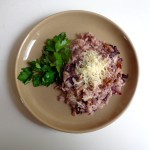
 When I first tasted risotto al radicchio I was dining alone in Venice and chose it almost at random from a menu with many other dishes that were unknown to me. Bitter red salad with rice? Why not, I thought, figuring it was worth trying something new. How could I have imagined the sublime dish that was brought to my table, rich and subtle, the flavor of the radicchio leaves tamed to a hint of something wild mellowed by creamy rice, butter and parmesan cheese? But there was something more to this dish, something unusual. Intrigued, when I returned to Paris I phoned the chef, who let me in on his secret…
Risotto à la trévise / Risotto with radicchio
In most risottos, the rice is sautéd with onions and moistened with white wine before broth is added. In this one, a specialty of Venice, the rice is moistened with red wine, which lends body and color to the dish. There are exceptions — some recipes for this risotto call for prosecco, the dry Italian sparkling wine brought out for festive occasions. But my first taste of the dish was the version made with red wine, and it’s the one I prefer.
Now, you may be asking, how did a recipe from Venice end up on the site of The Everyday French Chef? Radicchio — trévise in French, after the northern Italian city of Treviso — has been cultivated since antiquity in the Venice region and over the centuries made its way to France. When I encountered some in the market last week, with memories of my friend Gisella’s fabulous lasagne with radicchio on my mind, I had to buy it and try my hand at my favorite risotto recipe. Which, by the way, was a specialty of a great little Italian bistro around the corner from me, L’Osteria, while Toni Vianello was its owner and chef. This dish is a fine example of the way contemporary cuisine in Paris is becoming more multi-culti — at restaurants and in homes as well. Risotto with radicchio is inexpensive and easy to make. It may be served as a first course or a main dish accompanied by salad and wine. Its flavor is unique. I suggest you try it.

 With the end-of-year holidays approaching, this Russian-French version of gravalax makes a fine festive dish. The salmon is marinated overnight in salt and sugar — et voilà, it’s ready. Although I enjoyed this dish many times while working in Russia, where it is known simply as riba salyonnaya, or salted fish, I only started making it in Paris thanks to a Russian friend who passed along her family recipe. Served with shots of vodka or flutes of Champagne, it will get your holiday meals off to a spectacular start.
 One of the things I find most amazing about cooking is the way the simplest of ingredients can be turned into a dish that is, frankly, sublime. Red onion tart is such a dish. The onions are gently sautéed with a pinch of thyme, then placed in the tenderest of savory pie shells, sprinkled with cheese, bathed in a mixture of egg, milk and cream, salted, peppered and sprinkled with nutmeg. And all it takes to prepare this creation is one red onion.

 Does North African cooking count as French cuisine? I had dinner a couple nights ago with friends who insist that it does. ‘After all,’ said Jack, ‘when the French are asked to name their favorite food, the dish that comes up most often is couscous.’ And indeed, the influences back and forth between France and its former colonies are so strong that North African cuisine can be found virtually around every corner here. This Moroccan carrot salad — fresh, flavorful and oh so spicy — will transport you to a hot and exotic land.


