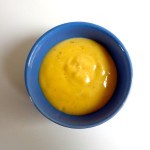
 Let’s demystify mayonnaise — one of France’s most versatile and elegant sauces. It is reputedly so difficult to make that only culinary experts should attempt it. Guess what The Everyday French Chef has to say to that? Poppycock. If you have the ingredients on hand, you can whip up a bowlful in less than five minutes. And the results are spectacular. Once you’ve tried it, you may find yourself singing, ‘Ain’t nothin’ like the real thing, baby, nothin’ like the real thing…’
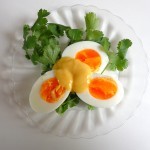
This sauce may be used with vegetables, cold roast meat, or simply with hard-boiled eggs to make one of the best loved starters in the classic French repertoire, oeufs durs mayonnaise, which I offer you today as a bonus.
For a video demonstration showing how to make the mayonnaise, click here.
 Mayonnaise / French mayonnaise
Oeufs durs mayonnaise / Hard-boiled eggs with French mayonnaise
My neighbors in the French countryside, enthusiastic consumers of mayonnaise, make it so often that they started using a blender, mixing the whole egg instead of just the yolk with oil, salt and mustard. The result is acceptable, but not as delicate as a proper mayonnaise made without the egg whites. I wouldn’t recommend it, especially because you can make the same quantity in the same amount of time using a small spoon, easier to wash than a blender. Different versions of French mayonnaise include aïoli from Provence (garlic mayo) and rouille (saffron-hot pepper mayo), also from the south of France. We will get to them in due course — but once you’ve got the mayo technique down, you can probably wing it. Just have a sip of wine, keep a steady hand, and stir. Easy as can be.
Site news: The Menus section of this site has been updated with new menu suggestions for autumn, including everyday meals and meals for weekends and special occasions, as well as a new page with autumn meals for vegetarians and vegans. Next week I’m thinking of posting a new recipe for fish, probably salmon (but don’t hold me to that), and possibly also a recipe from one of my favorite neighborhood chefs, a specialist in southern French cuisine. In the meantime, happy cooking!
 I first tasted this dish in the home of Valérie Lapierre, a superlative cook. She and another friend, an artist, had concocted a fabulous meal but refused to say what the main course would be. And then they arrived bearing dinner plates, each with its own small stuffed pumpkin. The pumpkins’ caps were lifted. An amazing aroma escaped. Spoons were dipped in. Out came succulent baked pumpkin and a filling of mushrooms, onions and cheese. It was one of the best things I’ve ever tasted, and quintessentially French.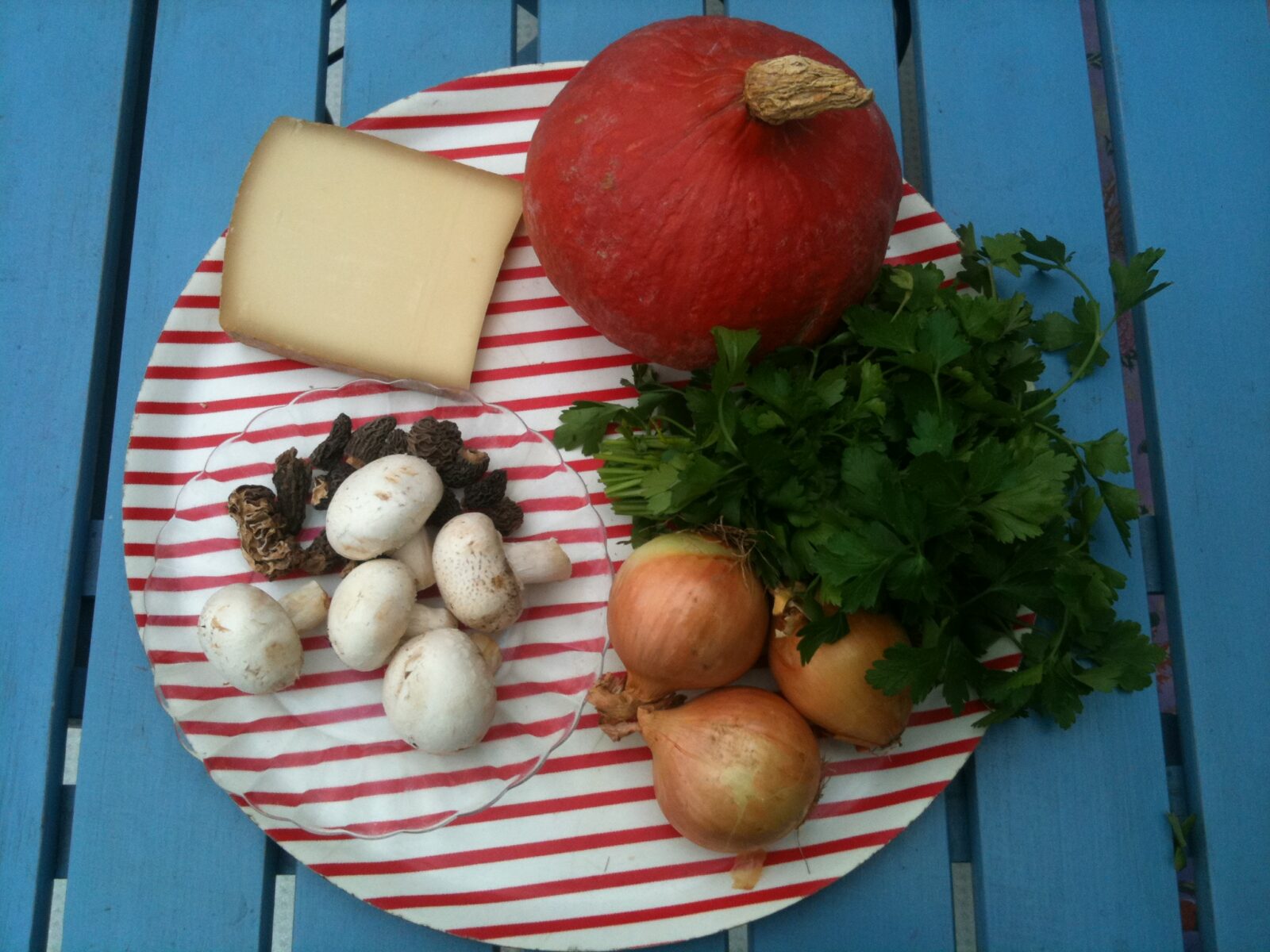
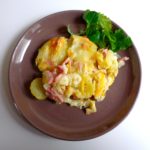 This is a cold-weather dish most commonly encountered in the Alpine ski resorts of eastern France: potatoes, onions, bacon and flavorful reblochon cheese baked together to make a mouth-watering one-dish meal. But tartiflette has become so popular that restaurants from Burgundy to the Pyrenees now serve it. The name derives from a word for potatoes, tartifla, that is used in Italy and Provence — but, oddly, not in Savoie…
 This is an apple tart for taking the chill off a cold autumnal evening. It comes from Normandy, where the salty wind off the sea can whip right through the warmest clothes. Normandy, France’s dairy land, where the fresh cream is as sublime as it comes. Normandy, where apple trees dot the countryside, and the apple tart is as French as, well, apple pie is American.

 Why should the word kir be associated in my mind with the word decadence? The cocktail originally known as a blanc-cassis has nothing particularly decadent about it. It’s the most natural of apéritifs, made of dry white wine — Burgundy is traditional — and crème de cassis, or black currant liqueur. Served throughout the Burgundy region long before it was named after the priest Félix Kir, a resistance hero and mayor of Dijon, this drink is heady enough to liven up any cocktail party, and even temporarily to keep one’s mind off an election taking place thousands of miles away. Oh, and by the way, I first tasted a kir back in the 1970s, with a Paris friend who was taking me to a party. On the way over, he taught me a new dance he said everyone would be dancing. It was called la décadanse.