Navarin d’agneau printanier

navarin2Navarin, or lamb stew, derives from the French word for turnips — navets — which turn up (pun intended) in colorful bunches in outdoor markets every spring. Their appearance heralds not only the return at last of warm weather, but also the arrival of a seasonal dish that is doubly heartening. For navarin may be as warming as a winter stew, but its spring vegetables display the promise of warm summer days soon to come.

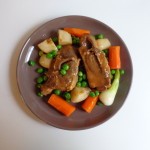
Navarin d’agneau printanier / Lamb stew with spring vegetables

We made a navarin in cooking class the other day and it took just over an hour. Stewing time, of course, depends on the cut of lamb you use. The version shown above is my favorite, with turnips, carrots, spring onions and fresh peas. But many other variations are possible. Julia Child’s recipe also calls for green beans and potatoes, but I find that results in a heavier dish akin to Irish stew, losing navarin’s light touch of spring in the process.

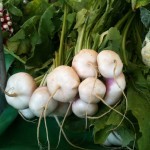
turnipsAs for turnips, they had bad rep in my family when I was growing up in the States. Why, I can’t understand. The turnip is a delightful vegetable, easy to grow in a garden plot and spicy enough to add zing to a stew or salad. Turnips were apparently first cultivated in India some 3,500 years ago, and today feature prominently in North African and Middle Eastern cuisine. They also have a long tradition of culinary and other uses in Europe. Nonetheless, their bad rep clings to them over here, too. In France, at least, where a movie or play that bombs is called not a lemon but un navet…

Book news: ‘Mastering the Art of French Eating,’ a new food memoir by the author Ann Mah, is now available for pre-sale ahead of its publication in September. The book is a regional tour of France and its culinary traditions undertaken by Ann when her husband, a diplomat, was suddenly transferred to Baghdad, leaving her on her own in Paris. It includes recipes from each of the regions visited, as well as Ann’s musings on food, life and love. Cannot wait to read it myself!

Posted in 7. Meat Dishes | Tagged , , , , | 1 Comment

Quiche au saumon fumé

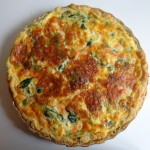
quiche saumon epinards3At cooking class the other day, the students wanted to make quiche. Fine. But which kind to propose? Quiche lorraine with cream and bacon felt too heavy for spring, never mind that it’s still raining in Paris. Ditto flamiche, the leek quiche that hails from northern France and Belgium. I wanted something richly flavorful with a hint of luxury and a touch of green, a dish to cheer us up in this most dire of springs. Et voilà — inspiration in the form of a smoked salmon quiche, with spinach to brighten it.

Quiche au saumon fumé / Smoked salmon quiche

This quiche may be served as a starter, a light main dish at lunch or supper, or at brunch. The flavors of the salmon and the spinach marry well and are enhanced by grated cheese and a sprinkling of fresh dill. As for the rest of the filling — eggs, milk and cream — allow me to let you in on an open secret. This filling may be used with any kind of quiche. You’d rather marry mushrooms and bacon? Or broccoli and cheddar? Go for it. This is the ideal dish for using your imagination. Happy cooking!

Posted in 4. Omelets, Soufflés, Quiche | Tagged , , , , , , | Leave a comment

Genoise au citron et pavot

gateau printemps1April in Paris… Snowflakes and gray skies… Nary a blossom is to be seen… Given the situation, the only solution the other day was to make a beautiful cake. It was Easter Sunday and I’d been invited to dinner. The hostess asked me to bring a dessert. I had little time, having had a guest myself at lunchtime, so I put on my thinking cap and came up with this lemon-poppyseed tort — quick to make, fun to decorate, lovely to behold.

Genoise au citron et pavot / Lemon-poppyseed tort

The cake is a genoise flavored with grated lemon peel and poppyseeds. I iced it with a mix of confectioner’s sugar, milk, lemon and brandy. Then came the decoration — ah, the decoration! This is an art I picked up while working as a chef at the Café Dewitt in Ithaca, New York, many years ago. We had some candy eggs left over from lunchtime, so I placed them around the rim, interspersed with miniature daffodils from a plant I’d bought at the market. And for the tray, strawberries. When the cake was presented that evening, oohs and aahs erupted and the guests broke into song — literally! Of course, it’s not Easter every day, but this cake may be decorated in many different ways. For example, with a sprinkling of poppyseeds on top, strawberries around the rim and flowers strew around the tray. It’s so much fun! Just use your imagination…

Posted in Desserts | Tagged , , , | Leave a comment

Soupe aux artichauts safranée

soupe artichaut2I grow artichokes in my garden in Burgundy. This spring I’ll have to start over because a wild boar trampled my two artichoke plants last autumn. Which means I’ll be lucky if I get a single artichoke by September. Happily artichokes can be found in abundance at markets in France throughout the summer and beyond. And sometimes you don’t even have to go to the market — frozen artichoke hearts are all you need. As in this soup.

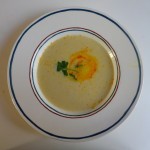
Soupe aux artichauts safranée / Artichoke soup with saffron

The soup is essentially a purée of artichoke bottoms with a little olive oil and cream. The saffron is what makes it really special. First, there’s the color — incandescent yellow-orange. Then there’s the sublimely exotic flavor, which is, I think, the reason why saffron is reputedly the world’s most expensive spice. Depending on how much you like saffron, you can include it in both the soup and the swirl on top, or use it only for the swirl. Personally, I like it enough to use it in both.

Meantime, the food and travel writer Ann Mah has just posted one of my recipes on her excellent site. Ann, a friend who until recently lived in Paris, has a regular column called Tuesday dinner with… where she invites other food bloggers to contribute a recipe for a dish they would make on a Tuesday evening — i.e. an evening when a fast and easy supper is called for. The recipe I sent her is Salade Savoyarde, a salad with lettuce, potatoes, country ham and melted cheese. To check it out, go to: annmah.net / Tuesday dinner with The Everyday French Chef.

Site news: One of the reasons I embarked on this culinary adventure last fall is that I’m hoping to publish a cookbook. For that to happen, I’ve been told, I need tens of thousands of followers! So how are we doing? Thanks to your interest and support, the site is nearly 8 months old and has a steadily growing following. But it’s not growing fast enough to reach 10,000 anytime soon. The Everyday French Chef needs a boost, and I’d like to ask for your help.

One way would be to send a link to the home page to 5 or 10 (or more) of your friends. Or, when you see a recipe you like, you could share it by pressing one of the buttons at the bottom of each page — via Facebook, Twitter, Email or Pinterest. And of course, if you like this site but have not yet subscribed, you may do so. I am very grateful for your support, and will keep you posted. In the meantime, happy cooking.

— Meg Bortin

Posted in 2. Soups | Tagged , , , , , | 4 Comments

Gigot d’agneau à la marocaine

gigot3Just in time for Easter, here’s a recipe with a twist — a leg of lamb coated in spices that infuse the meat with a seductive Moroccan flavor. Add a little couscous on the side, and you will have an exotic Easter meal as memorable as the painted eggs left around your house or garden by a certain rabbit. And once the Easter holiday has passed, you can make this recipe time and again, for it’s a crowd pleaser and quite easy to prepare.

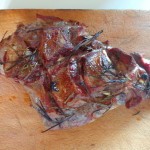
Gigot d’agneau à la marocaine / Roast leg of lamb, Moroccan style

The French tend to serve their lamb rare and the Moroccans well done, so how to approach this roast? My rule of thumb (with a caveat) is to forget about how other cultures prepare their meat and serve the roast as you — and your family and guests — like it. The caveat is that I’ve lived in France so long I’ve been influenced by the local style, and have come to believe that the meat becomes tougher and arguably less flavorful the longer you cook it. In my kitchen, I roast the lamb just long enough for the meat in the broader parts of the leg to be medium-rare — pink with perhaps a tiny spot of red in the middle. The meat toward the bottom of the leg will be more well done, allowing a choice for the diners around the table. Happy cooking!

Posted in 7. Meat Dishes | Tagged , , , , , | Leave a comment

Asperges braisées

asperges braisees3I think there’s something we can all agree on — the first taste of asparagus each year is one of the rites of spring. Not that spring has sprung in Paris quite yet, but the first green spears have just made their debut in the outdoor markets. I’d been waiting for that moment and seized on it last week while shopping for a dinner party. There, gloriously displayed, was a large heap of young asparagus. I bought it, brought it home and braised it.

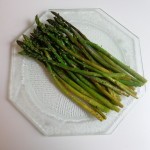
Asperges braisées / Braised asparagus

Braising transforms asparagus into almost a different vegetable. Not that I don’t like the more delicate steamed variety with hollandaise or simply with olive oil and sea salt. I’m sure we’ll get around to that later this spring. But braised asparagus acquires a richly smoky flavor as it browns, a lusty, earthy taste. I usually serve it as a starter, but it also brings star power as a side dish to whatever you may be serving. At the dinner party, I served the asparagus alongside roast guinea fowl. There were no complaints.

Posted in 8. Vegetables | Tagged , , , , , | Leave a comment

Champignons à la crème et au cerfeuil

champignons cerfeuil1My friend Nicole lives in the shadow of the Pompidou Art Center, right around the corner from a Paris bistro called Le Hangar. This trendy restaurant is sufficiently hidden away to retain a private feeling, even in the crowded Beaubourg neighborhood. We have been going there for years — no, decades. Of their classic French dishes with a modern spin, my favorite has always been a salad of raw mushrooms with cream and herbs, specifically chervil — the herb that looks like a feathery version of cilantro or parsley but is quite different.

Champignons à la crème et au cerfeuil / Mushroom salad with cream and herbs

Why did chervil never catch on in the States? I don’t remember seeing it there, although it may now be available in gourmet markets. It is ubiquitous in France, easy to grow and reputedly packed with vitamins and healthful properties. Chervil is all over the place in French cuisine — in soups, omelets, with fish, with vegetables and, as above, with certain salads. Its flavor is delicate, with hints of anise and tarragon. Apparently it came south from Russia, which is maybe why it is such a perfect partner for mushrooms and cream. If you cannot find chervil, dill is perhaps the best substitute. Happy cooking!

Posted in 1. Starters | Tagged , , , , | 2 Comments

Soupe de moules au safran

soupe moules safran1I never tasted mussels before arriving in Paris as a young woman. They just weren’t available far from the sea in the American Midwest, where I grew up. But even though Paris is about two hours by road from the nearest coastline (the Channel), all kinds of ultrafresh seafood can be found in abundance here. Mussels are cheap, easy to prepare and they delight the palate with their slightly sweet and nutty flavor. They marry well with other tastes, including spices like curry or, as in this soup, saffron.

Soupe de moules au safran / Mussel soup with saffron

Saffron is, of course, expensive, but the amount needed for this recipe won’t break the bank. Counter to standard wisdom, I prefer powdered saffron to the stringy kind — it’s easier to use and, in my view, just as flavorful. Saffron is pricey because it comes from a type of crocus that lives for a single day — the threads must be harvested on that day, and within a window of a couple of hours! It is one of my favorite spices, redolent of the luxury of Arabian nights. The way it enhances mussels is magical. Try it and see.

Posted in 2. Soups | Tagged , , , , | Leave a comment

Tarte aux poires à la crème d’amandes

tarte poire amandes2Pear tart with almond cream is also known in France as tarte aux poires Bourdaloue. It takes its name from a former Paris pastry shop called Bourdaloue, named for the street on which it stood, the Rue Boudaloue in the 9th arrondissement, which is named in turn for Louis Bourdaloue, a 17th century Jesuit priest renowned as a brilliant preacher. Marcel Proust was reputedly fond of Bourdaloue’s tart and wrote about it in one of his books (the name of which I have long since forgotten — if anyone out there has the reference, please let me know). Many years ago a Frenchman who was to become important to me brought me a tarte aux poires Bourdaloue as a first step toward seduction. I have been in love with this tart ever since.

Tarte aux poires à la crème d’amandes / Pear tart with almond cream

The pastry shop no longer exists, alas. It has morphed into a bakery of another name, and while the shop still retains the Bourdaloue awning, do not be deceived — its pastry bears no resemblance whatsoever. I recall my first Bourdaloue pear tart as meltingly sweet and creamy, with the silky smoothness of the almonds contrasting enchantingly with the slightly tangy resistence of the fruit. Okay, fair enough. I was high when I tasted it — high on wine, high on anticipation, high on the almost certain knowledge that I was falling in love. It’s enough to make anyone go crazy for a tart. Happy cooking!

Posted in Desserts | Tagged , , , , , | 2 Comments

Julienne de champignons

julienne2This dish of sliced mushrooms in a creamy, cheesy sauce is something I discovered while living in Moscow in the 1980s. In Russia, where it is known as zhulien, it is often served during intermission at theaters in little individual long-handled pots with a tiny spoon. Sometimes chicken is added to the mixture. I have not yet managed to track down the Russian history of this recipe, but it is clearly French in origin, as its name derives from the fact that the mushrooms are sliced julienne-style. Most likely it was introduced in the 1800s, when French chefs were brought north to cook for the tsars. So from Paris to Petersburg and back to Paris, where I occasionally make it, much to the delight of my guests.

Julienne de champignons / Mushrooms julienne

Russians, perhaps the world’s greatest mushroom hunters, especially love wild mushrooms, like chanterelles, which enhance this dish with an earthier taste than the cultivated variety. But as the chanterelle season is relatively short, the dish is most commonly prepared with cultivated white mushrooms, and flavored with dill or cilantro, two of the most popular herbs among Russians. In the photo above, the julienne was made with a mixture of shiitake and white mushrooms. The shiitake, readily available in French markets at this time of year, add additional flavor and texture to the dish. I used a medium-sized gratin dish, good for family suppers, but individual ramekins make a fine impression if you have guests gathering around your table. When serving a Russian-style feast, I would most probably present the julienne — in very small individual quantities, as it is quite rich — after a starter and before the main course.


Posted in 8. Vegetables | 1 Comment