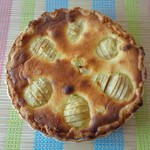
Tarte aux poires à la crème d’amandes

tarte poire amandes2Pear tart with almond cream is also known in France as tarte aux poires Bourdaloue. It takes its name from a former Paris pastry shop called Bourdaloue, named for the street on which it stood, the Rue Boudaloue in the 9th arrondissement, which is named in turn for Louis Bourdaloue, a 17th century Jesuit priest renowned as a brilliant preacher. Marcel Proust was reputedly fond of Bourdaloue’s tart and wrote about it in one of his books (the name of which I have long since forgotten — if anyone out there has the reference, please let me know). Many years ago a Frenchman who was to become important to me brought me a tarte aux poires Bourdaloue as a first step toward seduction. I have been in love with this tart ever since.

Tarte aux poires à la crème d’amandes / Pear tart with almond cream

The pastry shop no longer exists, alas. It has morphed into a bakery of another name, and while the shop still retains the Bourdaloue awning, do not be deceived — its pastry bears no resemblance whatsoever. I recall my first Bourdaloue pear tart as meltingly sweet and creamy, with the silky smoothness of the almonds contrasting enchantingly with the slightly tangy resistence of the fruit. Okay, fair enough. I was high when I tasted it — high on wine, high on anticipation, high on the almost certain knowledge that I was falling in love. It’s enough to make anyone go crazy for a tart. Happy cooking!

Posted in Desserts | Tagged , , , , , | 2 Comments

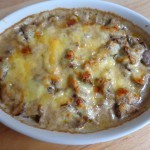
Julienne de champignons

julienne2This dish of sliced mushrooms in a creamy, cheesy sauce is something I discovered while living in Moscow in the 1980s. In Russia, where it is known as zhulien, it is often served during intermission at theaters in little individual long-handled pots with a tiny spoon. Sometimes chicken is added to the mixture. I have not yet managed to track down the Russian history of this recipe, but it is clearly French in origin, as its name derives from the fact that the mushrooms are sliced julienne-style. Most likely it was introduced in the 1800s, when French chefs were brought north to cook for the tsars. So from Paris to Petersburg and back to Paris, where I occasionally make it, much to the delight of my guests.

Julienne de champignons / Mushrooms julienne

Russians, perhaps the world’s greatest mushroom hunters, especially love wild mushrooms, like chanterelles, which enhance this dish with an earthier taste than the cultivated variety. But as the chanterelle season is relatively short, the dish is most commonly prepared with cultivated white mushrooms, and flavored with dill or cilantro, two of the most popular herbs among Russians. In the photo above, the julienne was made with a mixture of shiitake and white mushrooms. The shiitake, readily available in French markets at this time of year, add additional flavor and texture to the dish. I used a medium-sized gratin dish, good for family suppers, but individual ramekins make a fine impression if you have guests gathering around your table. When serving a Russian-style feast, I would most probably present the julienne — in very small individual quantities, as it is quite rich — after a starter and before the main course.


Posted in 8. Vegetables | 1 Comment

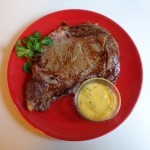
Entrecôte béarnaise

entrecote bearnaise3This is not an everyday dish because it involves a sauce, béarnaise, that requires a little time and a bit of technique. The results, however, are spectacular. Choose a tender, flavorful cut of steak. Sirloin, rib-eye, Porterhouse, club and New York strip make good substitutes for the French entrecôte, which is cut from the rib area. French restaurants often serve the steak grilled, which is unfortunate because the meat acquires a charred flavor. It should be pan-seared or broiled, with the sauce served alongside. Ah, the sauce!

Entrecôte béarnaise / Steak with béarnaise sauce

Béarnaise is creamy perfection. An emulsion of egg yolks and butter flavored with vinegar, shallots and tarragon, it is classified as a derivative of hollandaise on the French list of master sauces, and is equally rich. In fact, between the steak and the sauce, this dish is packed with cholesterol. But not to worry, as entrecôte béarnaise is one of those French paradox dishes. Match it with a sufficiently tannic red wine, preferably a great Bordeaux, and any negative health consequences simply melt away (or so they say).

It would be justifiable to think that béarnaise sauce comes from the Béarn region in the Pyrénées of southwest France, but that turns out to be wrong. The sauce was invented in 1837 by Jean-Louis-François Collinet, the chef at a restaurant outside Paris that was a former royal residence of the 16th century French king Henri IV. Collinet whipped up the sauce on the spur of the moment. Asked for its name, he saw a bust of Henri IV in the dining room and dubbed the sauce béarnaise — because the king had been born in the Béarn region! There are various derivatives of béarnaise, among them sauce choron (flavored with tomato) and sauce Colbert (flavored with meat glaze and white wine). Once you get the hang of it, a fine béarnaise can be produced in less than 10 minutes. It’s fun, and so rewarding to see the ingredients transmogrify into a perfect sauce.

Posted in 7. Meat Dishes | Tagged , , , , | Leave a comment

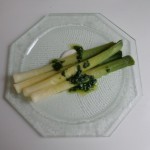
Poireaux sauce verte

poireaux2The leek is a handsome vegetable. The ancient Egyptians grew and enjoyed it, and so did the Romans — in fact, it was reputedly Nero’s favorite vegetable. The Welsh enjoy it so much that they made it their national emblem. Milder than the onion, the leek makes frequent appearances in European cuisine, notably in France and Belgium. So why are leeks so rarely seen in American cooking? One person here in Paris who’s not afraid of leeks is Shaun Kelly — but he’s Australian, not American. At his restaurant, Au Passage, he made a leek starter the other day that was so delightful I had to try to replicate it.

Poireaux sauce verte / Warm young leeks with a green herbal sauce

Leeks are also delicious served as a starter with mustard vinaigrette and many other sauces — or just with sea salt and a fine extra-virgin, cold-pressed olive oil. But this herbal sauce adds a little je-ne-sais-quoi that lifts the leeks out of the ordinary. As the leek is a winter vegetable — and spring finally seems to be around the corner — the time to try this dish is now. Leeks won’t be on the menu for long. Happy cooking!

Posted in 1. Starters | Tagged , , , , | 4 Comments

Pots de crème au chocolat

creme choco1Can you imagine that most of the world never heard of chocolate until the Renaissance in Europe? That’s when the conquistadors brought it back to Spain, having acquired it from the Aztecs. Cortés was among the first Westerners to observe its properties. His official biographer wrote that Montezuma drank a cup of it after every meal, followed by a smoke of tobacco flavored with ‘liquid amber.’ Others reported that Montezuma drank up to 50 cups of it a day. Did the Aztecs know what science has now confirmed — that dark chocolate is good for both heart and mind? If it makes you feel good, that may be because it contains the same chemical that is produced by the brain when you fall in love…

Pots de crème au chocolat / French chocolate cream

This recipe produces a satiny smooth dark chocolate dessert flavored with hints of cognac and coffee. It can be made in about 10 minutes, and served a couple hours later once it has had time to chill. Devilishly rich, it can be elegantly served in dessert wine glasses to make what the French call a péché mignon — a darling little sin that is excusable because one can’t help oneself from indulging in it. At this time of year, when the sun has been inexcusably absent for months, one would be sinful not to indulge in it. Happy cooking!

Posted in Desserts | Tagged , , , | Leave a comment

Purée de potiron au parmesan

This is the longest and dreariest winter I can remember in my more than 30 years in Paris. Gray, gray, gray every day, and it keeps snowing at a time of year when the café tables have usually started to come out, giving Parisians a chance to sip an apéritif in the sun and enjoy the lift that comes with the feeling that spring is just around the corner. By late February I normally get an itchy feeling in my fingers telling me it’s time to go down to Burgundy and trim the raspberry bushes. None such this year. Instead, I’m working on creating cheery winter dishes that can warm the soul on a cold and blowy night.

Purée de potiron au parmesan / Pumpkin purée with parmesan

Meantime, I’ve added a new category to this site: Classes. If you’d like to participate in cooking classes in my Paris kitchen, now or by arrangement in the future, please get in touch via the Contact form. The new series of classes kicked off last week with a delightful American couple just in from Minneapolis and a Parisian friend of theirs. We made pan-seared sea scallops on a bed of baby greens, veal chops with shiitake mushrooms, French apple tart and — you guessed it — pumpkin purée with parmesan. It took less than two hours, and we really had fun! I hope some of you will be able join in.


Posted in 8. Vegetables | Tagged , , , | 1 Comment

Rodolphe Paquin

PaquinBWhen Rodolphe Paquin took over 16 years ago as chef at the Paris restaurant Le Repaire de Cartouche, the place was in a shambles. Which is a shame, if only because of the restaurant’s unique frescos depicting the life of Cartouche, an 18th century brigand and ladies’ man who hid out locally — yes, repaired — while seeking to evade the police (who eventually caught up with him and executed him on the rack when he was just 28). Paquin’s genius was not just to save the place, but to tap into his Normandy roots to introduce a creative culinary style based on ultrafresh products from the sea and the forest.

Rodolphe Paquin / A chef in Paris

This was a very good thing for me because Le Repaire de Cartouche is in my neighborhood, in the 11th arrondissement just down the boulevard from the Bastille. I love the place, which — despite earning the occasional testy online review — has never disappointed me. The seafood is sublime, game of all sorts is on the menu throughout the fall/winter season, natural wines are featured and the desserts are heavenly. Reason enough to choose Paquin as the second to be featured in this site’s series of interviews with our favorite Paris chefs. The Everyday French Chef will be back on Tuesday with a new recipe. In the meantime, happy reading.

Posted in Et cetera | Tagged , , , , | Leave a comment

Huîtres gratinées aux épinards

huitres gratinees3I’ll never forget my first taste of an oyster. My French boyfriend showed me how it was done. He took an open oyster on the halfshell, detached it with a sharp knife and, in one swift gesture, let the glistening gray morsel slip into his mouth with its tranparent liquid. My turn. I copied what he’d done, closed my eyes and tipped the shell to my mouth. It was like swallowing a nutty salty mouthful of pure sea. This experience ruined me for life, oyster-wise. I prefer them raw, live actually, and straight from the sea. But every now and then I get the urge to experiment — as I did the other day with this recipe.

Huîtres gratinées aux épinards / Oysters gratineed with spinach

These oysters, baked in the oven with a creamy sauce and a sprinkling of fresh baby spinach, fall into the French dining category of amuse-bouche — i.e. palate pleasers. They make a spectacular start to a meal, and you need serve no more than one per person, at the table or before you get there, during cocktail hour. They can, of course, also make a proper sit-down hors d’oeuvre, in which case one apiece would not be enough. But beware — these oysters are devilishly rich. And by the way, they bear only a fleeting resemblance to Oysters Rockefeller, a dish invented more than a century ago in New Orleans that a) does not use spinach, and b) does use breadcrumbs, which my recipe doesn’t. In France, they say the oyster season is limited to months with the letter ‘r’ — from September to April. That leaves two months or so to try this dish. Happy cooking!

Posted in 1. Starters | Tagged , , , | 2 Comments

Velouté de cresson

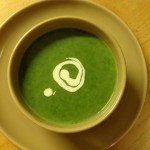
watercress soup2Watercress was considered by the ancients to have medicinal and even magical properties. The Romans thought it could cure baldness, the Greeks that it could cure madness and moderate the effects of overindulgence in wine. Dioscorides, a Greek doctor who lived in the first century AD, considered watercress an aphrodisiac. Well, I won’t claim those powers for this soup — although it will, if not heat your body, warm your soul.

Velouté de cresson / Watercress soup

Speaking of aphrodisiacs, if you haven’t yet read Table for One, the story I published this week on Leite’s Culinaria, please take a look. You might find it, ah, stimulating. Also on the literary front, I’d like to mention two recent books worth checking out. The first is The Tin Horse, a novel that veers toward noir by Janice Steinberg (my cousin, who amusingly named some characters after women of our family). Here’s a collection of reviews. The second is The Idiot and the Odyssey II by Joel Stratte-McClure, who as publisher of the 1970s newspaper Paris Metro gave me my first job in journalism. Joel was kind of off-beat then, and now he has taken upon himself to walk clear around the Mediterranean. Here’s a link to an interview he gave about the book. Finally, for all local foodies, the Paris Cookbook Fair is taking place next week at the Caroussel du Louvre. I plan to stop by, and hope to see you there. In the meantime, happy cooking!

Posted in 2. Soups | Tagged , , , | 4 Comments

Omelette bonne femme

omelet3I wanted to give you a great recipe for Valentine’s Day, and this is what I came up with. It’s a delightful brunch dish when preceded by a glass of champagne — and can also make a light supper with a minimum of fuss in the kitchen, leaving time for other pleasures. I’ve taken some liberties with the traditional recipe, adding arugula to the basic bonne femme combination of bacon and potatoes in order to create a more modern flavor.

Omelette bonne femme / Omelet with bacon, potatoes and arugula

The omelet isn’t the only thing that’s new today. I’m happy to report that a short story I wrote has been published on the site Leite’s Culinaria as a pre-Valentine’s Day special. Don’t be misled by the title they used. It’s a surprising cross-cultural tale of seduction originally titled Spicy. I hope you enjoy it.

Meantime, if you’re looking for the ultimate Valentine’s Day dessert, I’d like to direct you to another site, Joy of Baking, where the red velvet cake — a Georgia specialty I discovered last summer in Atlanta — is just out of this world. I learned about this site at the recent cooking conference in New York, and will return to that subject one of these days soon. Happy cooking!

Posted in 4. Omelets, Soufflés, Quiche | Tagged , , , , , , , | 3 Comments