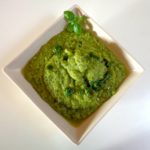
 If you’ve ever grown zucchini, you’ll know that it goes forth and multiplies at this time of year, producing an overabundance at farmers markets. You’ve made ratatouille throughout the summer, tried your hand at tian or fried zucchini with garlic, and would like to attempt something new. May I suggest zucchini puréed with fresh basil, garlic and olive oil? An Everyday French Chef creation that scored plaudits in this household…
Purée de courgettes au basilic / Zucchini puréed with basil
It takes only 15 minutes to make this dish, which can be served alongside just about anything. You steam the zucchini, purée it and then blend it with a sauce of fresh basil, garlic and olive oil. Add a little salt, grind in some fresh pepper, and you have a zesty, flavor-packed side dish ready to go straight to the table. And did I mention it’s light? This is comfort food without the calories, a perfect treat as summer heads into autumn.
I’ve always liked zucchini — but I have to say we had a major contest of wills in the summer of 2000, when I planted my first organic veggie garden at what was then my new country place in Burgundy. In late spring, I put in six baby zucchini plants that I’d bought at the farmers market in Toucy. They settled in nicely and, soon enough, began to produce opulent yellow flowers that turned into baby zucchini.
It was thrilling to pick the first ripe zucchini and cook it straight off the vine (hint: you can also eat baby zucchini raw, sliced thinly and sprinkled with sea salt and olive oil). But as the summer progressed, the plants went into overdrive. Suddenly I was drowning in zucchini. I couldn’t pick it fast enough, more and more kept coming, and soon I had giant marrows on my hands. What to do?
That summer I found myself making huge pots of zucchini soup, which I packed in plastic boxes and stored in the freezer. The soup would be nice to have around over the winter, I figured. Then one snowy weekend, when I was back in Paris, the electricity went out in the country. By the time I returned, the soup had melted and had to be thrown away. Sigh.
From then on, I put in only a couple of zucchini plants each year, and still had more than enough of this versatile vegetable to grace our table. And now that I no longer have a garden, I find myself gathering zucchini every Sunday at the market down the street in Paris. I whipped up this purée the other day and served it alongside pork that had been slowly roasted, surrounded by cherry tomatoes. A great summer meal.
Happy cooking.
 This dynamite dish of harissa-infused chicken, potatoes and leeks, topped with fresh herbs and a tangy yogurt sauce, is (full disclosure) not my original creation. I found it on the site of the uber food blogger David Lebovitz, who had himself adapted it from a cookbook by Melissa Clark. Reader, I tried it — and have made it many times since, to the delight of family and friends. As it is now part of my Paris repertoire, I wanted to share it with you.
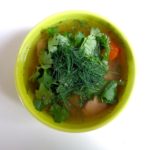 The subtle flavors of lamb, barley, carrots and gentle spices combine to make a soup that is both satisfying and light, perfect for taking the chill off now that cooler days are arriving at last. Topped with fresh cilantro and dill, with a touch of lemon juice and cinnamon for zest, it evokes the exotic tastes of Central Asian cuisine. I concocted it at lunchtime one gray day this week — a welcome change from the sweltering weather of July.
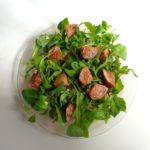 There’s a wildness to the combined flavors of figs, garlic and mint that I find absolutely irresistible when fresh figs appear in farmers’ markets in midsummer. Add some tender leaves, olive oil and a spritz of balsamic vinegar, and you have a palate-pleasing summer salad that can be ready in a couple of minutes. This salad marries well with proscuitto-style ham or with goat cheese on toast. I tried it both ways during the recent heatwave.
 Tapenade
 Poulet au miel et au thym
 Charlotte glacée aux framboises
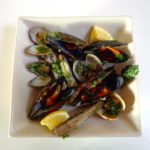 I discovered this dish at a beachside restaurant near Sète in the south of France, and found it so delicious that I asked the chef for the recipe. It is a trilogy of shellfish — mussels, clams and razor clams — that are cooked until just tender and then coated in a persillade sauce of parsley, garlic and olive oil. The recipe is simple, quick and fun to make. The combination, redolent of sun and sea, will knock your socks off.
 The restaurant in question,
  This classic American salad has taken Paris by storm in recent years, although the French have a way of doing things slightly differently. You will never see iceberg lettuce in a French Cobb, and instead of the traditional sweet dressing it will be served with a tangy mustard vinaigrette. The French also don’t worry about lining up the toppings in rows — they prefer to scatter the chicken, tomatoes, avocado, eggs and bacon over a bed of greens.
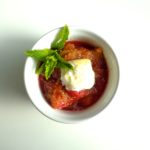 We’ve got one week left of spring, time enough to get creative with one of my favorite seasonal fruits — rhubarb. Well, to be exact, it’s a veggie, but for culinary purposes rhubarb stars in desserts. This simple, flavor-packed compote can be prepared in 15 minutes. I like to serve it with a dollop of something creamy on top, for example fromage blanc or Greek yogurt. Add a leaf of mint or a strawberry and it makes an elegant finale to any old meal.
 I also grew rhubarb at my country place, and as it is perennial the new owners will also enjoy it. Ah yes, my friends, I sold the dacha this week. It’s a major life change, but one that was necessary. I will miss my garden, but will look forward to creating dishes from all of the fabulous garden-grown fruits and veggies on offer in France.
 It’s lunchtime, a guest is coming, you’re in a rush. The omelette mixte is a classic of French cuisine that can be whipped up in just 10 minutes, from eggs, ham and grated Comté or a similar cheese. But, you may be thinking, what’s so special about a ham and cheese omelet? Well, mes amis, the art is in the making — the gentle lifting of the edges to create a fluffy concoction, the flick of the wrist to fold the omelet over itself, French style.
 The origins of beef Stroganoff are murky but the consensus seems to be that a French chef had something to do with it. I therefore offer you my version of this classic dish of thinly sliced beef and mushrooms in a tangy cream sauce. I was inspired to make it recently after a visiting Russian friend, to my great surprise, asked for the recipe. Further inspiration came from an expert on Russian cuisine who is in Paris doing research for a new book.
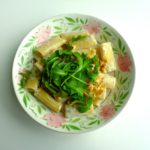 Gorgonzola and walnuts, rigatoni and cream, topped by arugula — a perfect dish for a rainy May in Paris. They say April is the cruelest month, but this is not the case in my city. After a couple weeks of sunshine, summery temperatures and chestnuts in blossom, we are back to raincoats and sweaters. Given the weather, a comforting dish of pasta seemed in order the other day, and this recipe came to mind. I whipped it up in 20 minutes.
 readers of this site will know, is one of my favorites. If you also enjoy Roquefort, recipes you might like to try include


