Soufflé au roquefort

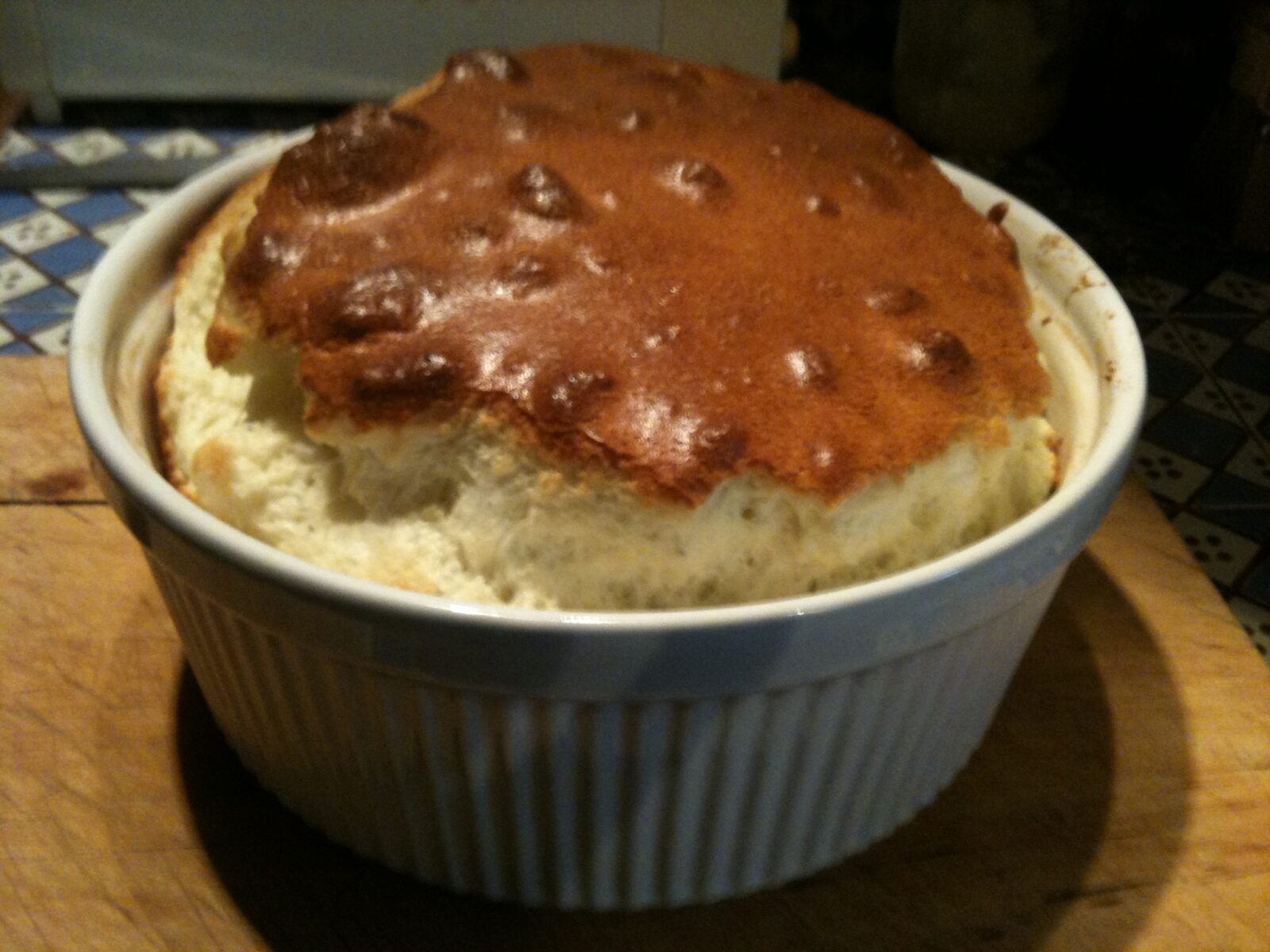
I first started making cheese soufflés while living in Moscow, where I was posted as a correspondent in the 1980s. Those were dark years with limited options for grocery shopping. But one could always find the ingredients needed for a soufflé — eggs, flour, butter, milk and cheese. I alternated between the recipes of two of my favorite cookbooks — The French Chef Cookbook by the unmatchable Julia Child, my first and most important influence in becoming a French chef, and The Vegetarian Epicure by Anna Thomas, a wonderful book. Over the years I have simplified these recipes to come up with a quick and easy version of this most ethereal of culinary creations.

Soufflé au roquefort / Roquefort soufflé

I don’t know who invented the soufflé but will look into it for future postings. But the bottom line is that this makes a spectacular entry to any meal. As a starter for a special occasion, you may make individual soufflés accompanied by champagne. For a light lunch or supper, follow the soufflé by a green salad and maybe some fruit. As for the cheese itself, if you don’t like roquefort, or don’t have any to hand, many other cheeses work equally well. Experiment, innovate, create…

Posted in 4. Omelets, Soufflés, Quiche | Tagged , , | Leave a comment

Artichauts vinaigrette

artichaut vinaigrette2When I was a kid growing up in the United States, artichokes were considered a great delicacy in my family. But as we lived far from California, where they were grown, they were expensive. My mother would cook a single artichoke for the four of us, cut into quarters. When I came to France and was served a whole artichoke for the first time, I thought it must be a mistake. But artichokes are available everywhere here. They grow wild along the roadside in parts of the south, their crowns bursting into glorious purple bloom if they remain unharvested. So it wasn’t a mistake. I had simply landed in paradise.
Artichauts vinaigrette / Artichokes with mustard vinaigrette sauce

It is customary in France to serve a whole artichoke per person as a first course, accompanied by a sauce for dipping the leaves and the heart. The sauce served most often is a vinaigrette made with Dijon mustard, red wine vinegar and an uncomplicated salad oil. Sometimes I use this sauce for artichokes, while other times I opt for the delicious combination of lemon juice and olive oil. On special occasions, I serve artichokes with homemade mayonnaise. That recipe will be coming along soon.

Posted in 1. Starters | Tagged , , , | Leave a comment

Mousse au chocolat

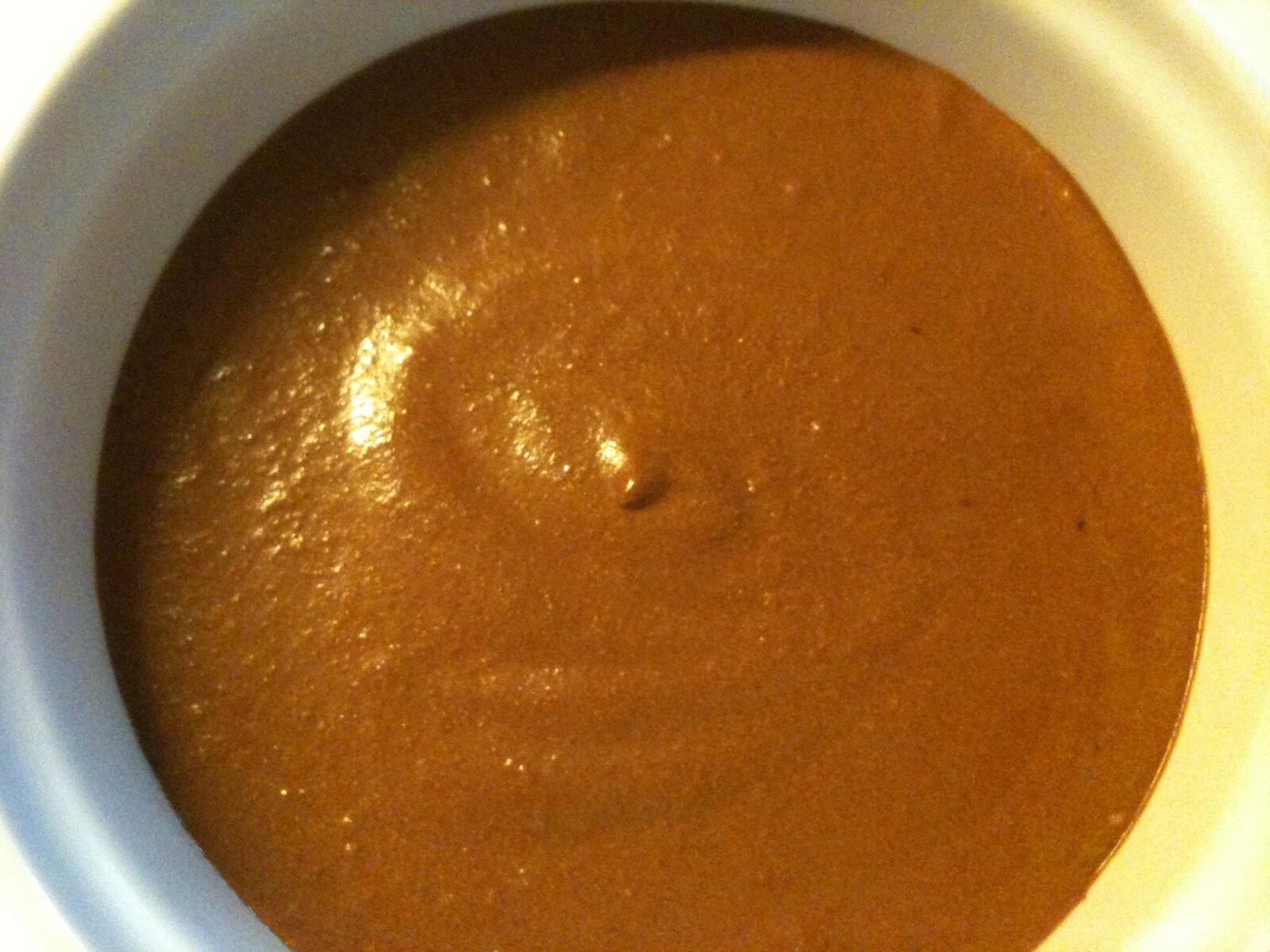
chocolate mousse1This is a mousse for serious chocolate lovers. Its deeply seductive flavor comes from the combination of high-quality dark chocolate with cognac and whipped crème fraîche. If that sounds too devilish to you, or if you will be making your mousse for the younger set, you may omit the brandy and substitute dark coffee or vanilla. For best results, buy a couple of imported bars with a chocolate content of 70 percent. You won’t regret it.

Mousse au chocolat / Dark chocolate mousse

There are various culinary approaches to mousse. The most common, in France, is to include butter with the chocolate and eggs. Instead of butter this version instead uses cream, which I find makes a lighter mousse and one not quite so rich. It allows the flavor of the chocolate to dominate while producing the melt-in-your-mouth quality you seek from this sort of dessert. If the mousse is not sweet enough for your taste, serve with a dollop or spritz of sweet whipped cream on top.

Posted in Desserts | Tagged , , | 1 Comment

Gratin de courgettes

gratin-courgettes3Zucchini infused with thyme, garlic and nutmeg and topped with a crust of bubbling cheese — it sounds as good as it tastes. But the best thing about this dish is how easy it is to make. In the time it takes to heat up the oven, you can steam the zucchini, grate the cheese, combine the cream and seasonings, and presto — it’s ready to bake. You may need to double or triple the recipe, because it will have your happy diners clamoring for seconds.
Gratin de courgettes / Zucchini gratin

The gratin is a staple of French cuisine but every chef has a different way of preparing it. Which means you can use your imagination to create variants of this dish — experimenting with different cheeses, for example, or combining the zucchini with another vegetable.

A word on cheese. My friend Ann Mah, an elegant writer on food and travel, has a new feature on her web site every Tuesday in which she invites another food blogger to share his or her midweek cooking secrets, most recently David Lebovitz. Through this feature I discovered Chez Loulou, a site that includes a terrific guide to French cheese. France reputedly counts a cheese for every day of the week — as De Gaulle famously said, ‘How can you govern a country that has 365 cheeses?’ In fact there are many more French cheeses than that, making a guide both interesting and useful.

The gratin may be served as a side dish or as the main dish of a light meal, preceded or followed by a salad. It will marry well with a sturdy red wine.

Posted in 8. Vegetables | Tagged , , | 4 Comments

Pavé de cabillaud tout simple

pan-seared cod3Flaky, white, infused with lemon and a touch of thyme, pan-seared cod with its golden exterior is a dish to daydream about. And maybe, in the not too distant future, merely to dream about — for cod, once an abundantly plentiful fish, has been on and off the endangered species list for more than a decade. Within our lifetimes it may well disappear completely in markets from Paris and Lisbon to New York. If it’s available these days, it can be pricey. But it’s worth it, in my opinion.

Pavé de cabillaud tout simple / Pan-seared cod with thyme

Instead of debating the ethical issues of eating cod in the 21st century (issues of which there are plenty, but we have the comment space on this page for that), I’d like to bring you up to date with some site news.

Today marks once month since I launched The Everyday French Chef as an experiment, not knowing what would ensue. The result so far has surpassed my hopes. Yesterday, we had our 2,000th page view — a milestone that felt particularly well timed! As of today, I’ve begun building up the Menus section of the site with suggestions for quick seasonal everyday meals — cooking time of 20-30 minutes — composed of dishes that have already appeared on this site. Coming soon: Menus for weekends and special occasions.

If you have been enjoying the site, please don’t hesitate to subscribe by clicking on the little envelope at the top of the page. This will bring a daily email update to your inbox informing you of the recipe of the day. And please feel free to share these recipes with your friends. Many thanks for your support!

Meg Bortin

Posted in 5. Fish and Shellfish | Tagged , , , | 3 Comments

Salade d’automne

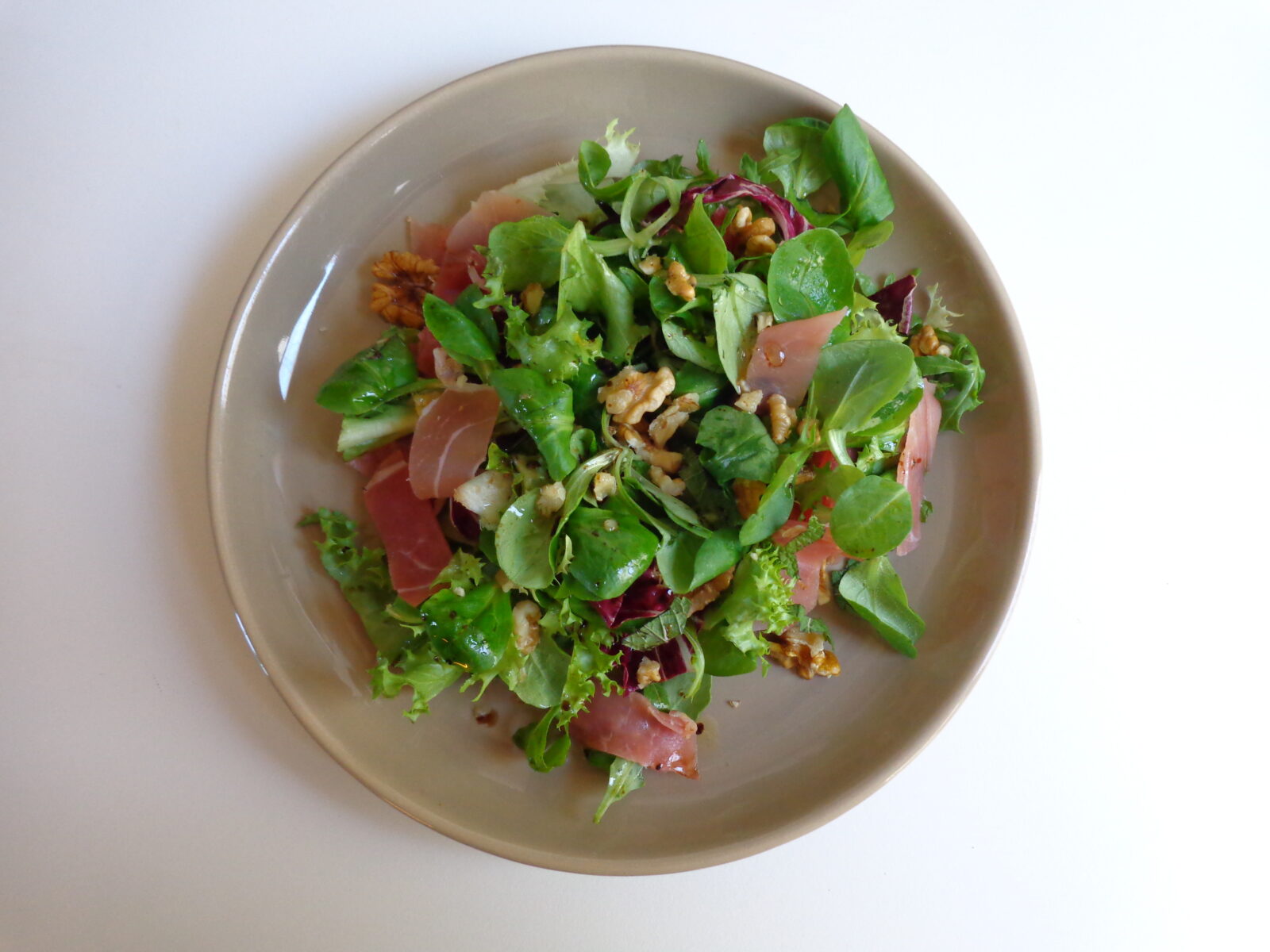
autumn salad1This salad is as easy to make as it is tasty, with mixed greens, prosciutto, walnuts, garlic and a touch of mint. It makes a great first course at dinner, works well as a light meal preceded by soup, and has enough star quality to serve as a main course at lunch, perhaps with a bit of cheese to follow. You can use any number of greens, for this salad is a variation on mesclun — the Provençal salad mixture that has become ubiquitous in France.

Salade d’automne / Autumn salad with country ham and walnuts

Traditionally, to merit its name, mesclun (from a Latin word meaning ‘to mix’) had to be made from at least seven types of greens and herbs, among them chervil. I have seen and tasted mesclun made with a broad variety of leaves, and even with flowers — orange nasturtiums, for example, or purple chive flowers. But they are neither necessary nor desirable in this salad, for they would clash with the fantastic combination of walnuts and garlic that is not only delicious but also a staple of the kind of cuisine that has made Georgians — from the Caucasus, not the States — one of the longest living peoples on earth. The mint adds a rustic flavor that will have your guests begging for more.

Posted in 3. Salads | Tagged , , , | Leave a comment

Soupe au potiron

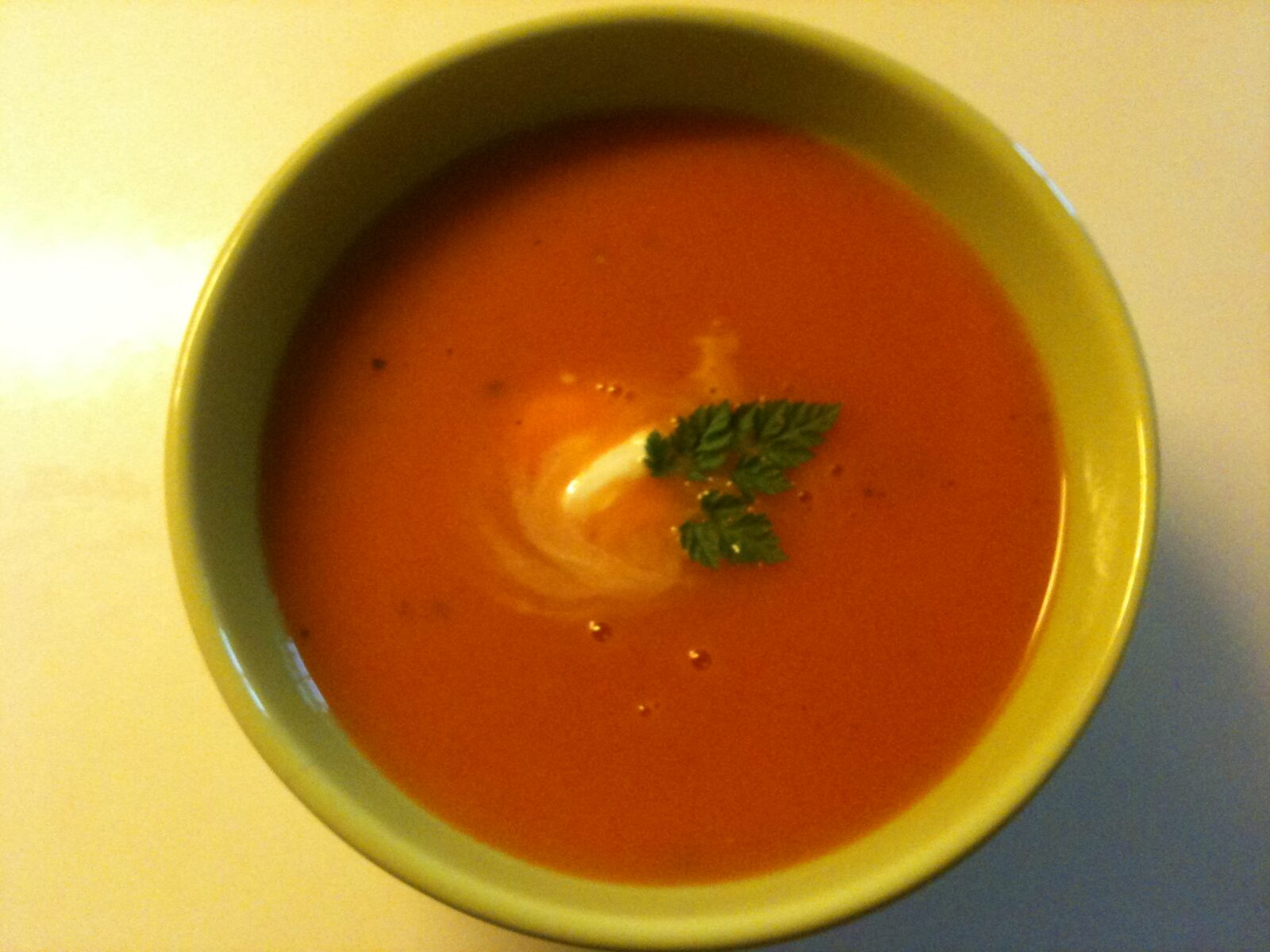
soupe potiron1When the days grow shorter and the nights brisker, one’s thoughts might turn to soup. And not just any soup — a thick, warming kind, like this pumpkin soup. It is both spicy and light, with just a touch of cream. A dash of cumin and squeeze of lemon add an edge to the natural sweetness of the pumpkin. You may prepare this soup using water or homemade broth. It takes just 10-15 minutes, not counting the cooking time (during which you may prepare the rest of the meal, or read a book or some such).

Soupe au potiron / Pumpkin soup

If you don’t have vegetable or chicken broth on hand, begin by making it. The broth recipes are included in today’s soup recipe, and also appear on the site separately in a new category called Basics. Over the next few weeks I will begin adding the main sauces used in French cooking to this category, from salad dressings like mustard vinaigrette to mayonnaise, hollandaise and beurre blanc. Dessert basics like pâte sucrée (sweet pie crust) and meringues will also be appearing in this category. Happy cooking!

Posted in 2. Soups | Tagged , , , | Leave a comment

Clafoutis aux poires

The beauty of the clafoutis is that it is so easy to make. An unpretentious French dessert, it is typically prepared in the spring, with cherries. But why wait half a year to enjoy it? In this late-summer version, pears are first caramelized and then baked in a batter of eggs, sugar, flour and milk. The result, served at tea time or after a meal,  is mouth-wateringly delicious.
Clafoutis aux poires / Pear flan

How this dessert got its name has various interpretations, but the origin that seems most plausible combines a Latin word meaning “to fill” and a French word meaning “to throw everything in.” For that is how it’s made. Once the pears are browning in butter and sugar, you throw the other ingredients into a mixing bowl, stir well and you’re done. A few moments later you have composed the dessert. Barricade your kitchen, because the aroma is so tempting that your entire household will descend on you.

Site news: We’ve been up for four weeks now, and I have to say it has really been fun. If you like the site, please subscribe by email — simply click on the envelope above and you will receive a daily update with a link to the latest recipe. FaceBook subscriptions will also be available soon.
The Everyday French Chef will be back on Monday. Happy cooking!

Posted in Desserts | Tagged , , , , | Leave a comment

Raviolis à la sauge

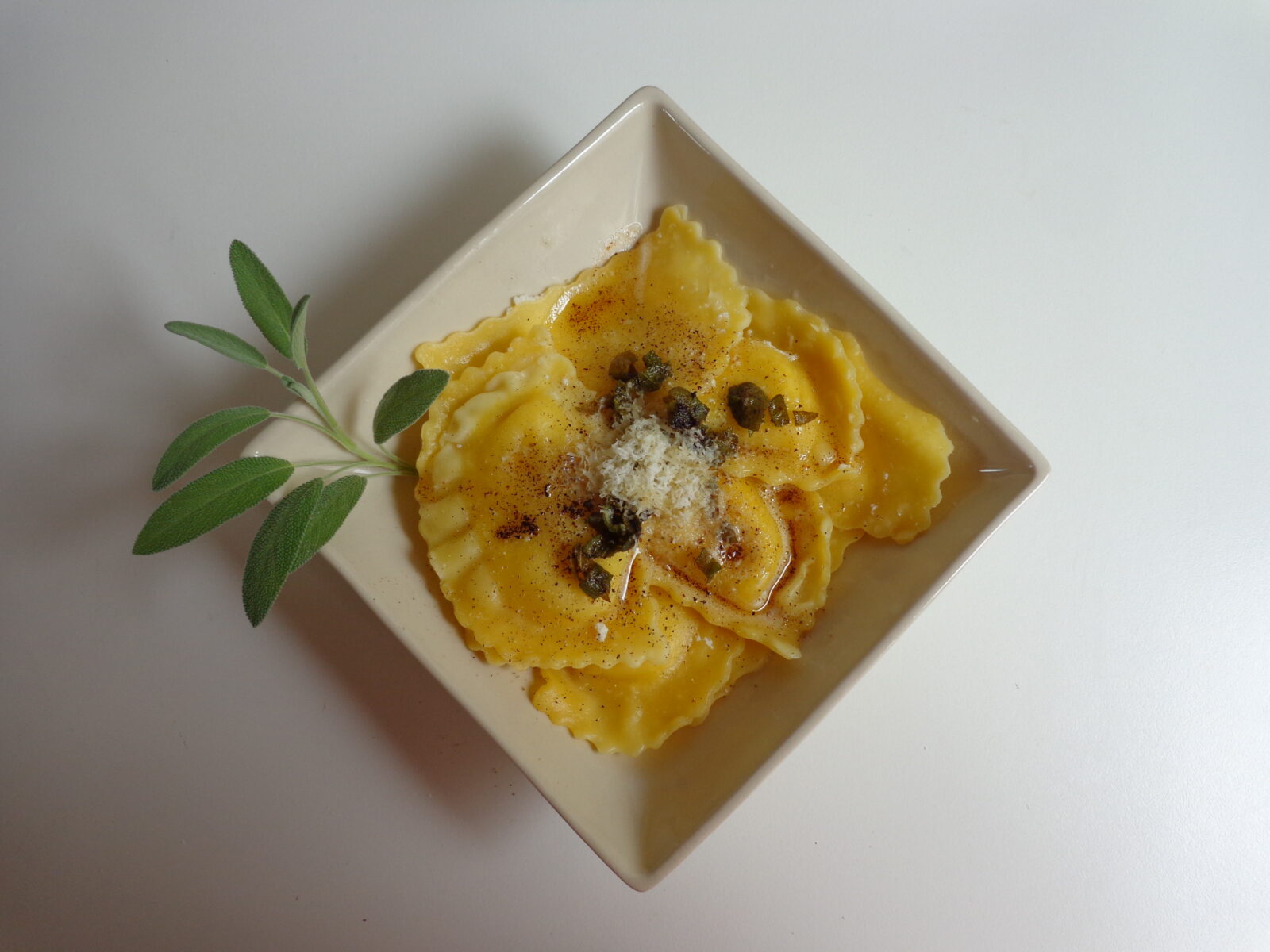
ravioli sage1You’re right, you’re right. This is an Italian dish, not a French one, and more specifically a Tuscan dish — as I discovered one happy summer when some friends and I wandered down a country lane near Montalcino, past vineyards and noble cypress trees, and happened upon an outdoor trattoria  too enticing to resist. There was no menu, only the chef’s selection of the day. When the pasta course arrived — plump cheese ravioli exuding the lusty aroma of sage — we knew that we, too, had arrived at something special.

Raviolis à la sauge / Cheese pasta with sage

This dish is now Parisian as well, and not just because I’ve been making it in my Paris kitchen for the last 20 years. I see it occasionally on bistro menus — hardly surprising, since anyone who has tasted it once will want to try it again and again. If fresh sage is not available where you live, I strongly suggest you invest in a packet of seeds and grow some on your windowsill. It grows easily and hardily. Once established, you will have all the sage you need for the kitchen on a beautiful plant that cloaks itself in purple flowers in the spring. This dish may be served the first course of a large meal or on its own as the main course with a salad on the side.


Posted in 1. Starters, 9. Pasta, Rice, Grains | Tagged , , | Leave a comment

Côtelettes d’agneau au romarin

lamb rosemary2Rosemary grows wild in the hills of southern France, the kind of hills where shepherds still accompany their sheep in a constant search for green pastures. Maybe this is why the flavors of rosemary and lamb marry so well. Whether cooking for one, two or a crowd, this recipe is quick and ultra easy to prepare. One suggestion would be to serve the lamb with a purée of carrots — also easy to prepare and, as my student Louise would say, divine.

Cotelettes d’agneau au romarin / Lamb chops with rosemary
Purée de carottes / Carrot purée

carrot puree1Vegetable purées are served often in French cuisine — in restaurants and at home — and I will be adding many such recipes to this site as time goes on: cabbage, fennel, celery root, to name just a few of my favorites. Their simplicity complements the complexity of meat, but they are also delicious served on their own, with a salad on the side and some cheese to follow. If you would like to serve purées as a main dish, double the recipe.

Posted in 7. Meat Dishes | Tagged , , , , , , | Leave a comment