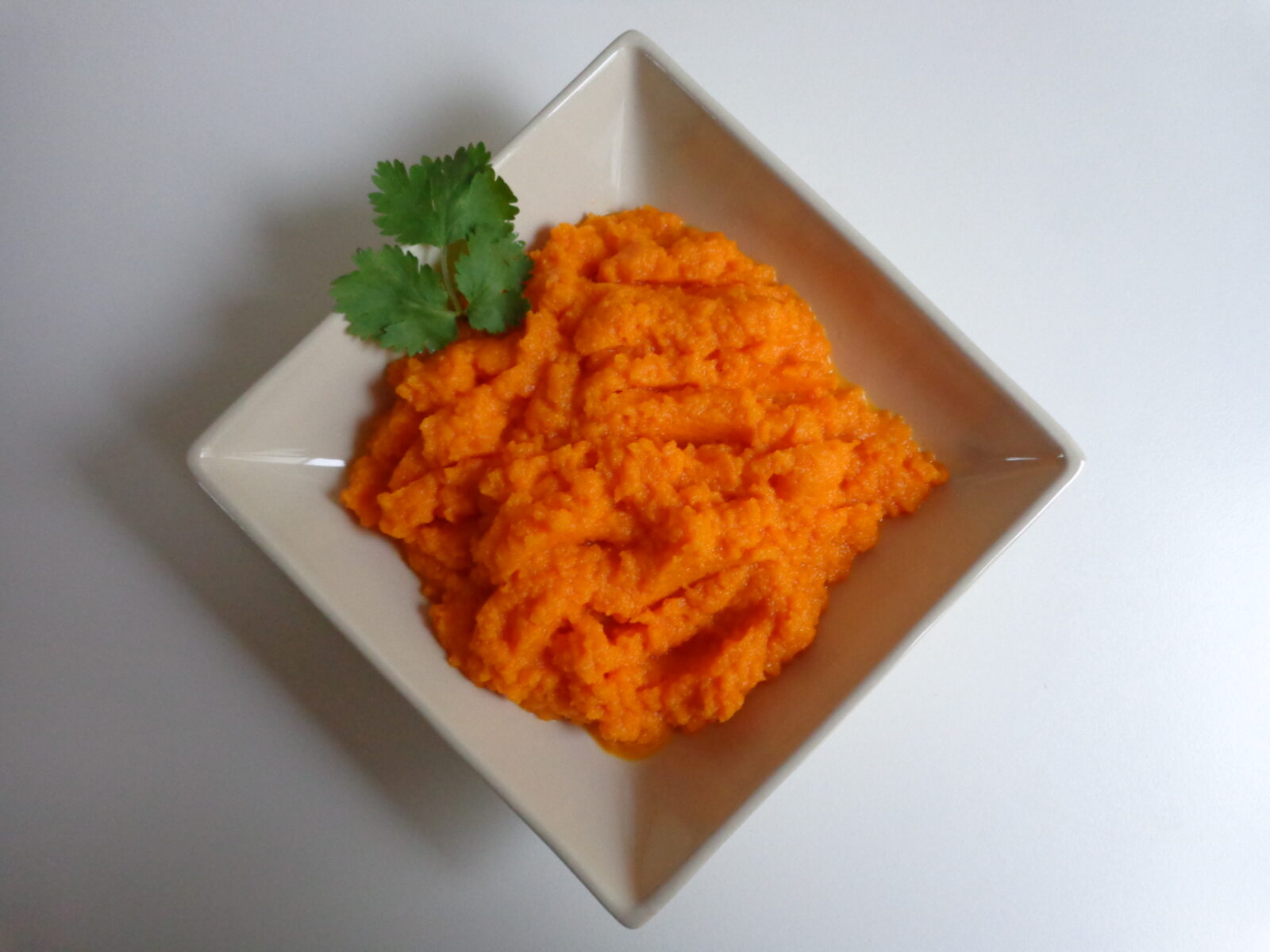
Coquilles saint-jacques au muscat

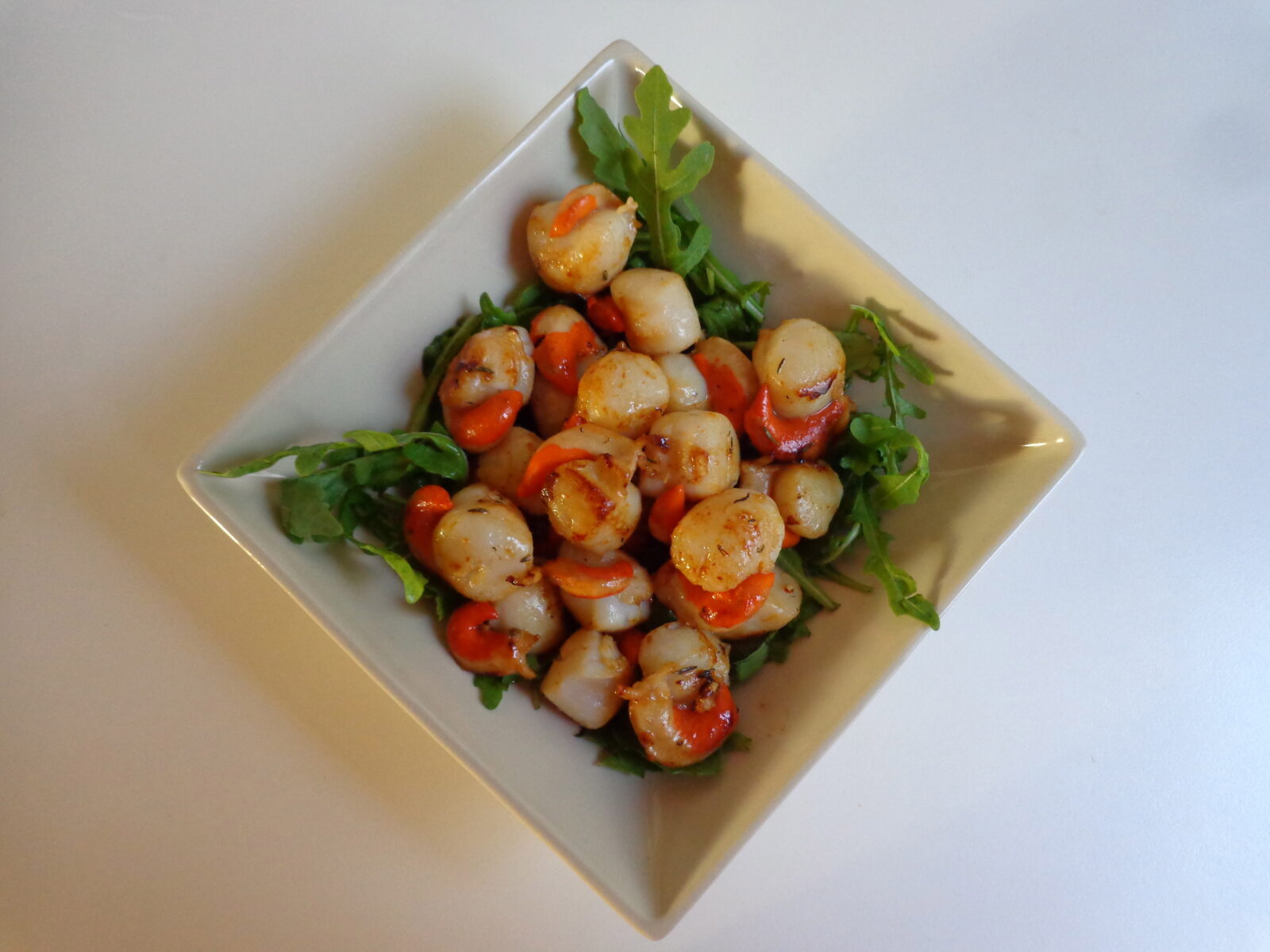
sea scallops1Scallops sautéed to a glorious crispness, their hearts meltingly tender, with the pungency of garlic and thyme infusing a sauce of ethereal sweetness… That is what this recipe produces, and it takes no more than 10 minutes to prepare. Served on a bed of salad greens, it makes a spectacular starter or light lunch dish, and has star quality as a main dish in its own right.

Coquilles saint-jacques au muscat / Scallops sautéed in sweet wine

In former times one had to live near the sea to have access to scallops, but that is no longer the case thanks to the advent of high-quality frozen seafood. The results are almost as good with frozen scallops as with fresh ones, or arguably better if you consider the convenience factor. With scallops in your freezer you can produce this dish at a moment’s notice. As for the vin de muscat — not to be confused with muscadet! — it is a pale yellow sweet wine that has been produced in various regions across southern France since ancient times. My favorite is Frontignan, as much for the beauty of the bottle as for the delicate flavor. If muscat is not available where you live, the recipe works well with any number of sweet wines, from sweet sherry to apple jack.

Posted in 1. Starters, 3. Salads, 5. Fish and Shellfish | Tagged , | Leave a comment

Pâté de foies de volaille au cassis

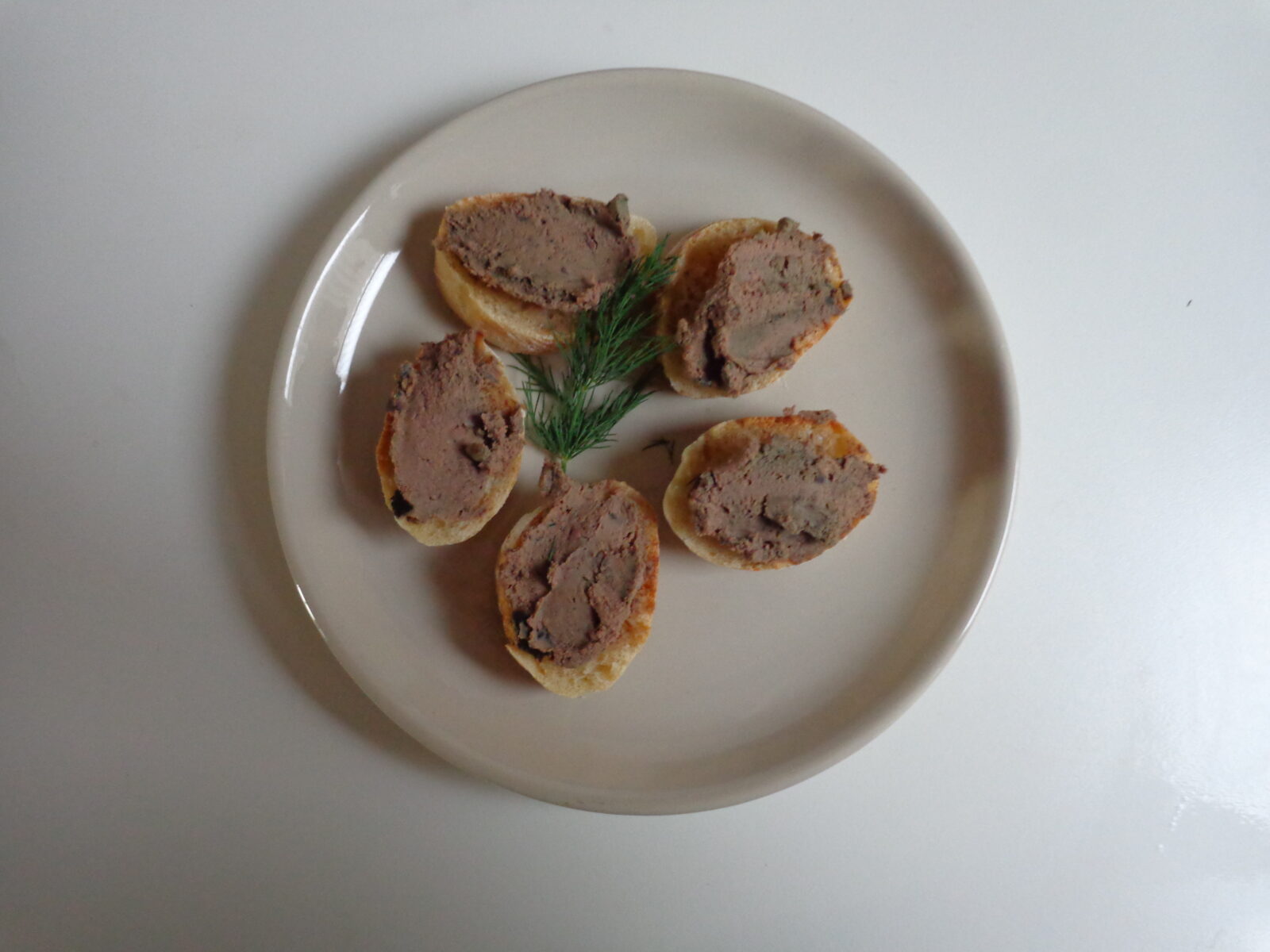
pate with cassis1First, the news. It is now possible to subscribe to this site. To receive daily email updates from The Everyday French Chef, just click the link on the upper right of this page. And now, the recipe. Although pâté is quintessentially French, there are as many ways of making it as there are regions across this multifacted land. This version is unusual in that it is flavored with crème de cassis, the black currant liqueur from Burgundy that is popular over here in the white wine cocktail known as kir. The cassis gives the pâté a slightly sweet tang (no, that’s not a contradiction), as you’ll see if you try it.

Pâté de foies de volaille au cassis / Chicken liver pâté with cassis

More traditionally, pâté is flavored with cognac or port, either of which may be substituted in this recipe with happy results. More variations: add a little fresh sage when you add the thyme, or crumble in a hot cayenne pepper for additional kick. Or, when you’re ready to serve, chop some fresh herbs on top — dill, cilantro and chervil  work well. This pâté is a nice start to a meal served with a little salad on the side, with other hors d’oeuvres, or simply on its own.

Posted in 1. Starters | Tagged , | Leave a comment

Crumble aux myrtilles

blueberry crumble2The crumble may have originated in Britain or Ireland or even America — nobody seems to know for sure — but the French have embraced it so wholeheartedly that it now pops up on menus of Parisian restaurants both humble and grand. Variations created over here include crumbles with everything from veggies to chicken to nuts. The fruit crumble, however, is the origin of the species, and among fruit crumbles, my favorites are with berries — black currants, red currants, blackberries or, as in this recipe, with blueberries.

Crumble aux myrtilles / Blueberry crumble

This is not to discount the evident merits of apple or rhubarb crumble, not to mention peach or plum, which stand out as crowdpleasers in midsummer. But berries retain a seductive musky flavor linked to their woodsy origins. And the berry crumble has another advantage: its simplicity. A child of 10 can easily throw one together, as I learned when my daughter insisted on making one herself a few years back. It took me 10 minutes last night to make the crumble shown above, not counting baking time — 5 minutes for the berries and 5 for the crumbly topping. Try it, and let me know how it turns out.

The Everyday French Chef will be back on Monday. Happy cooking!

Posted in Desserts | Tagged , , | Leave a comment

Poêlée de champignons des bois

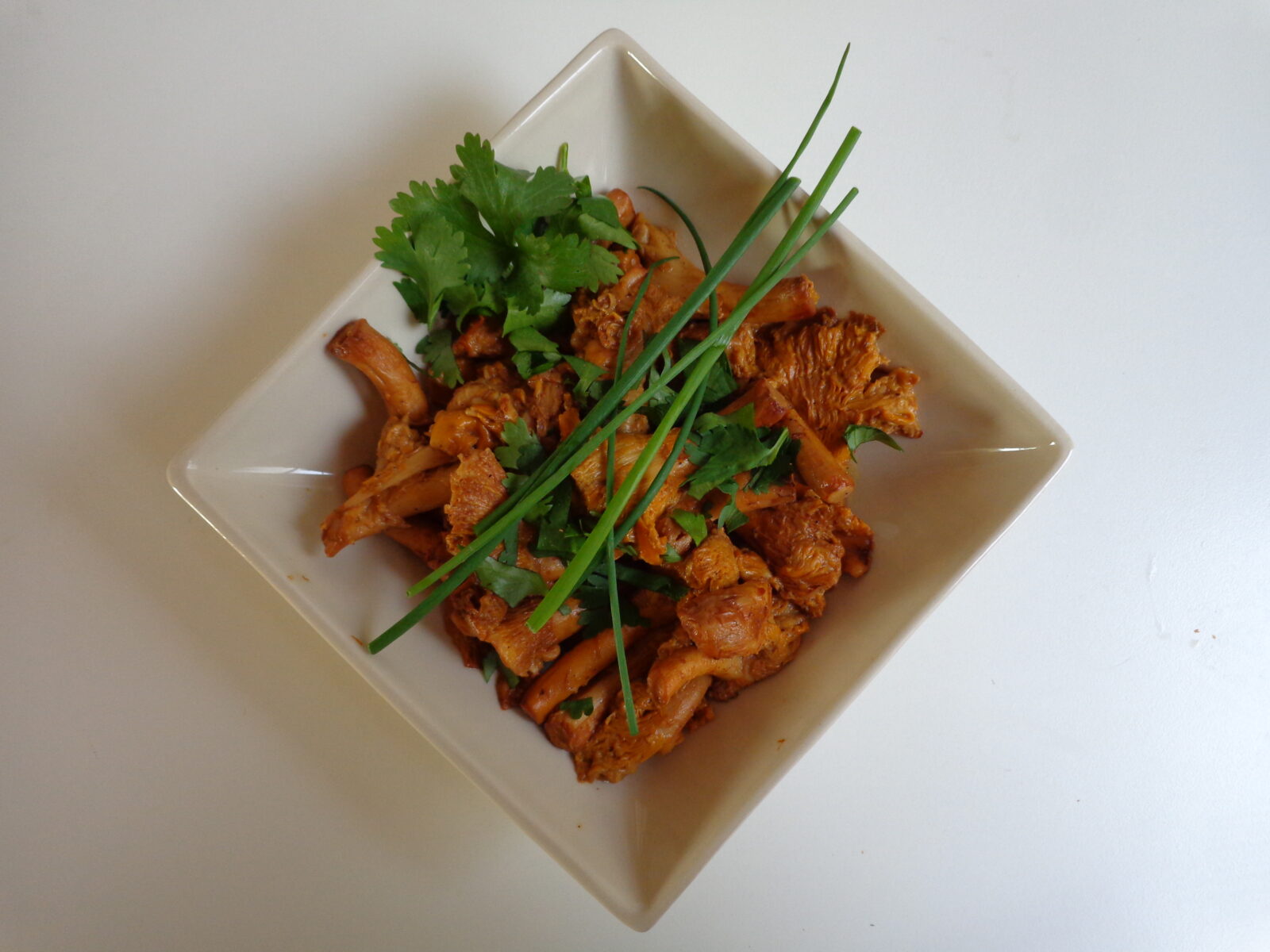
wild mushrooms1I learned this dish many years ago from a French friend who happened to be living in the Périgord region south of Limoges, an area that falls within the northern reaches of Dordogne. First we went out gathering mushrooms in a nearby wood. We were searching for girolles, the bright yellow-orange mushrooms known in English as chanterelles and — my favorite — in Russian as lisichki (‘little foxes’), presumably due to their golden color. We brought the mushrooms home and looked them over. Happily my friend was rather experienced at this and could tell a poison mushroom from a good one. Then quite quickly she cleaned them, sautéed them in olive oil with a little garlic — et voilà! A masterpiece. But I’ve taken liberties with her recipe…

Poêlée de champignons des bois / Wild mushrooms with herbs

After living in France for a while I was sent as a reporter to Russia, where mushroom hunting and eating is a national passion. I fear I was seriously smitten by the Russian taste for fresh herbs, which explains why I have added them to this recipe, along with a spot of cream. Prepared this way, the mushrooms can be served as a warm starter or used to accompany fish, meats, pasta or eggs. My preferred herbs from Russia are dill and cilantro, but this is one dish where you can let your imagination run wild. Try any herbs you happen to have on hand — and let us know how it turns out!

Posted in 1. Starters, 8. Vegetables | Tagged , , , | Leave a comment

Spaghettis aux coques

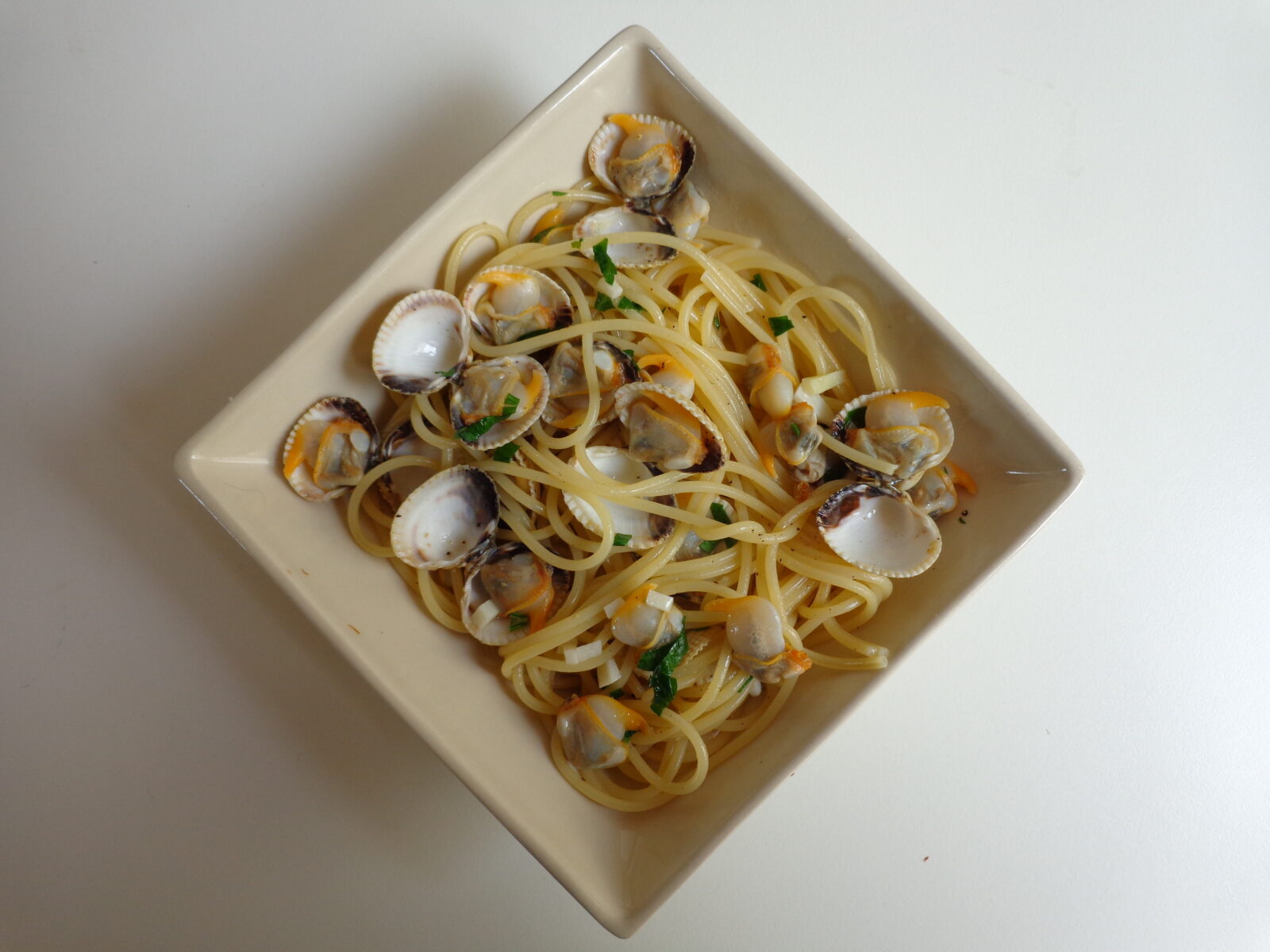
spaghetti clams1This is the French version of pasta alle vongole, the Italian dish that tastes so seductively of the sea. It is made with cockles, which are abundant along the shores of northern France and England, among other places. If they are not available in your region, try substituting other small clams — the smaller they are, the more tender they will be. In this recipe, the cockles are sautéed in butter and garlic, then steamed open in white wine. The cooking goes so quickly that you need to get your spaghetti going before starting with the cockles. When both are done, you combine them together, sprinkle with parsley — et voilà! A delicious meal in less than 15 minutes.

Spaghettis aux coques / Spaghetti with small clams

Now here’s some news about this web site. It’s been up and running for just over two weeks and, having finally managed to get the statistics working, I can happily report that we have reached 150 visits a day. Many thanks to all of you for that. Where are the visitors coming from? Quite a few from Facebook, unsurprisingly. But another group of visitors is arriving via the site of my friend Martin Walker, a journalist turned novelist who spends part of each year in the Dordogne region of southwest France and who has kindly posted a link to ‘The Everyday French Chef’ on his homepage.

Martin’s site, brunochiefofpolice.com, was created in connection with his series of detective novels starring a friendly and canny Dordogne policeman named Bruno — who also loves to cook. The site is full of great regional recipes. I suggest you take a look at the new video showing the TV chef Keith Floyd making a salad with fresh walnuts and hot goose giblets while aboard a small river craft, being buzzed by water skiiers. Very amusing, and the recipe looks great.

The Everyday French Chef will be back on Thursday. Happy cooking!

Posted in 5. Fish and Shellfish, 9. Pasta, Rice, Grains | Tagged , , , , | Leave a comment

Poulet rôti épicé

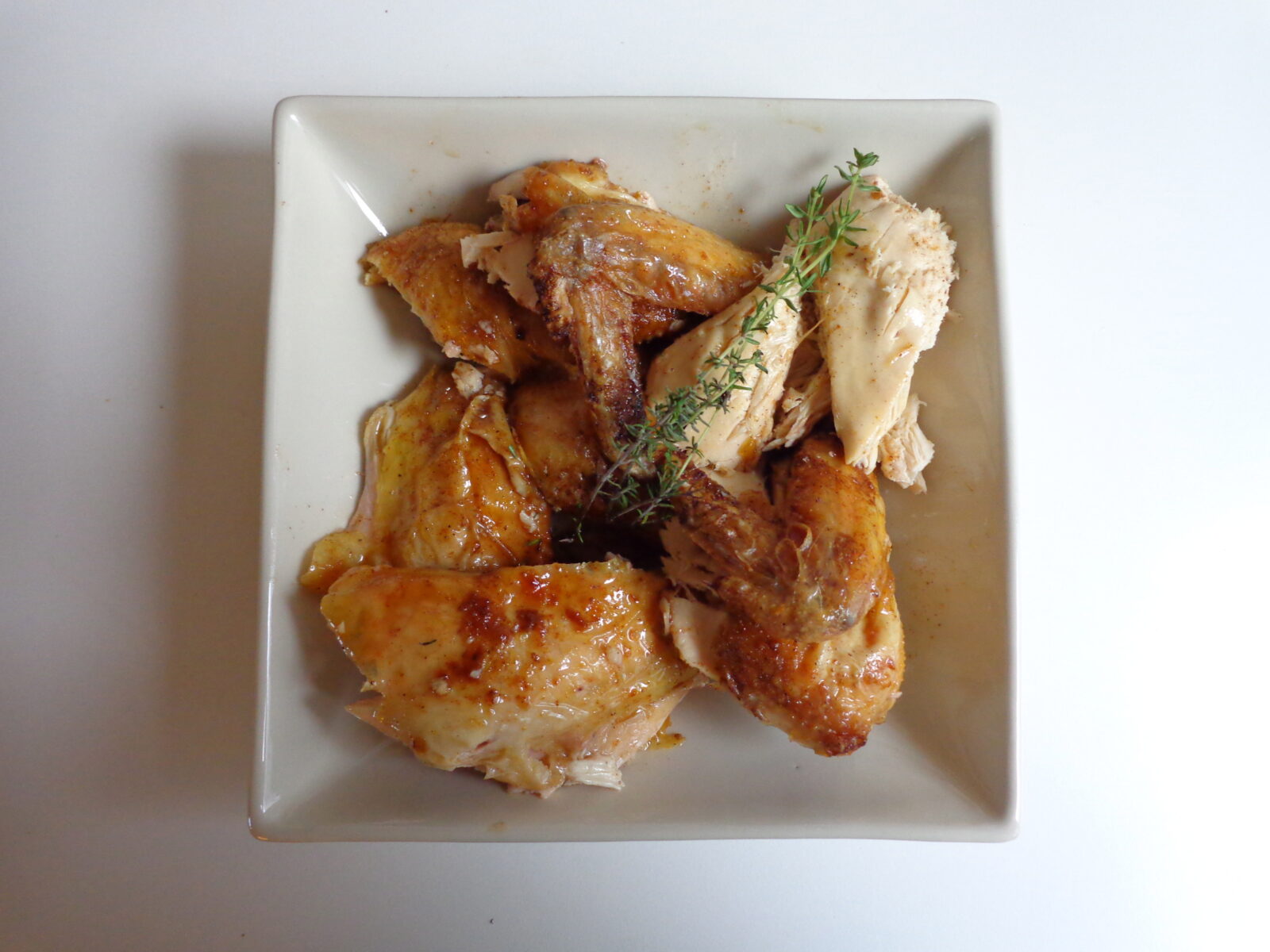
roast chicken 1The evening before I was to teach my first cooking class, I met two French friends for dinner at a Paris bistro. ‘What’s on your teaching menu for tomorrow?’ they asked, and when I replied, ‘Roast chicken,’ they burst out laughing. ‘Everyone already knows how to make roast chicken,’ they smirked, with more than a hint of gallic superiority. ‘Ah, yes, mes amies,’ I replied, ‘but there is more than one way to roast a chicken.’ In this recipe, the chicken is coated with a sauce made of olive oil, cumin and cinnamon before going into the oven. The mouth-watering result will be evident just 15 minutes into the roasting process as irresistible aromas begin wafting through your kitchen.

Poulet rôti épicé / Roast chicken with spices

As I learned when I put on my apron to teach that first class, roast chicken had not been such a bad choice after all. Before we even started with the bird, my students peppered me with questions: What’s the difference between a free-range chicken and an organic chicken? Why are some chickens white and some yellow? The answers, to the best of my knowledge: Free-range birds have access to outdoors, although how much access varies from region to region. Organic chickens are generally free-range and also receive pesticide-free, organic feed and are certified free of antibiotics and hormones. As for the color, white chickens are fed with wheat and yellow chickens with corn — at least in France. Happy cooking!

Posted in 6. Poultry | Tagged , , , , | 3 Comments

Tarte aux quetsches

plum tart2Heralding autumn, the blue plums known as quetsches appear in French markets at this time of year. They are grown mainly in the eastern regions of Alsace and Lorraine, and appear to be related to what the British call damsons. Neither too sweet nor too sharp, they carry an almost nostalgic flavor of summer declining — and make a perfect tart for this time of year.

Tarte aux questches / Plum tart

The pastry for this tart is a classic French pâte sablée, or sweet pie crust, which I learned to make in the 1970s while working at the Café Dewitt in Ithaca, New York. It is quite quick to make once you get the hang of it, and does not need to be rolled out. You simply pat it into your tart pan — et voilà!

The Everyday French Chef will be back on Monday. In the meantime, thanks for your support. And happy cooking!

Posted in Desserts | Tagged , , | 2 Comments

Ratatouille

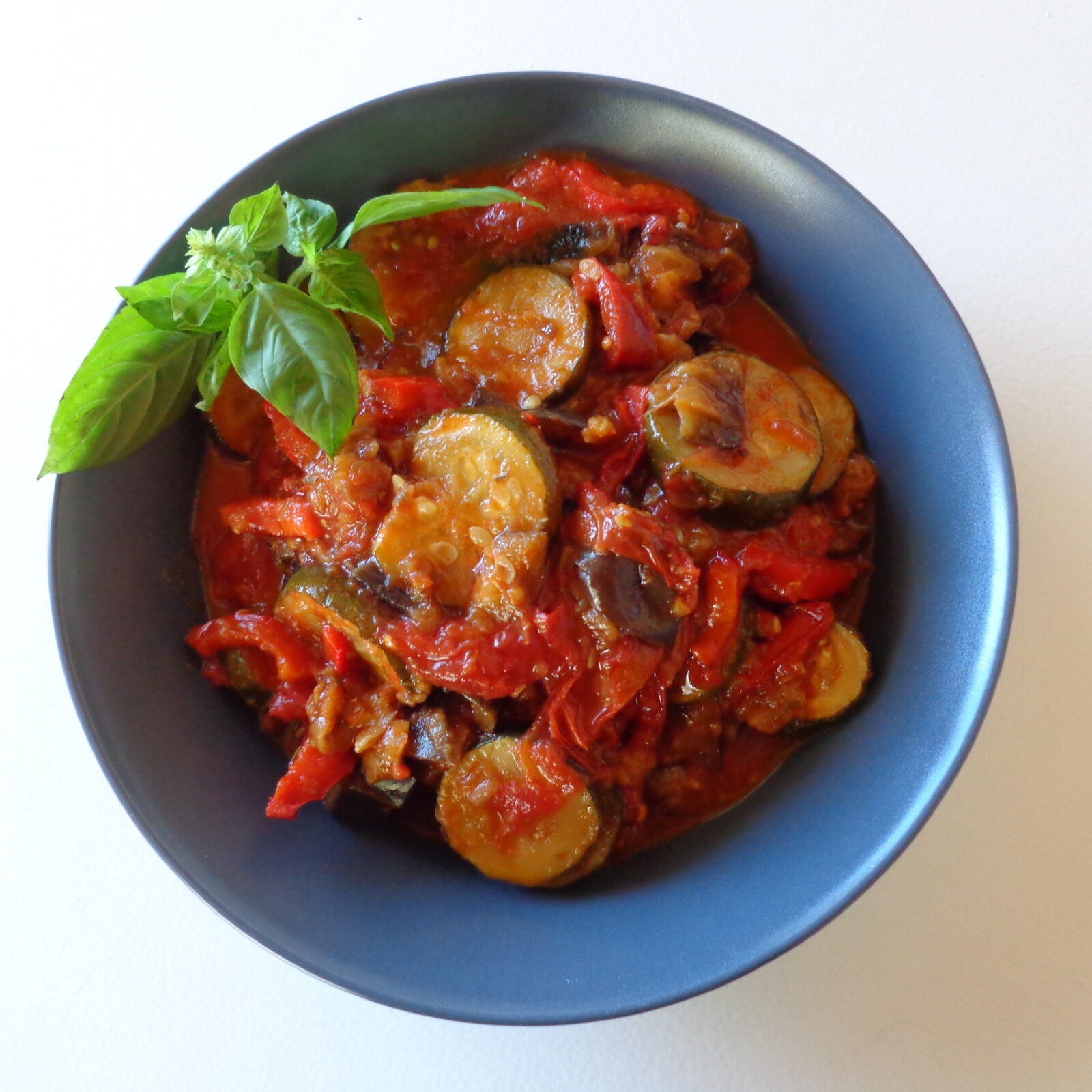
ratatouille2There must be as many ways of making ratatouille as there are chefs in France, for appreciation of this ultraflavorful vegetable stew spread north from Provence long ago. The best I ever had was at lunch at a two-star Michelin restaurant in the lavender-swathed foothills up from the coastal road to Nice. The chef kindly shared her recipe — which I have long since lost — but the key was to cook each ingredient separately before combining them all at the end. According to my Provençal cookbook, Recettes de Provence by Andrée Maureau (Edisud), that is indeed the traditional way of making ratatouille. But for everyday French chefs it is far too time-consuming. This recipe, in contrast, is quick and simple, and practically just as good.

Ratatouille / Ratatouille

Ratatouille is usually served as a hot vegetable dish, but it is also wonderful as a summer salad. To serve it as a first course, sprinkle the ratatouille with a few drops of fresh lemon juice, mix well and spoon onto individual plates atop a bed of lettuce. The essential trick here is never to serve the ratatouille cold. To ensure that you receive the full burst of its fabulous flavor, allow the ratatouille to return to room temperature before serving.

Posted in 8. Vegetables | Tagged , | Leave a comment

Omelette à la sauge

sage omelet1There is an art to omelet making. I learned it long ago at the Café Dewitt in Ithaca, New York, where I had a part-time job as a chef while working on my Masters thesis. The trick is to make the omelet both fluffy and consistent at the same time, airy and yet earthbound. In this particular omelet, the goodness of the eggs is enhanced by the flavor of fresh sage, one of the most sensuous herbs around.

Omelette à la sauge / Omelet with fresh sage

I first encountered the culinary use of fresh sage during a trip to the Tuscan countryside, where a small outdoor restaurant hidden away along an ancient road served cheese ravioli in a sauce of melted butter and sage, topped with grated parmesan. It was so fantastic that we went back for more several nights in a row — and since then I have incorporated sage into my French cooking at home.

This omelet makes a great lunch dish, accompanied by a green salad, some fresh bread and perhaps a glass of wine. To round out a simple meal, serve fresh fruit for dessert. The omelet is quite easy to make once you get hold of the ingredients. If sage isn’t available where you live, you can substitute other herbs, as noted at the bottom of the recipe.

Posted in 4. Omelets, Soufflés, Quiche | Tagged , , , , | Leave a comment

Magret de canard au cassis

duck cassis2This recipe marries two of my favorite flavors — the wild, woodsy taste of black currants and the rich, warm taste of duck. Throw in a little garlic and thyme and you have an intensely satisfying dish for autumn, winter, or in fact any time of year.

‘But wait!’ you may object. ‘What about all that duck fat?’ Yes, it’s true — a duck breast comes with a thick layer of fat on one side, while the other side is lean. The trick is to score the fat with a sharp knife, and to throw off the melted fat as the duck is cooking. This way your sauce will be flavor-packed without being heavy. And you can also — although this is anathema to most French — trim the fat off as you eat the duck. The great thing is that this recipe can be prepared quickly, and if guests are coming you can do it in two stages — the first before they arrive, and the second just before bringing the duck to the table.

Magret de canard au cassis / Duck breast with black currant sauce

Needless to say, this is one of those foods that falls under the heading ‘the French paradox’ —  the way the French stay thin and live longer than the rest of us mortals despite consuming rich foods. In fact, according to official French statistics, life expectancy is higher in the region surrounding Toulouse — in southwest France, where the most duck is produced — than in any other part of the country except the capital.

Another part of the French paradox is that red wine seems to be beneficial to health if one does not overindulge. And duck  pairs beautifully with a glass of the red — from southern France, or anywhere with wine robust enough to stand up to these intense flavors.

Here’s an update about this site, which has received an enthusiastic welcome from readers since it was launched last week. For which many thanks. First, some readers have pointed out that ingredients called for in these recipes are not available where they live. What is to be done? Later today I will add a new category to the menu bar, Ingredients, with advice on which food products to choose and what to substitute if you cannot find certain items. Second, while I am still experiencing some technical difficulties, the RSS feed on this site appears to be working. If you’d like to receive a daily alert telling you which recipe has been posted, simply click on the ‘Entries RSS’ line toward the bottom of the right-hand column on this page and sign up. I hope to have an RSS icon on the top of the page in the near future. Happy cooking!

Posted in 6. Poultry | Tagged , , , , , | Leave a comment