Salade d’épinards aux oeufs et oignons rouges

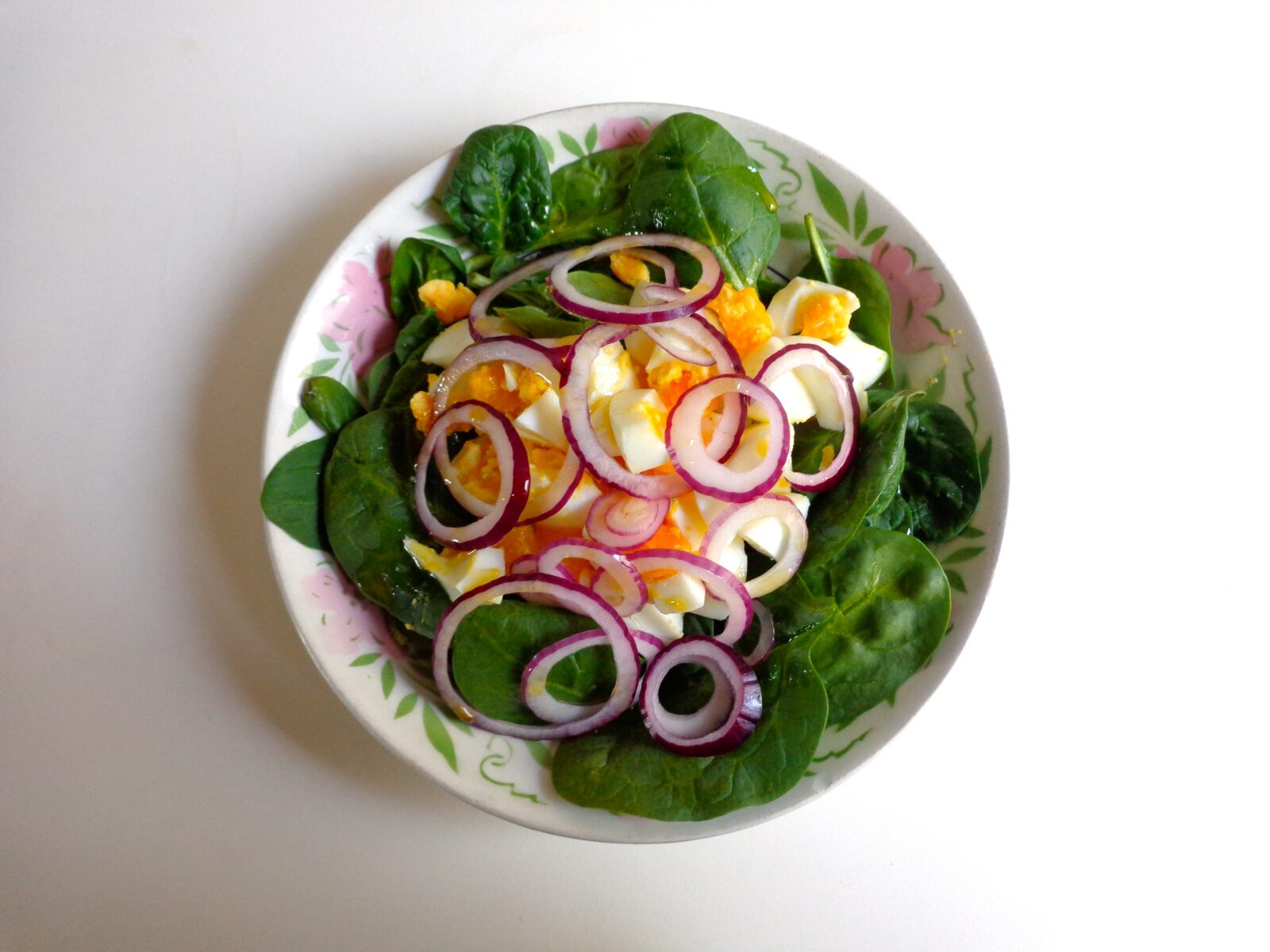
spinach egg6Egg salad with onions and mayonnaise — des oeufs à l’oignon — is a dish often served among the French Jewish community. This is most likely due to the Polish or Russian origins of many French Ashkenazi Jews. I first encountered the dish at the home of my boyfriend many years ago, and found it a delicious variation on the egg salad with celery and mayo I had known growing up in the States. But times have changed and many people prefer their egg salad lighter these days. In this version, the eggs are chopped, placed on a bed of tender spinach leaves, and seasoned with red onion rings, lemon and olive oil.

Salade d’épinards aux oeufs et oignons rouges / Spinach salad with egg and red onions

The charm of this salad lies in its simplicity. It can be prepared at a moment’s notice, in any season. It makes a lovely lunch dish, served with toast or Russian-style black bread, and can be enhanced by any number of side dishes — soup, thin-sliced country ham, a cheese plate, or another salad. For a festive touch, sprinkle some red caviar over the top. Or place some fresh herbs on the side for a burst of extra flavor.

As an everyday chef, I have nothing against packaged baby spinach leaves, or other greens, which are pre-cleaned and sorted and thus far easier to use. If instead you buy your spinach at the market, wash it at least twice to remove all the sand. And by the way, if you prefer you can use a different sort of tender leaves: arugula, baby chard, curly endive, Belgian endive or lamb’s lettuce are some of the possibilities.

There is finally a scent of spring in the air here in Paris, and new vegetables and fruits are poking up here and there at the markets. Last weekend I bought my first fresh peas of the season (imported from Morocco), and walked past stands of brilliant red strawberries, withstanding temptation only due to the high price. The flower sellers are offering small pots of narcissus, hyacinth and amaryllis, which you can take home to provide an early touch of springtime. It’s cheery after the long, gray winter. Here’s wishing you all a beautiful early start to spring on Valentine’s Day, with hearts, flowers and sweetness.

Happy cooking!

Posted in 3. Salads | Tagged , , , , | Leave a comment

Gâteau de fête au chocolat

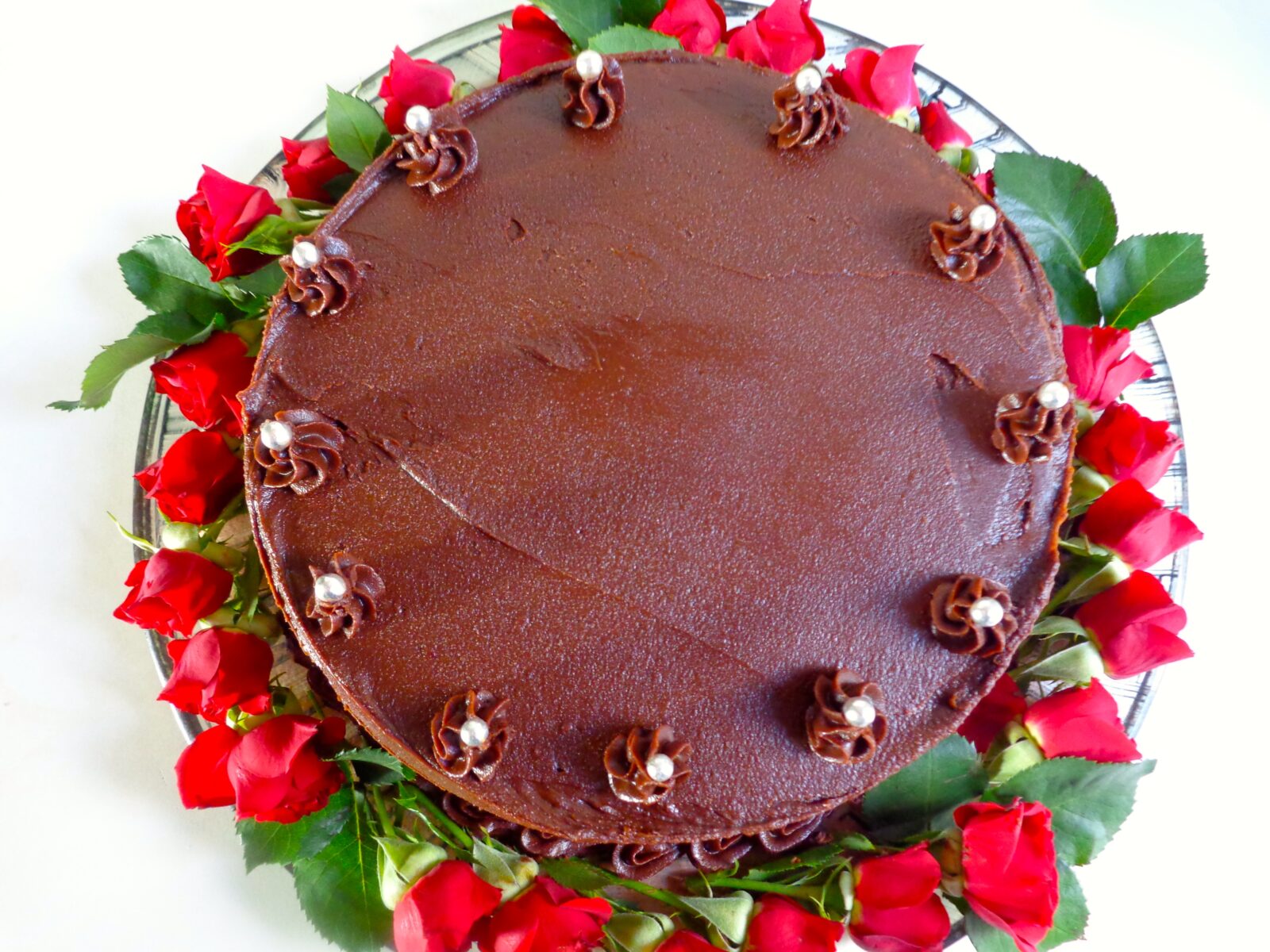
chocolate cake6Valentine’s Day is coming, and what better way to express your love than a magnificent chocolate cake decorated with hearts or flowers? This is not an everyday recipe — it does take time. But it’s fun. The cake, a chocolate genoise, can be assembled in many forms. You will be both architect and artist as you build a structure, coat it with glossy buttercream icing, and decorate it at your whimsy to make a one-of-a-kind creation.

Gâteau de fête au chocolat / Decorated chocolate cake

I first began making this cake when working as a chef at the Café Dewitt in Ithaca, New York. Over the years, I’ve created birthday cakes, wedding cakes, a cake in the shape of a house for a friend’s moving-in party, a cake in the shape of a heart one Valentine’s Day (for the house, use a rectangular pan; for the heart, use one square pan and one round pan of the same diameter, cutting the round in two and placing the half-circles on two continguous sides of the square). I think my masterpiece was a wedding cake with nude bride and groom sculpted out of tinted almond paste, lying in a jungle setting…

The cake pictured above was made recently for the 45th wedding anniversary of some friends here in Paris. It’s amusing to watch as the guests attack the cake — sometimes layer by layer, but sometimes they go straight on through to get multilayer slices. The cake is sprinkled with cognac inside, and the layers spread with both jam and icing. If kids are involved, you can skip the cognac. For birthdays, try to find long, thin candles, which make a spectacular impression placed close together around the top of the cake.

chocolate cake4One unusual way to decorate such a cake is with fresh flowers. I’m a fan of roses, but have used many other varieties according to the season. For greenery, you can add some fresh herbs — sage, for example — or snipped pine branches at Christmas time. The one thing I can guarantee is that you will enjoy yourself as much as the contented recipients of your creativity. Happy cooking!

On a different subject, I shop every Sunday at a street market near my home that is one of the best in Paris. For a colorful description, see this recent blog post by my friend Adrian Leeds, a regular chronicler of things Parisian, whose recent trip to the market in search of artichokes makes a fun read.

Posted in Desserts | Tagged , , , , , , | 2 Comments

Légumes d’hiver rôtis

roasted winter veggies3The succulent aroma of roasting root vegetables is so enticing that it may have you wanting to take them out of the oven too soon. But the key to this recipe is a long roasting process that leaves the veggies both caramelized and meltingly tender. A fine antidote to the bleak end-of-January weather here in Paris in which the sky seems to weep with longing for spring.

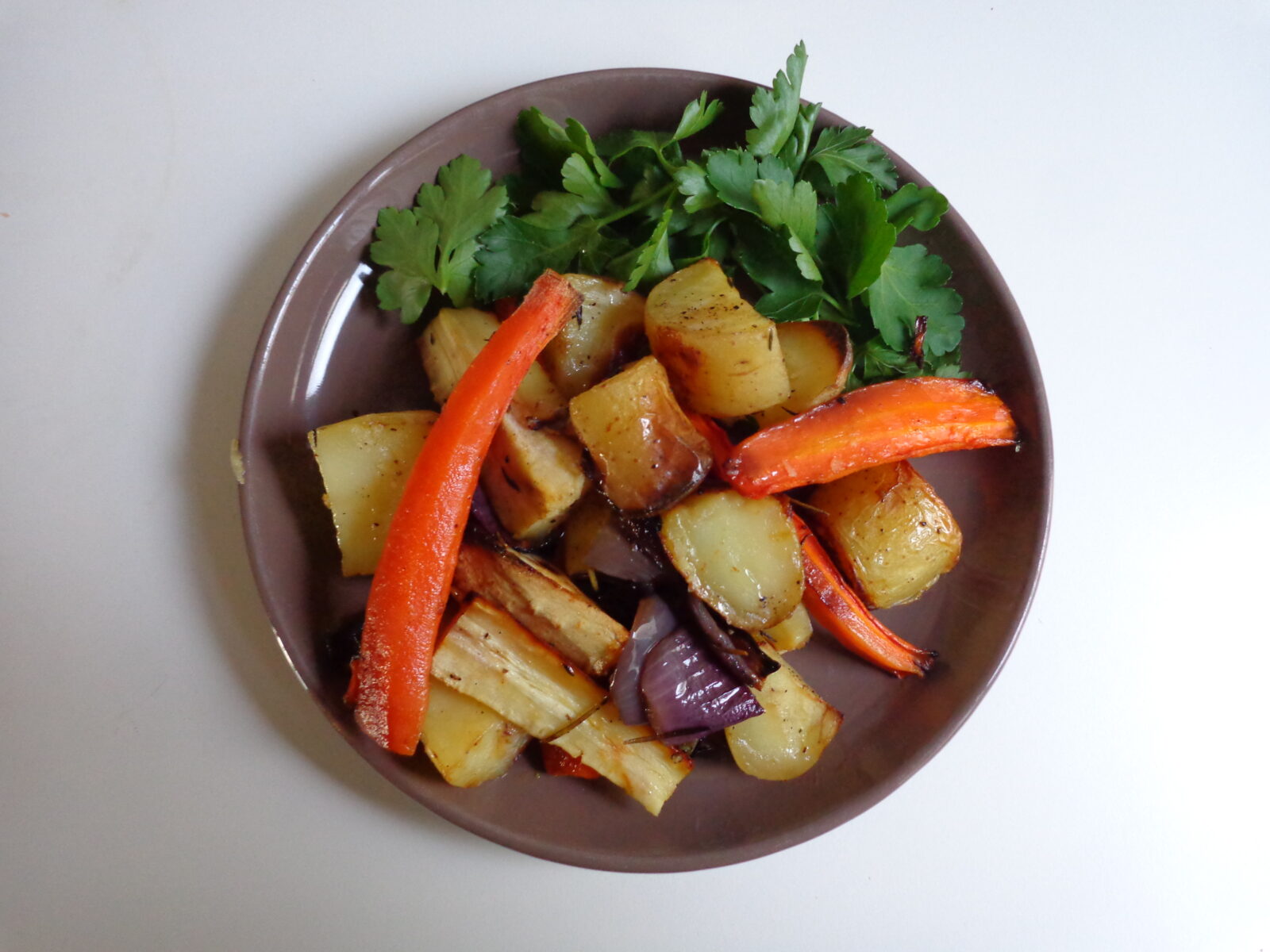
Légumes d’hiver rôtis / Roasted winter vegetables

This is a versatile dish that can combine whatever vegetables you may have on hand at the moment. In the version pictured above, carrots, parsnips, red onion and potato make a succulent mix. Another combination might be celeriac, finocchio, garlic and pumpkin. Preparation is ultrasimple — pare the veggies, drizzle with olive oil, sprinkle with rosemary or thyme, grind on some black pepper, and prepare for pleasure.

Root vegetables are among the oldest foods consumed by humanity. Tens of thousands of years ago, our forebears in Africa used digging sticks to get them out of the ground. Full of healthy vitamins and minerals, and packed with slow-burning energy power, they have been bred over the centuries to take on the shapes and colors we recognize now. But what goes around comes around. Wild carrots, for example, came in tones of white and purple before being bred to become the familiar orange of today. But now, at my local farmers’ market, new varieties in purple and yellow are being sold — for higher prices than orange — as the trend in ‘heritage’ vegetables gathers steam.

When not in the kitchen, I’m working on a project about the deep past of humanity — a time when there were no ovens and cooking was done over an open fire. It’s lovely to imagine our early ancestors foraging for early versions of the vegetables in this dish and roasting them however they could to come up with a similar creation — guaranteed to take the chill off a winter’s day and elicit murmurs of satisfaction when served. Happy cooking!

Posted in 8. Vegetables | Tagged , , , , , , | 3 Comments

Brandade de morue

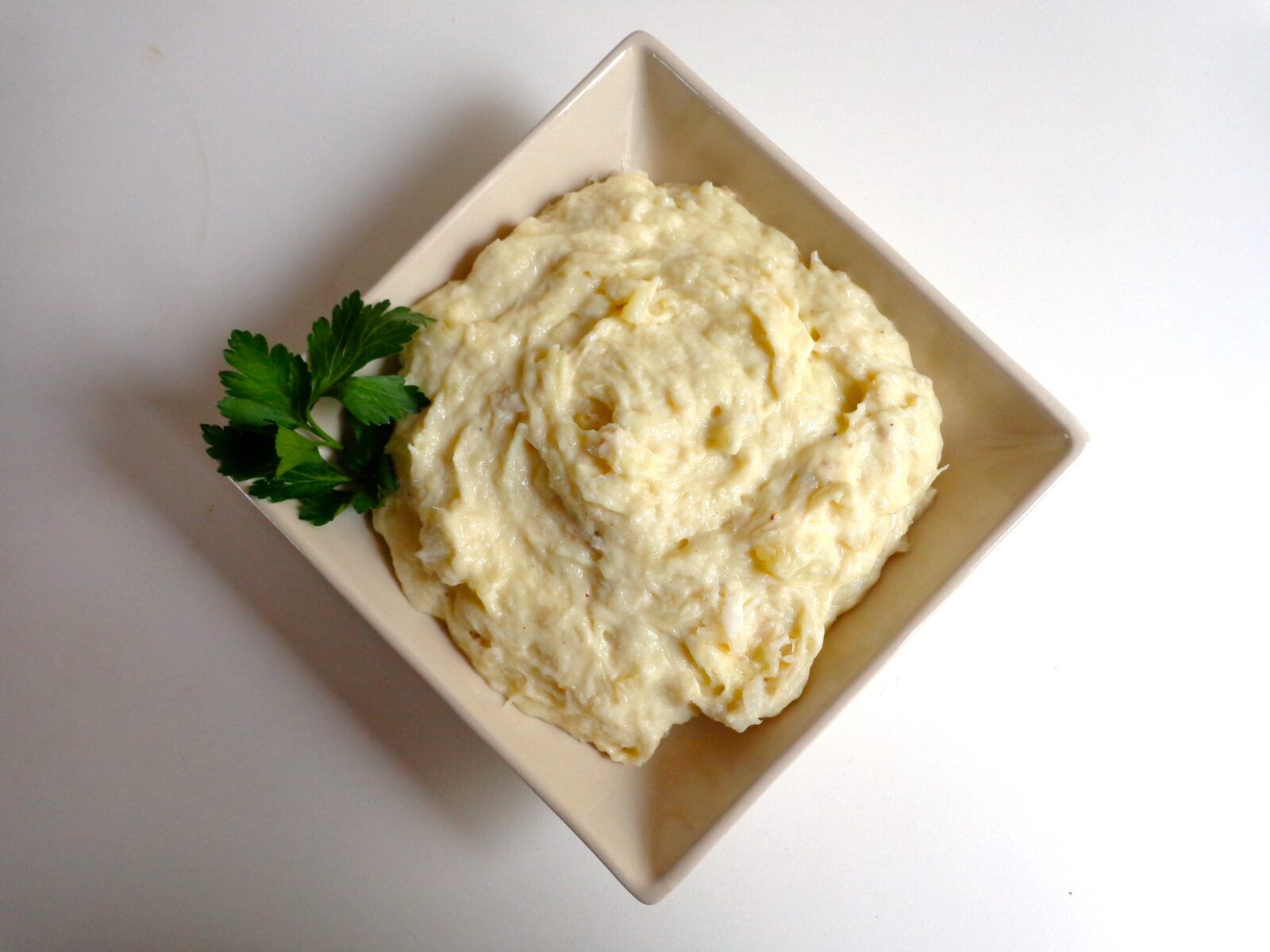
brandade2How to reconcile brandade de morue, one of my favorite winter dishes, with the modern era? A sublimely satisfying purée of salt cod, garlic, olive oil, and milk or cream, with or without potatoes, it has traditionally involved 24-36 hours of desalinating the fish and the use of a mortar and pestle to achieve the final blending. Not ideal for an everyday French chef who may be pressed for time. But now, with the wide availability of fresh cod and the use of an electric blender, making a fine brandade can be both easy and quick.

Brandade de morue / Pureed salt cod and potatoes

But will it still be a classic brandade? In fact, there is no such thing. As Andrée Maureau, author of Recettes de Provence, puts it, ‘Each home has its secrets.’ In the south of France, where salt cod has been a staple for centuries, truffles are often added to brandade. Sometimes garlic is used, sometimes not. Potatoes are controversial. But here in Paris, truffles are rarely seen in brandade and potatoes are almost universally included. In my recipe, I use milk instead of cream to cut down on the richness of this hearty dish.

Brandade may be served either as a starter or a main dish, accompanied by a salad and a crisp white or rosé. It may be prepared in advance and reheated just before serving. Triangles of toasted white or country bread, sometimes rubbed with garlic, are often tucked into the sides of each shallow bowl of brandade. In France, frozen desalinated salt cod is now available — this lends an authenticity of flavor to the dish, while cutting down hugely on the work involved. But I have also made brandade successfully many times using fresh cod, with the addition of sea salt to approach the traditional flavor.

On a separate front, a reader wrote in a few days ago to ask about the order of dishes in a classic French meal. Briefly, the traditional order is: starter, main course, salad, cheese, fruit and/or dessert. I will be posting about this at greater length in the near future. In the meantime, the Menus section above provides many suggestions for seasonal meals, including the order of dishes to be served. Happy cooking!

Posted in 5. Fish and Shellfish | Tagged , , , , | Leave a comment

Rôti de boeuf

rosbif1The French roast their beef astoundingly quickly. The first time I bought a roast in Paris — where it’s customary to ask the butcher about the cooking time — I nearly fell over when he said to preheat the oven to a high temperature and roast the beef for 10 minutes. And yes, roast beef is consumed very rare in France. But that sounded ridiculous! Over time, however, I have come to appreciate the French method of cooking what is called le rosbif.

Rôti de boeuf / Roast beef, French style

The dish that results from this almost Tandoori style of roasting is crisp on the outside and succulent on the inside. It’s true that I extend the cooking time by about 5 minutes per pound in order to achieve a roast that is rare to medium rare, and not bleu (extremely rare), the way many French diners prefer it. Accompanied by a potato gratin and a green salad, it makes a meal fit for the royals who were overthrown in the French revolution. Or you can serve it cold with homemade mayonnaise for a delightful lunch or supper.

For the last week, in a welcome distraction from the wave of terrorism here in Paris, I have been attending a seminar on paleo food — and by this I mean not the current trendy variety but the kind of food that was eaten by our ancestors in the Upper Paleolithic, or late stone age. And, as it turns out, roast beef or a variety thereof is perhaps one of the oldest dishes that our species, homo sapiens sapiens, has enjoyed. They hunted the aurochs, an ancestor of the cow, with increasingly sophisticated stone tools, and roasted the meat on a spit over a fire, or so I was told. As the class was in French, we were learning about the earliest modern humans who inhabited this part of the world — making it safe to say that le rosbif is truly a French classic. Its name, of course, is a tip of the hat to their neighbors across the Channel, the English, also known here informally as les rosbifs

With regard to last week’s post, I’d like to thank all of you who wrote in to express your concern and support regarding the events in Paris. I took part in the march of more than a million people here on Sunday, a moment of amazing solidarity. Things have calmed down in recent days, although this morning there was a bomb alert at the Gare de l’Est, the railway station from which trains leave for eastern France and much of eastern Europe. This atmosphere has put everyone on edge. But I find that going into the kitchen to do something creative is a great antidote.

Happy cooking.

Posted in 7. Meat Dishes | Tagged , , | 2 Comments

Crevettes mayonnaise

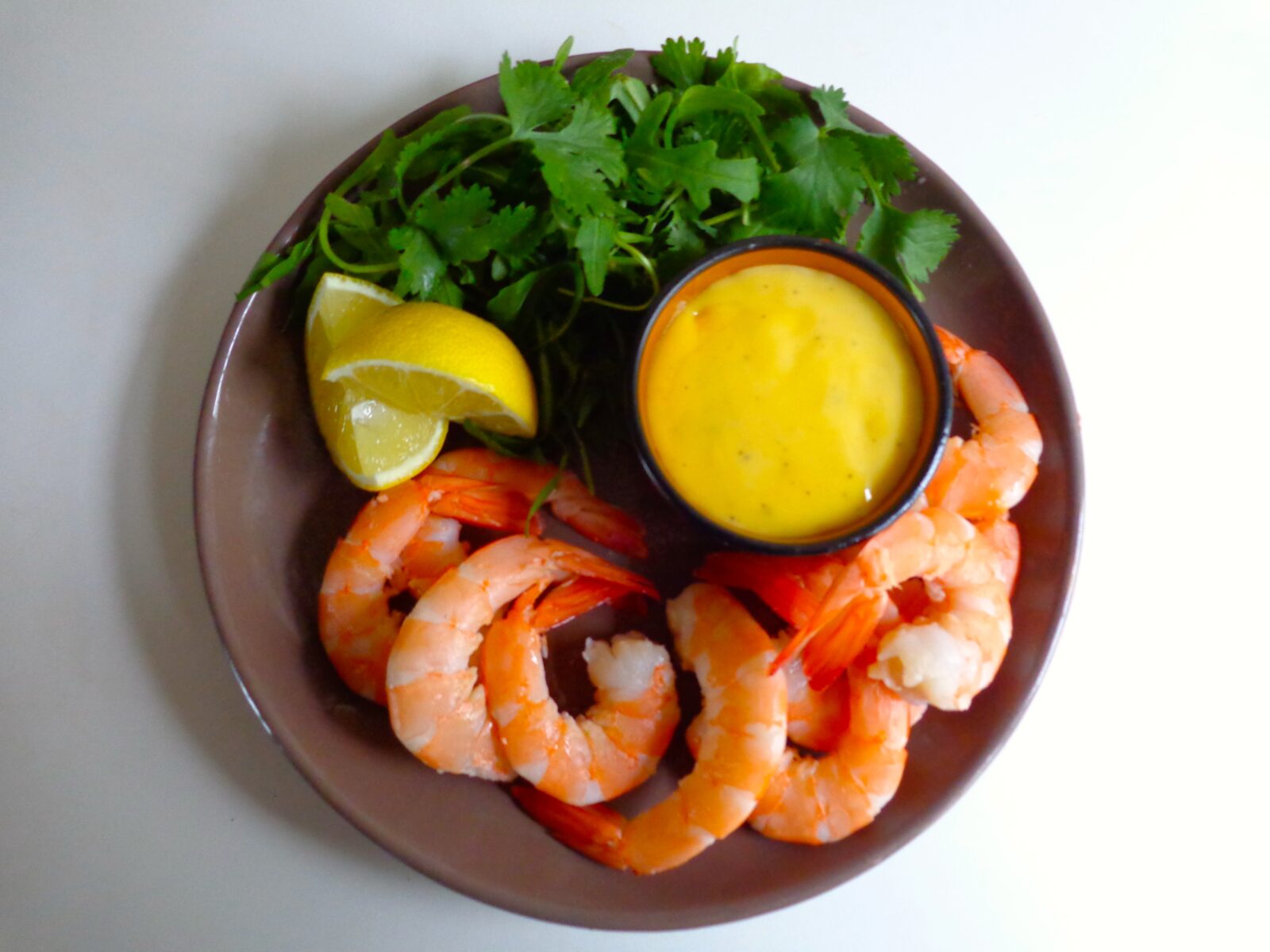
shrimp5I first enjoyed a significant French seafood platter in a small seaside town in Normandy during a romantic weekend. The three-tiered tray came to our table brimming with oysters, clams, sea snails, shrimp and a crab set on ice, accompanied by lemons and homemade mayonnaise. It took quite a while to make our way through all of that, and I have to say it was, well, erotic. Concocting such a tray at home might be difficult, but one element — shrimp with homemade mayonnaise — can be fun for the everyday chef.

Crevettes mayonnaise / Shrimp with homemade mayonnaise

If you’ve never made mayonnaise before, let me assure you that it’s far easier than you may think. Before beginning, you might want to check out this video. It was produced by Tom Feierabend, a fellow American in Paris, who like me lives just around the corner from the site of the deadly attack this week on Charlie Hebdo. (And yes, the rest of this post will be about politics, so if you are not interested in that subject please don’t read on.)

It’s too much of a challenge to write about food at a time like this, when all of France is convulsed by the violence of recent days. This morning there have been new developments as the police home in on the gunmen who massacred some of France’s most beloved cartoonists on Wednesday, shouting Allah Akbar. The gunmen have taken one person hostage and are believed to be holed up in a print shop in a rural area northeast of Paris, according to French press reports.

On a personal note, my daughter and I live two minutes by foot from Charlie Hebdo offices that were attacked on Wednesday, and the metro she takes to high school is a stone’s throw from where the violence took place. I am traumatized, of course, like the rest of this nation, but at the same time feeling proud to be among a population that has shown such resilience in the face of national tragedy. I’ve been writing at greater length about the recent events on Facebook. Here’s a link to my page if you’d like to read more.

Just one final thought for you here, dear readers: Vive la liberté, et vive la France.

Posted in 1. Starters | Tagged , , , , | 7 Comments

Potée auvergnate

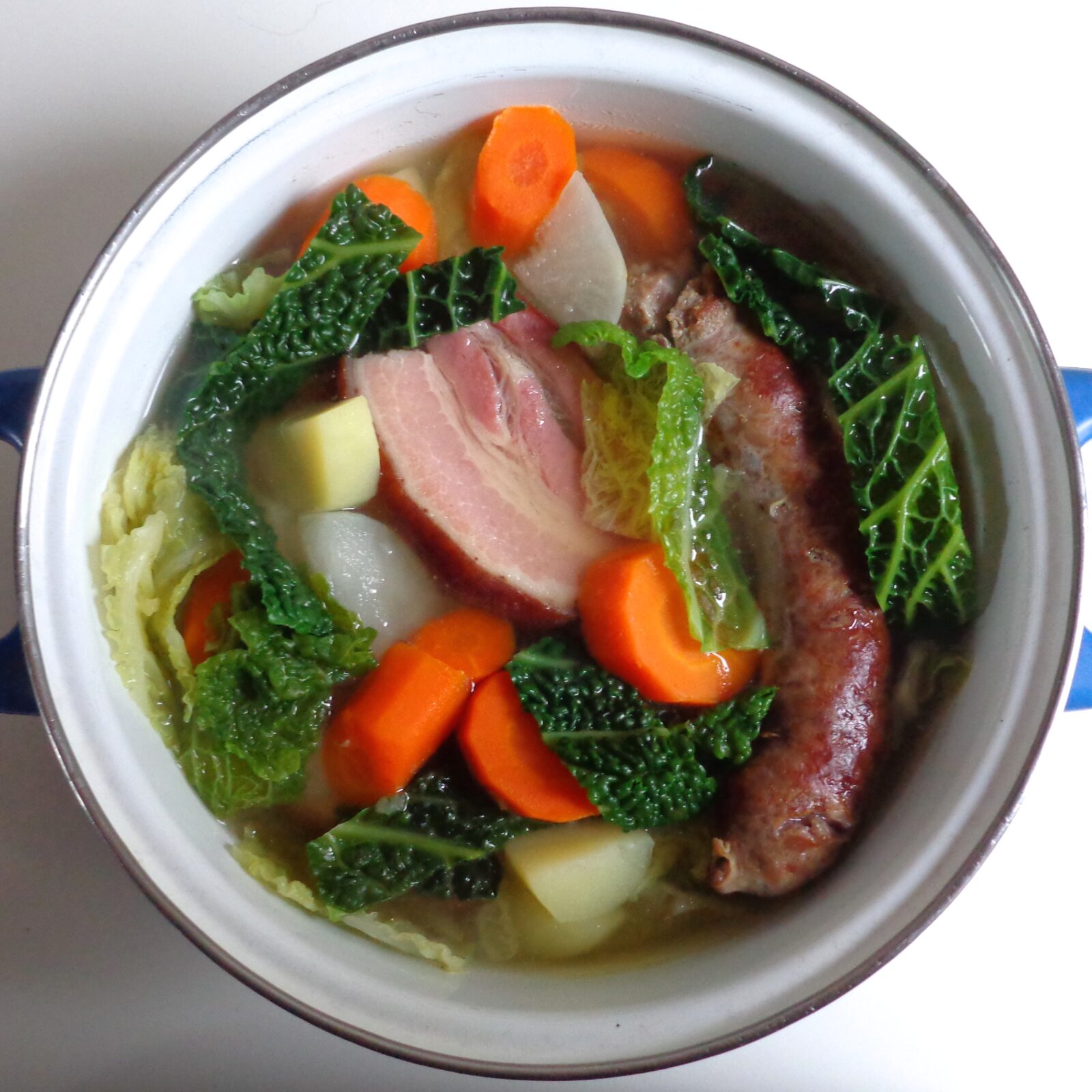
potee4Now that the festivities are behind us, it’s time to get back to simple everyday food. Like this hearty dish from the Auvergne region of central France. Known as potée — literally, a potful — it combines winter vegetables with sausage and bacon to make a satisfying one-dish meal. Enjoyed fireside with a glass of good red, it will help fend off the January cold.

Potée auvergnate / Hearty winter soup from Auvergne

You will need only a green salad and wedge of cheese to complete your meal — perhaps some Cantal, which hails from the Auvergne region. (If you have never encountered Cantal, it is slightly crumbly like aged Cheddar but with a different taste.) Or a wedge of bleu cheese, another Auvergne speciality.

The region, which sits right in the center of the southern half of France, is rugged and mountainous, dotted with extinct volcanoes known in French as puys. Sparsely populated today, it has been inhabited for 15,000 years and was home to Gallic kings like Vercingétorix until Julius Caesar conquered Gaul in 52 B.C. The Auvergne also has the dubious distinction of having housed the collaborationist government of Philippe Pétain at the city of Vichy during France’s occupation by the Nazis in World War II.

But what has all this to do with food? I love the cuisine of Auvergne for its frank simplicity and its peasant roots. It is an earthy cuisine with plenty of character, as shown for example in the dish called aligot, a zingy blend of mashed potatoes, young Cantal and garlic (a family favorite). Auvergne is also renowned for its cured sausage and ham, and beyond la potée many other dishes feature cabbage, including a local recipe for stuffed cabbages that I plan to feature here one day or another.

So, on that note, here’s wishing you all a simple, earthy and delicious new year. Happy cooking!

Posted in 2. Soups | Tagged , , , , , , | 2 Comments

Blini

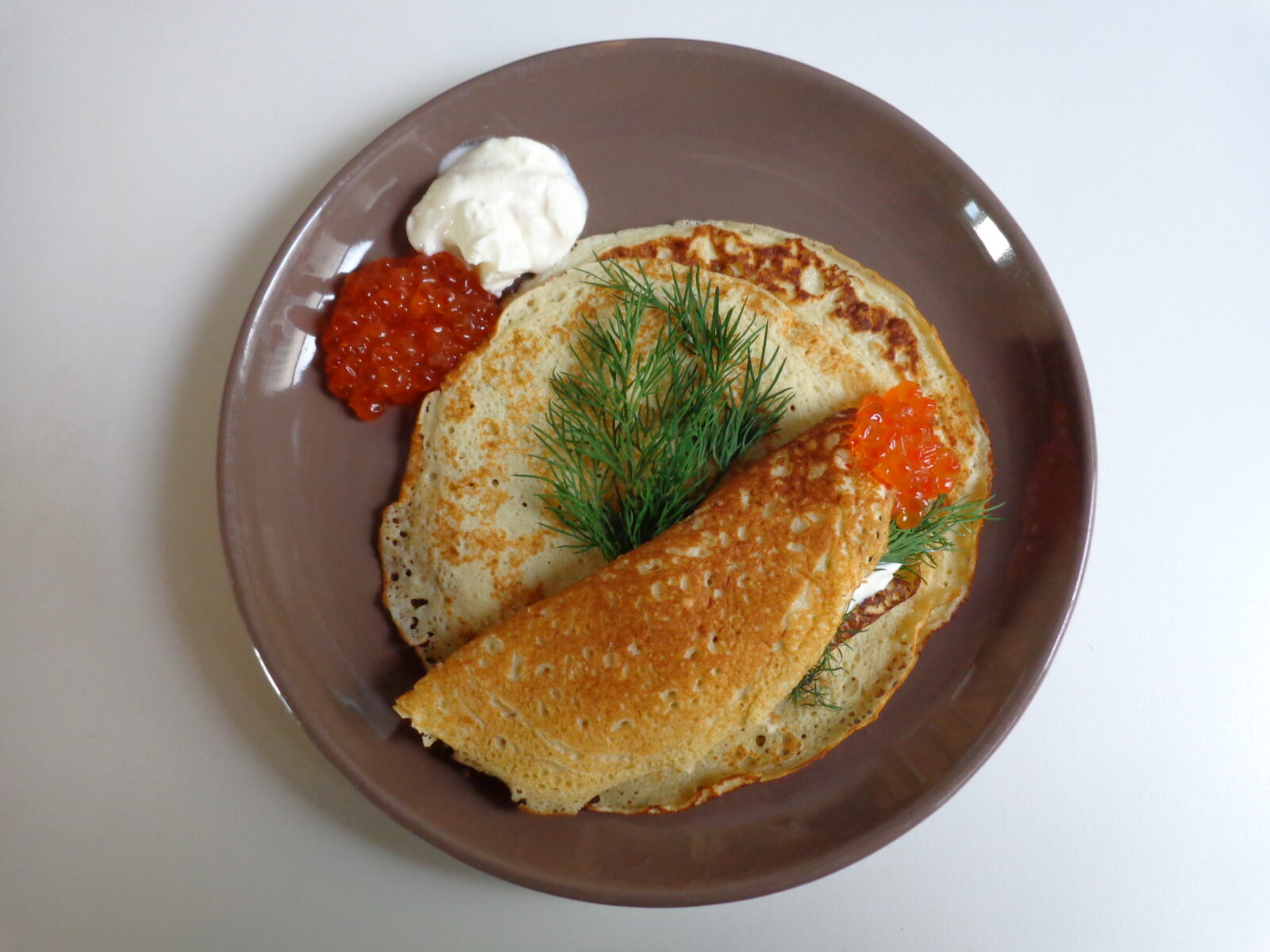
blini2When I first moved to Russia in June 1986, black caviar was not only plentiful and cheap, but also — less than two months after the Chernobyl nuclear disaster — seemed (to me) to be one of the safest foods around. Would radiation have had time to penetrate the Caspian Sea, home of the sturgeon? I thought not, and indulged as often as possible in the luscious black roe. On toast for breakfast most days and, on special occasions, with blini.

Blini / Blini

Blini being the wonderfully fluffy and yeasty pancakes that have spread from Russia to Paris and beyond. Served on festive occasions, they make a dazzling start to a meal.

These days the sturgeon is an endangered species, so I top my blini with red caviar or smoked salmon instead, or sometimes just with cream and herbs. Which doesn’t change the fabulous quality of the blini themselves. Unlike the kind one finds in supermarkets these days — which often resemble cardboard — homemade blini are light as a feather. They are fun to make, although to be honest it’s a bit of a production and I usually make them just once a year, during the holiday season.

So, dear readers, here’s wishing you joyous festivities this December and a spectacularly happy start to the New Year. The Everyday French Chef will be on vacation next week, back with new recipes on January 2. If you’re looking for holiday meal suggestions, please check out the Holiday Menus page here. I think that cooking wonderful meals for family and friends is one of the truest forms of love. Let’s hope there’s plenty of that going around as we see out 2014 and ring in 2015. The world needs it, and so do we all.

Happy cooking!

Posted in 1. Starters | Tagged , , , , | Leave a comment

Confit de canard

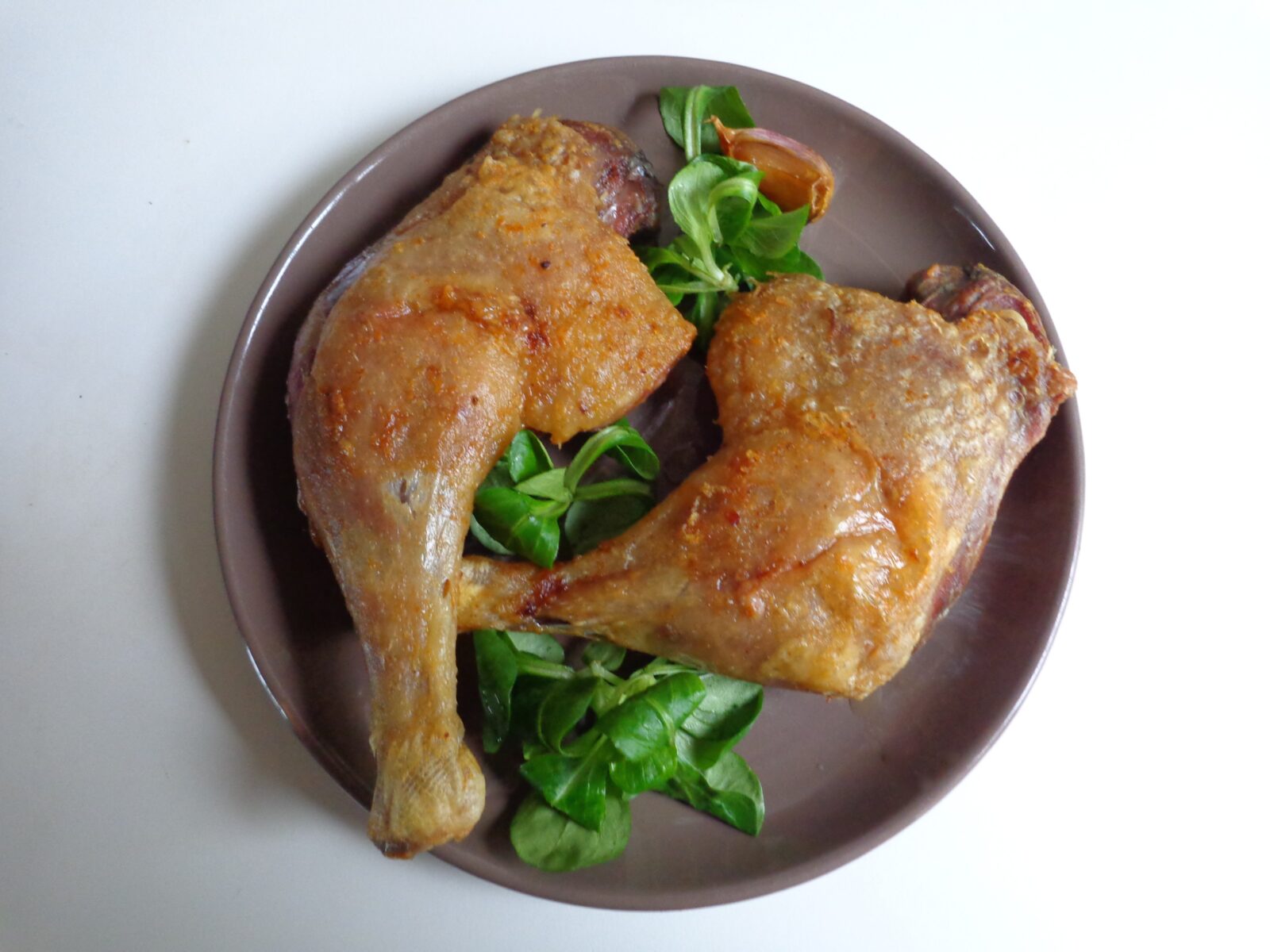
duck confit4Confit de canard — preserved duck — hails from southwest France and is widely served throughout the country, although it is rarely seen elsewhere. The duck is preserved first in salt and then in fat, usually on the farm where the duck is raised. But guess what? You can also make it yourself. Meltingly tender, with a hint of garlic and thyme, it makes a fine dish for the holiday season.

Confit de canard / Duck confit

But beware — this is a classic ‘slow food’ dish. You need to get started a day or two before you plan to cook the duck, which is first salted for a day, then cooked for a couple of hours in rendered duck fat, then refrigerated in the strained fat before being roasted in the oven.

This process dates back hundreds of years. Until recently, when freezers revolutionized food preservation, preserving meat by salting or drying was the only way to ensure a supply throughout the year. The preserved duck was kept in jars — and it is still sold like that today in French supermarkets. This makes it an easy matter in Paris, say, to walk down the street, buy a jar of confit and serve it up the same evening.

But as I discovered when trying this recipe, the duck tastes fresher and sweeter when you make it yourself. It can be a simple fireside meal, accompanied with sautéed potatoes or a salad of tender leaves, or the centerpiece of a special dinner, served with sophisticated vegetable purées. The one essential in every case is a bottle of full-bodied French wine.

If you are looking to create a holiday menu in advance, there are some suggestions here.

Next week I plan to give you my recipe for blini, the wonderfully yeasty Russian pancakes that may be served with red caviar, tarama or simply sour cream and fresh herbs to make a spectacular start to a holiday meal. As we head into the darkest days of the year, I find that spending a little time in the kitchen is a fine way to lend brightness and cheer to your home, wherever it may be. Happy cooking!

Posted in 6. Poultry | Tagged , , , , | 1 Comment

Céleri-rave aux noix sur lit de feuilles

celeriac walnuts3Celeriac, although seen infrequently elsewhere, has long been a staple of French cuisine. When I first arrived in Paris, it appeared most regularly on the mixed veggie plate called assiette de crudités, grated and bathed in a mustardy remoulade sauce. These days chefs both here and abroad have become more creative and are using this versatile vegetable in many ways. For example, caramelized on a bed of greens sprinkled with walnuts.

Céleri-rave aux noix sur lit de feuilles / Caramelized celeriac with walnuts and greens

To be honest, the inspiration for this dish came not from France but from a column by the New York Times food writer Mark Bittman, who wrote in September about a swing through London where he visited four hot new restaurants. Among them was Chiltern Firehouse, where the Portuguese chef Nuno Mendes (formerly of El Bulli) was presiding over the kitchen of a place billed by the Daily Telegraph in July as London’s ‘hottest celebrity hangout.’

There was no photo, just a description: ‘Planks of sweetly caramelized roasted celeriac are served with walnuts, onions and greens.’ I decided to give it a try, skipping the onions and serving the dish on plates instead of planks, drizzled with a few drops of balsamic vinegar and some first-cold-pressed extra virgin olive oil. For greens, I used arugula, dill, mint and cilantro. Given how quickly my guest and I finished it off, it seems it was a success.

Veggies, nuts and olive oil brought together in a succulent combination: this dish, like many others on this site, may be enjoyed not just by omnivores and vegetarians but also by vegans. As we head toward winter, I have updated the Menus section of the site with new everyday and special day menus for all. Take a look, if you like, and use these menu ideas as inspiration for your own selection of dishes.

Inspiration — that’s the name of the game in the kitchen these days. You don’t need to be Nuno Mendes to come up with a winning idea that translates into plaudits at the table. You just need some good ingredients and a spoonful of creativity. Happy cooking!

Posted in 8. Vegetables | Tagged , , , , , , , | 1 Comment