Rémoulade de crabe au céleri

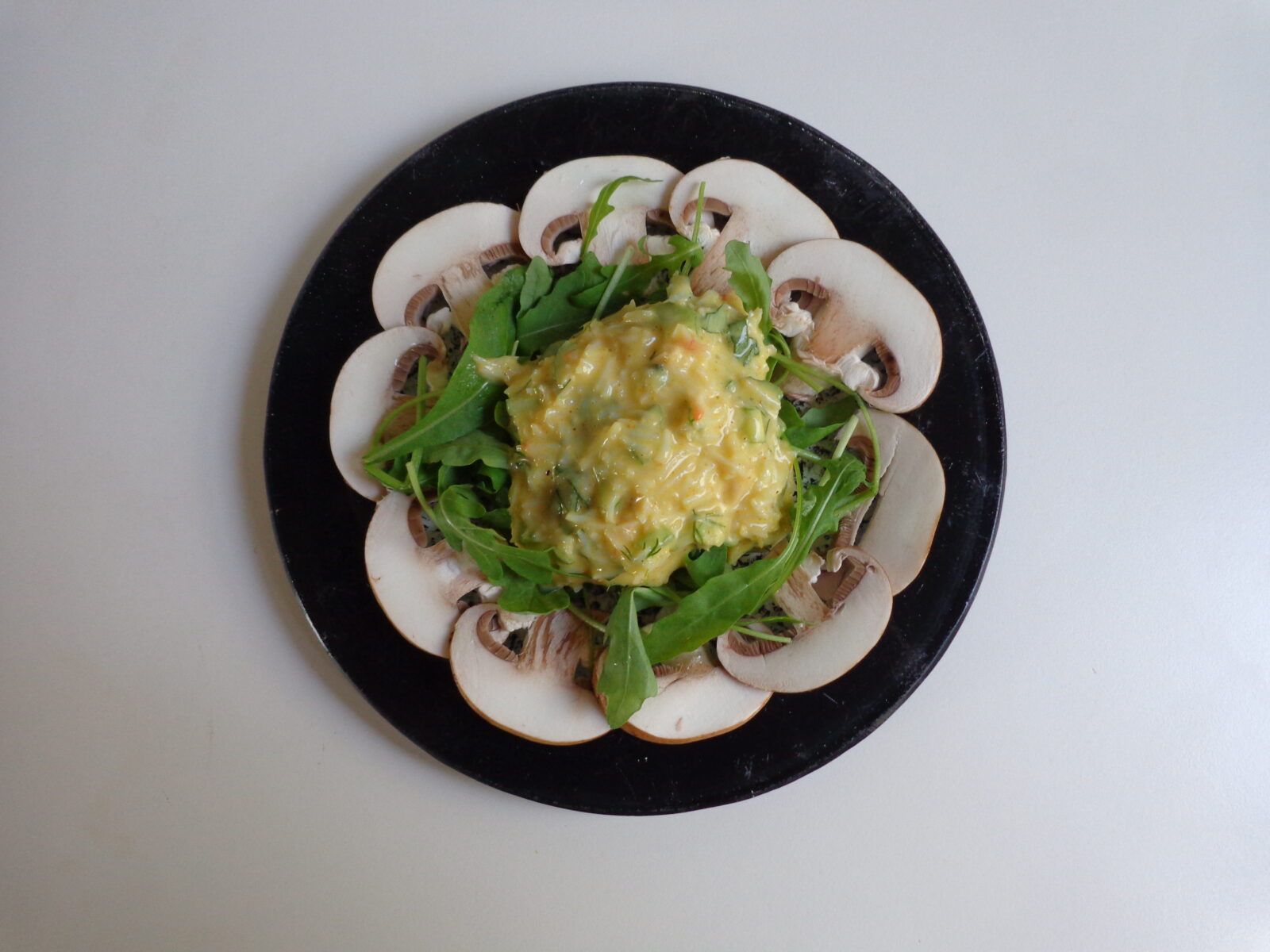
crab remoulade1With Thanksgiving behind us and as we head into the holiday season, I will be posting dishes over the next few weeks that can grace a festive table. The first, curried crab remoulade, makes a delightful starter to brighten up a cold winter’s day. It’s an invention that was inspired by a menu I saw while walking home the other day. But not just any menu — it was posted outside Rodolphe Paquin’s restaurant, Le Repaire de Cartouche. I didn’t have time to nip inside and try the dish, so today’s recipe is how I imagined he might make what he called rémoulade de tourteaux aux céleris et champignons.

Rémoulade de crabe au céleri / Curried crab remoulade

Rémoulade de tourteaux? I served the salad to a friend who wrinkled her nose when I told her what she was about to try. “Is it turtle?” she asked. No, I replied, it’s not tortu, and not baby turtledove (tourtereau) either. It’s a crab, the kind with a smooth broad shell that is most frequently seen in market stalls in northern France. (The other type of crab frequently seen in markets here is called an araignée, or spider. It’s shell is humped like a coconut, and it’s frighteningly hairy.) All this linguistic confusion gets worse when you consider that un tourteau can be more than a crab in French. The word also denotes a type of cheesecake, a heraldic shield, and a piece of motorboat machinery!

Front.coverMoving on, I’ve got two things to report. First, I wanted to let you know that the Goodreads site is offering a free giveaway of my new book, Desperate to Be a Housewife. Five signed copies are available, and the contest runs until Jan. 5. If you’re not familiar with Goodreads, it’s a social networking site for people who love books and had a couple million members at last count. To sign up for the giveaway, click here.

The second bit of news is that there was a private screening yesterday of the Thanksgiving episode of Arte’s new series on food and art in which yours truly played an American cook and blogger in France. They have now shot 4 episodes of the series, which will be aired only when all 10 episodes are ready. I will keep you posted on that. The series is being produced by a company called 2P2L — a seriously genial lot. They plied us with champagne before the screening, and went on to show an engaging program about Norman Rockwell, the three-star chef Georges Blanc, turkey raising in France and the history of America’s favorite holiday. Of course it’s always difficult to see oneself on screen (I am definitely going on a diet), but it was fun to have my little moment of fame. Next stop, Hollywood. Happy cooking!

Posted in 1. Starters | Tagged , , , , , | Leave a comment

Crème caramel

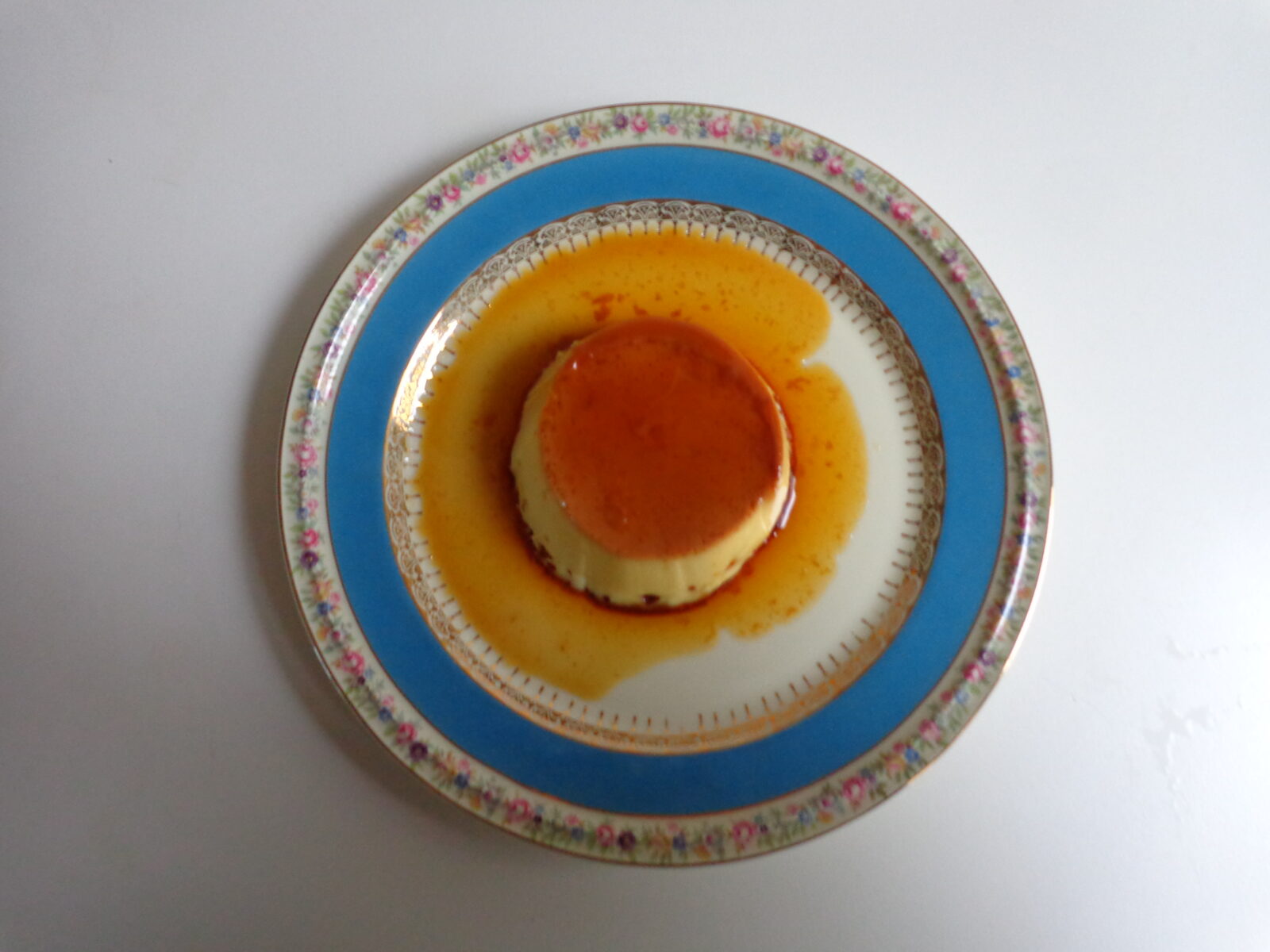
creme caramel2I ran a little guessing game on Facebook last night to see which classic French dessert people thought I’d be posting today. The answers ranged from tarte Tatin to crème brulée and clafoutis aux cerises (a springtime speciality!). No, it’s crème caramel — one of this country’s favorites, and mine too. It’s simple to make, and very healthy as desserts go, with just milk, eggs and sugar as ingredients. I’ve been making it forever. Now it’s your turn.

Crème caramel / Crème caramel

A little history. When I first moved to France, in 1974, I lived on the rue des Boulangers in the 5th. It’s a winding street that, at the time, was paved with cobblestones. Around the bend from my place was a little bistro of the kind one can only dream of. Red-and-white checked tablecloths, a great selection of classic dishes, good carafe wine — and a 10-franc menu. That’s about $2. A handsome couple ran the place, with the man behind the copper bar and the woman serving up boeuf bourguignon, gratin dauphinois (that’s potatoes) and, for starters, the world’s best assiette de crudités. And for dessert, a selection that always included crème caramel. She would scoop out each portion with panache and swoop it over to your table, the custard gently wobbling in its rich caramel sauce…

Okay, enough dreaming. That sort of bistro is hard to find these days, so the best solution is to make your own crème caramel. This recipe allows you to make individual portions if you prefer. It is adapted from a Julia Child recipe I used to use as a young chef, and should be prepared a few hours before you plan to serve it.

A couple more things. Thanksgiving is coming, and if you’d like to innovate with a French touch this year, you can find recipes on this site for everything but the turkey. Here are some suggestions: wild mushrooms with herbs or pumpkin soup for starters, then rolled roast of duck with rosemary or roast quail, roasted butternut squash with pine nuts or sweet potatoes with herbs or Georges Blanc’s pumpkin gratin or stuffed pumpkin, accompanied by pomegranate relish, polenta with parmesan and rosemary, salad of mixed greens from Provence and, to conclude, French apple tart.

Front.coverFinally, just a reminder that my new book, Desperate to Be a Housewife, came out last week. In the fourth chapter, the one called Paris (the first three are called Flight, Sex and Men), you will find a colorful description of my life on the Rue des Boulangers, in an apartment I shared with a man I’d met only 12 hours before we signed the lease! Those were crazy days, but fun.

For more details on the book, click here, or to order it, click here. In the meantime, as always, happy cooking!

Posted in Desserts | Tagged , , , | 2 Comments

Coquilles saint-jacques aux girolles

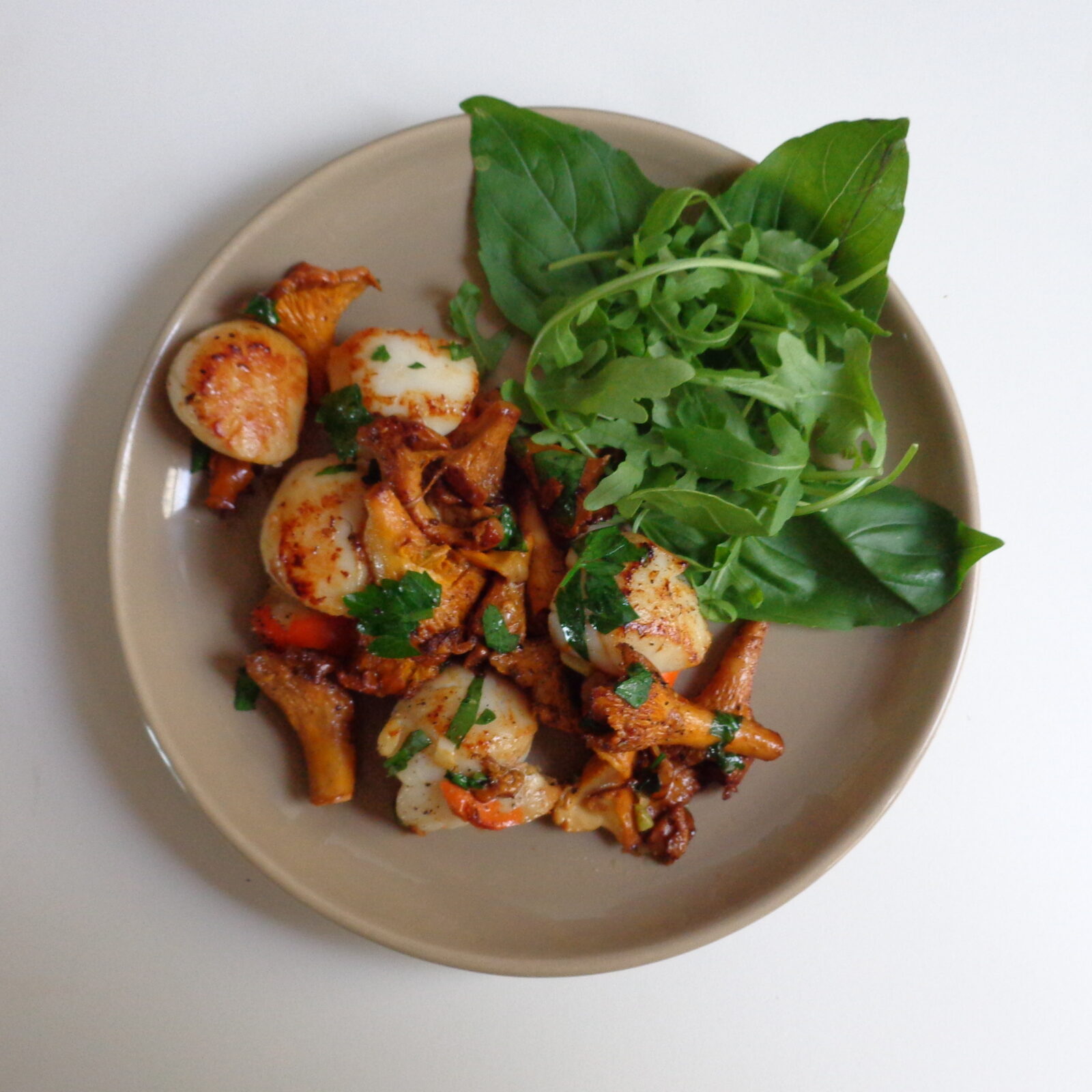
scallops chanterelles2This is a French version of surf and turf, a perfect marriage of succulent scallops from the sea and golden chanterelle mushrooms from the forest. I’d been longing to make the dish this autumn, but chanterelles — girolles in French — are capricious and not always available at the market when you want them. Ditto fresh scallops. There’s a season for them, at least in France, and if you ask too early the fishmonger will look askance, making you feel that you’ve committed a terrible social (or culinary) blunder.

Coquilles saint-jacques aux girolles / Pan-seared sea scallops with chanterelles

But not to worry — this dish may be prepared with frozen scallops with results that are almost as great. And as for the chanterelles, you can substitute a different type of wild mushrooms, including varieties that are available dried, like morels. Still, there’s nothing like the real thing. So it’s worth the effort, and the money, to go for fresh everything if at all possible. Serve the sea scallops with anything from a purée — of celery root, cauliflower or pumpkin, for example — to fresh tagliatelle or simply mixed greens, as shown in the photo. Once you’ve gathered the ingredients, the scallops and wild mushrooms are very quick to prepare — and the results are spectacular.

Front.coverNow here’s some big news: My memoir has come out! It is now available on Amazon as a paperback or for Kindle. In case you missed the description last week, Desperate to Be a Housewife tells the story of my alter ego, Mona Venture, as she leaves America during the Vietnam era, moves to Paris, becomes a reporter, and goes on to London and Gorbachev’s Moscow, amid many misadventures with men — and some great meals! For details, go to my personal web site, megbortin.com.

All of the menus on this site have now been updated for fall. To check them out, click Menus on the black bar at the top of the page. Happy cooking!

Posted in 5. Fish and Shellfish | Tagged , , , , , , | Leave a comment

Fenouil et endives braisés

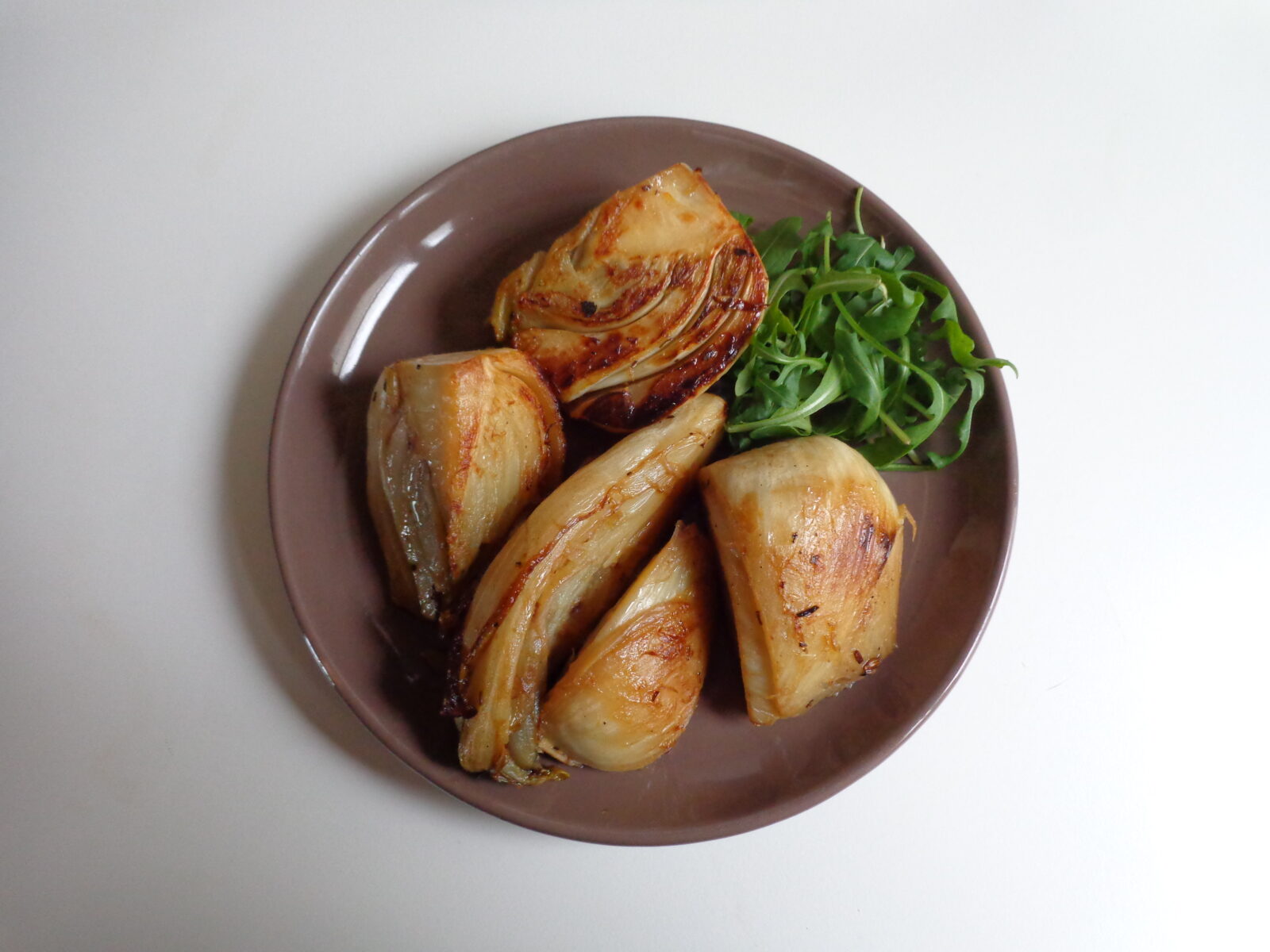
braised fennel endives2My friend Vera, a superlative cook, has lived all over the world. Bohemian by birth (Czech) and by nature (an adventurer’s soul), she moved from Prague to Paris to Montréal to Beijing to Jerusalem to Moscow to Berlin to London — and mastered the culinary styles of all. Now she is back in Paris, and I shouldn’t have been surprised the other night when she served a familiar dish with unfamiliar flavors. It was so fantastic I had to make it.

Fenouil et endives braisés / Braised finocchio and Belgian endive

I’ve been serving braised fennel for years — a warming dish for cold weather. Ditto braised Belgian endive. What makes Vera’s combination of the two so unusual is her addition of herbs and spices, which lifts the dish from comfortable to zingily spectacular. The vegetables caramelize while braising and the flavors intensify with the addition of herbs from Provence, fennel seeds and hot cayenne pepper. ‘But is it French?’ I asked her. ‘Yes,’ she said, ‘but with a dash of Bohemia!’ By the way, she served it alongside a succulent blanquette de jarret de veau, a heartier take on the usual stew of veal in a creamy sauce. I plan to post a recipe for this classic French dish sometime this winter.

Now here’s some news. I learned two days ago that the much-heralded (on this site) Arte program about food and art has been postponed indefinitely, meaning that the episode where the great chef Georges Blanc makes his version of a Thanksgiving dinner à la Norman Rockwell — and where I make the cranberry sauce — will not be aired this month. In fact, the producers told me, that episode may not air until Thanksgiving 2014! Very unfortunate, although we can still be thankful that Monsieur Blanc provided us with the recipe for his fabulous pumpkin gratin, posted here two weeks ago.

Front.coverOn other fronts, the Everyday and Weekend Vegetarian Menus have been updated for fall, and I will update the menus for omnivores over the next week — promise. Also coming next week, I will tell you about my forthcoming memoir, Desperate to Be a Housewife, which will be published in late November. For a sneak preview, visit my personal web site, megbortin.com. In the meantime, happy cooking!

Posted in 8. Vegetables | Tagged , , , , | 3 Comments

Salade César

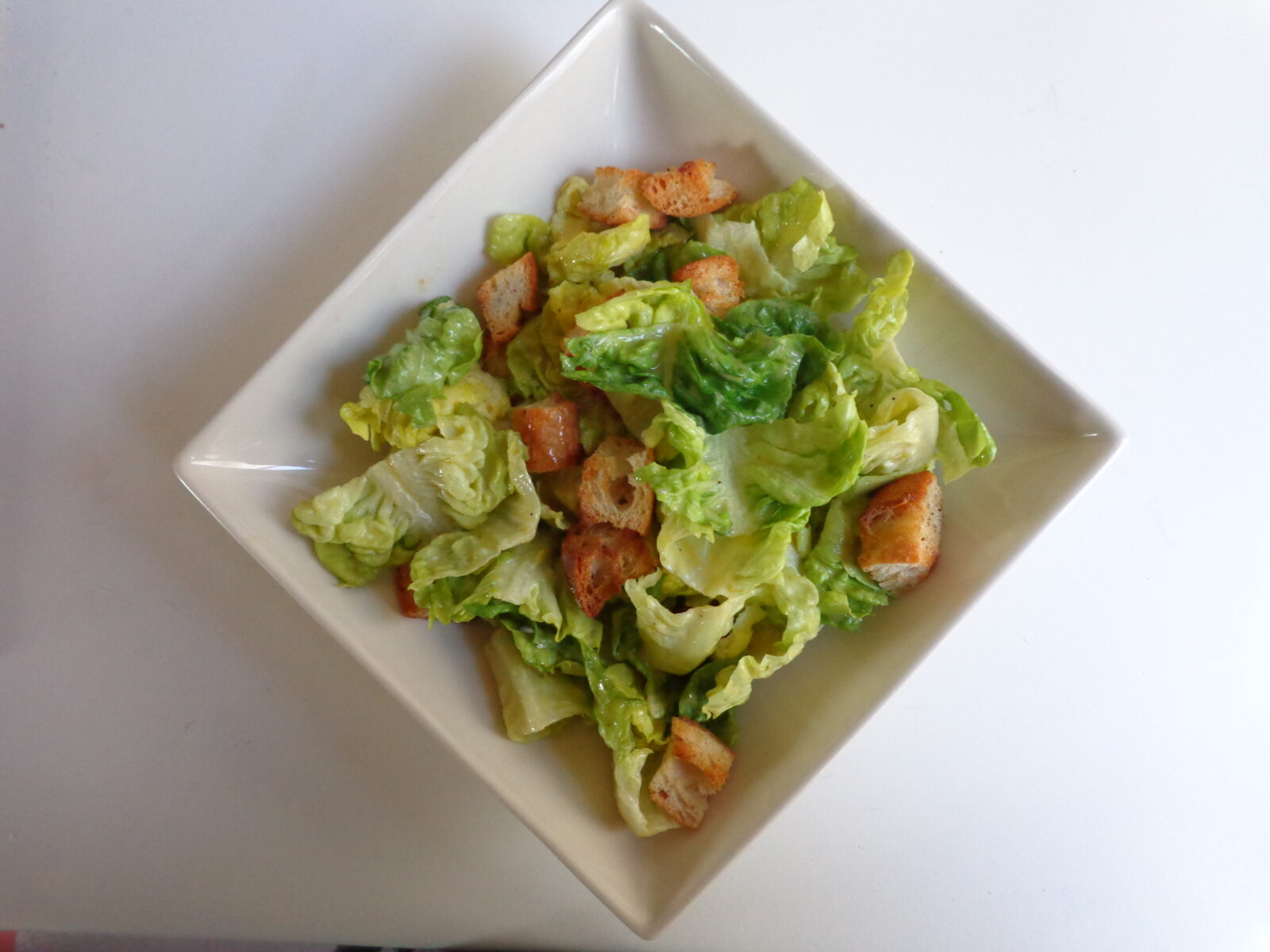
caesar1Is Caesar salad French? Many would say no. It was invented by Cesare Cardini, an Italian-American chef, at his restaurant in Tijuana. What’s so French about that? Ah oui, mes amis — but the defining characteristic of a Caesar salad is the dressing, and this dressing is essentially a French mayonnaise. Cardini’s addition of garlic and parmesan to flavor the mayo was a stroke of genius. Apparently it was his brother’s idea to add the anchovies. In any event, this rich and tangy salad has become a staple in Parisian bistros. It’s also one of my favorite lunchtime meals. I have been making it for decades. Here’s how.

Salade César / Caesar salad with herbal croutons

Now then. Having made the argument that a Caesar is in some ways French, allow me to counterattack. In nearly 40 years in Paris, I have found only one restaurant here that makes a decent Caesar — and it’s an American joint, Joe Allen. The others fluff it, usually by using some ersatz version of Caesar dressing, often over any old kind of lettuce, rarely romaine. And the croutons! They taste like they came out of a box, bearing no resemblance to the crispy homemade croutons that give crunch to a true Caesar.

When I made the salad shown in the photo earlier this week, I had invited a friend to lunch. Little did I know that Adrian Leeds was a Caesar expert! She told me she had tried dozens of Paris establishments in search of the perfect Caesar, and had found one, in addition to Joe Allen, that does it right: Le Bistrot du 7ème. I’ll have to try that place.

When we lunched, I added grilled chicken to our Caesars. Steak, shrimp and salmon are also classic additions. But Leeds, who hails from New Orleans, told me about a kind of Caesar I’d never imagined before — with fried oysters on top. Deep-fried, one presumes. ‘It’s unbelivable!’ she said. Well, I’m not sure I’ll be trying that anytime soon in my Paris kitchen, although if I ever make it to New Orleans I’ll certainly give it a shot. Meantime, I’ll stick to my tried and true recipe, perfected over the years. Here’s Leeds’ verdict on our lunchtime Caesar, and I hope she meant it: ‘The best I ever tasted.’ Happy cooking!

Posted in 3. Salads | Tagged , , , , , | 2 Comments

Gratin de potiron Georges Blanc

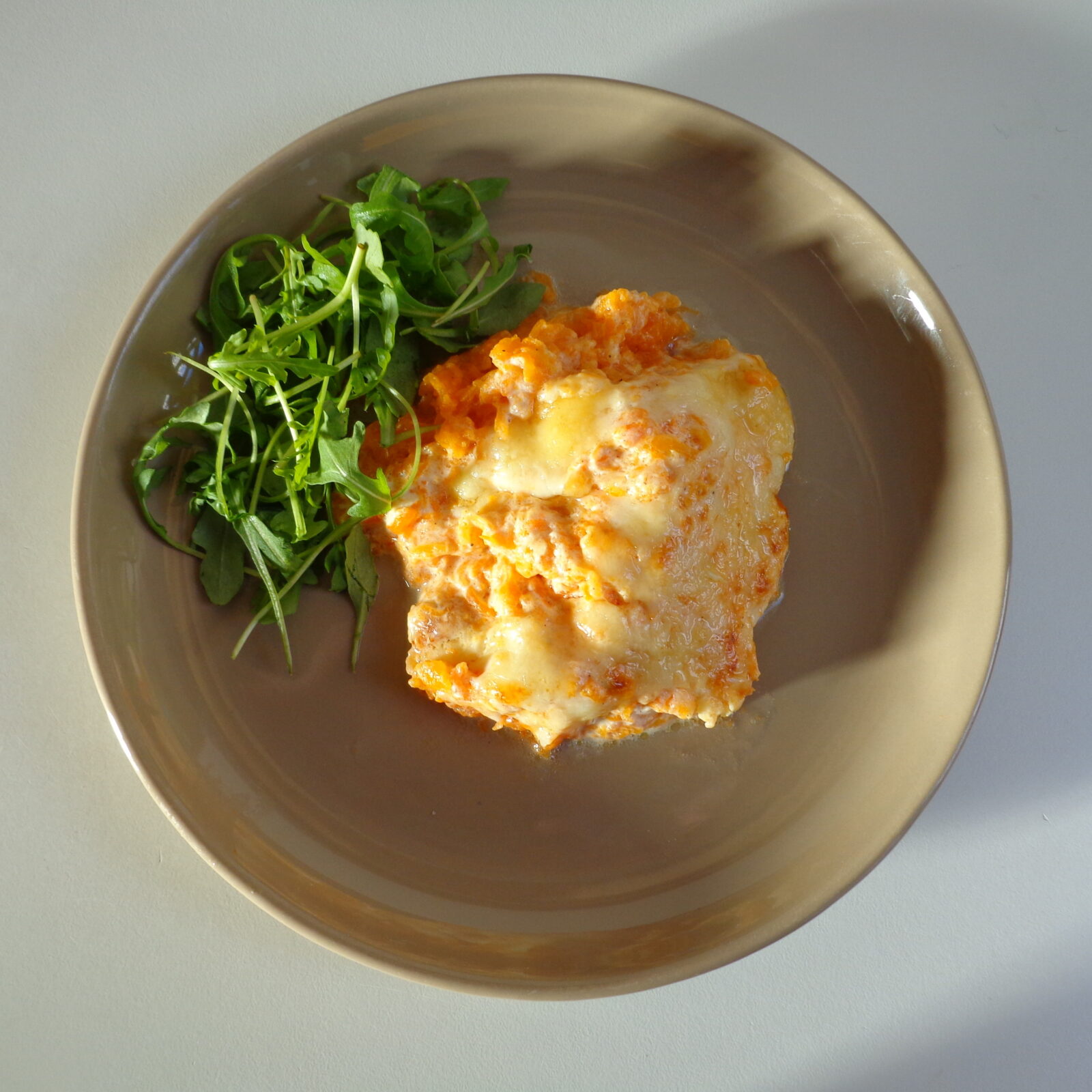
pumpkin gratin4I wish I could claim credit for this fabulous pumpkin gratin, but in fact Georges Blanc gave me the recipe after I visited his three-star kitchens near Macon last month. Blanc, the current scion of a culinary dynasty stretching back four generations, is apparently so proficient at his art that he doesn’t need to think about proportions. He sent me the list of ingredients and instructions without specifying the quantities! So I have done my best, and any shortcomings with this recipe are my fault, and not his.

Gratin de potiron Georges Blanc / George Blanc’s pumpkin gratin

So there you have it, in plenty of time for Thanksgiving if you’d like to do something different this year. (My apologies to Canadian readers — I didn’t get the recipe in time for your Thanksgiving.) For those of you who may be interested in my experiences with M. Blanc — one of France’s most renowned and revered chefs — I wrote a piece about my pre-Thanksgiving visit with him that was published last month in the International Herald Tribune (now the International New York Times). Click here to read it. All I have to add on the subject is that when I served this gratin to a table of French guests, all of whom appreciate great food, there were oohs and aahs all around and requests for more. But they’d eaten it all. For a reason. This is a rich dish, so small portions are de rigueur.

And speaking of pumpkin, I have discovered a great recipe for vegan pumpkin chocolate chip muffins on the site of a young blogger friend, Carmen Priotto. She has a fine collection of vegan recipes, not necessarily French, but they all look delicious. Meantime I have updated this site’s  vegan menus for fall, and will update the menus for vegetarians and omnivores in the coming days. Happy cooking!

Posted in 8. Vegetables | Tagged , , , | 7 Comments

Boeuf bourguignon

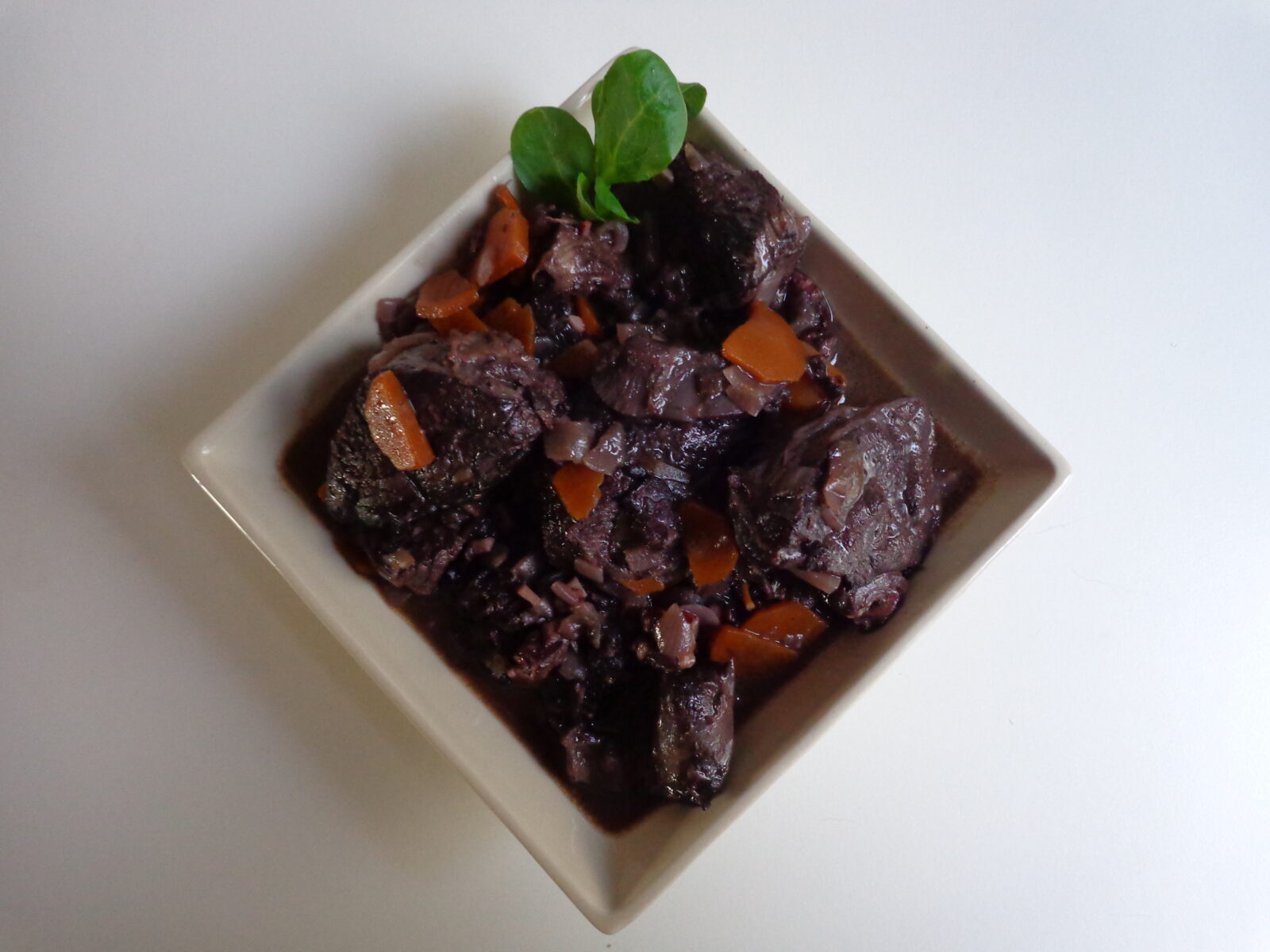
bourguignon2Is there any dish that more eloquently evokes French cuisine? Boeuf bourguignon is an ultimate classic, made even more famous outside of France by the 2009 film Julie and Julia, in which a young Brooklyn woman sets out to make every dish in Julia Child’s Mastering the Art of French Cooking, with boeuf bourguignon as the climax — or anti-climax, when Julie burns the stew. Like Child, Julie takes the attitude, as Columbia Pictures says, that ‘with the right combination of passion, fearlessness and butter, anything is possible.’ But — allow me a contrarian moment here — boeuf bourguignon is not a complex dish, and (pace Julia Child) it is traditionally prepared without butter.

Boeuf bourguignon / Beef braised in red wine, Burgundy style

I’ve been making bourguignon for decades, using the method most common in Burgundy itself (bourguignon translates as ‘from Burgundy’) in which various cuts of stewing beef are sliced into large cubes and sautéed with bacon, onions, garlic and a bottle of red wine. No pearl onions, no mushrooms — and no butter. I often add carrot slices, as they do in the region. Far from being a major production, it is a dish that takes no more than 20 minutes to prepare, with another 3 hours of stewing time on the stove top. No need to bake it in the oven and risk seeing your succulent stew turn into a carbonized mass.

Now a little history. According to my Burgundy cookbook, Cuisine en Bourgogne de A à Z by Amicie d’Arces, boeuf bourguignon was reserved for saintly feast days in centuries past. For the simple reason that fresh meats — beef, mutton and veal — could not be preserved in the manner of pork, and were served only on special occasions in peasant familes. The author writes that on Mardi Gras, people in the Morvan region of Burgundy used a branch from the previous year’s Palm Sunday to sprinkle their farms with sauce from boeuf bourguignon to ward off snakes! Such is the power of this dish. It’s magic.

Well, that was a long time ago and now boeuf bourguignon is regularly served throughout France — one of its most popular dishes. In fact, when you go to a French butcher to buy the meat for this stew, you don’t need to specify the cuts of meat. Just ask the butcher for ‘bourguignon’ and he’ll do it for you.

There are as many ways of making boeuf bourguignon as there are French cooks. My simple recipe reaches back in time to the most basic methods — and produces spectacular results. Others take a fancier route, with many variations: flame the meat in marc de Bourgogne (Burgundy-style grappa) or cognac, add juniper berries, cloves, tomato paste, leeks, whatever. In his recipe, the late, great Burgundy chef Bernard Loiseau used mushrooms, pearl onions and butter — along with balsamic vinegar and sugar! (Loiseau committed suicide in 2003 when it was rumored that his restaurant, La Côte d’Or, would lose its three-star status — a terrible testament to the pressure of being at the pinnacle of French cuisine.)

However you choose to make your bourguignon, it is a fine cold-weather dish that becomes even better when reheated the next day, accompanied — of course! — by a great French wine. Happy cooking.

Posted in 7. Meat Dishes | Tagged , , , , | 6 Comments

Tarte aux pommes toute simple

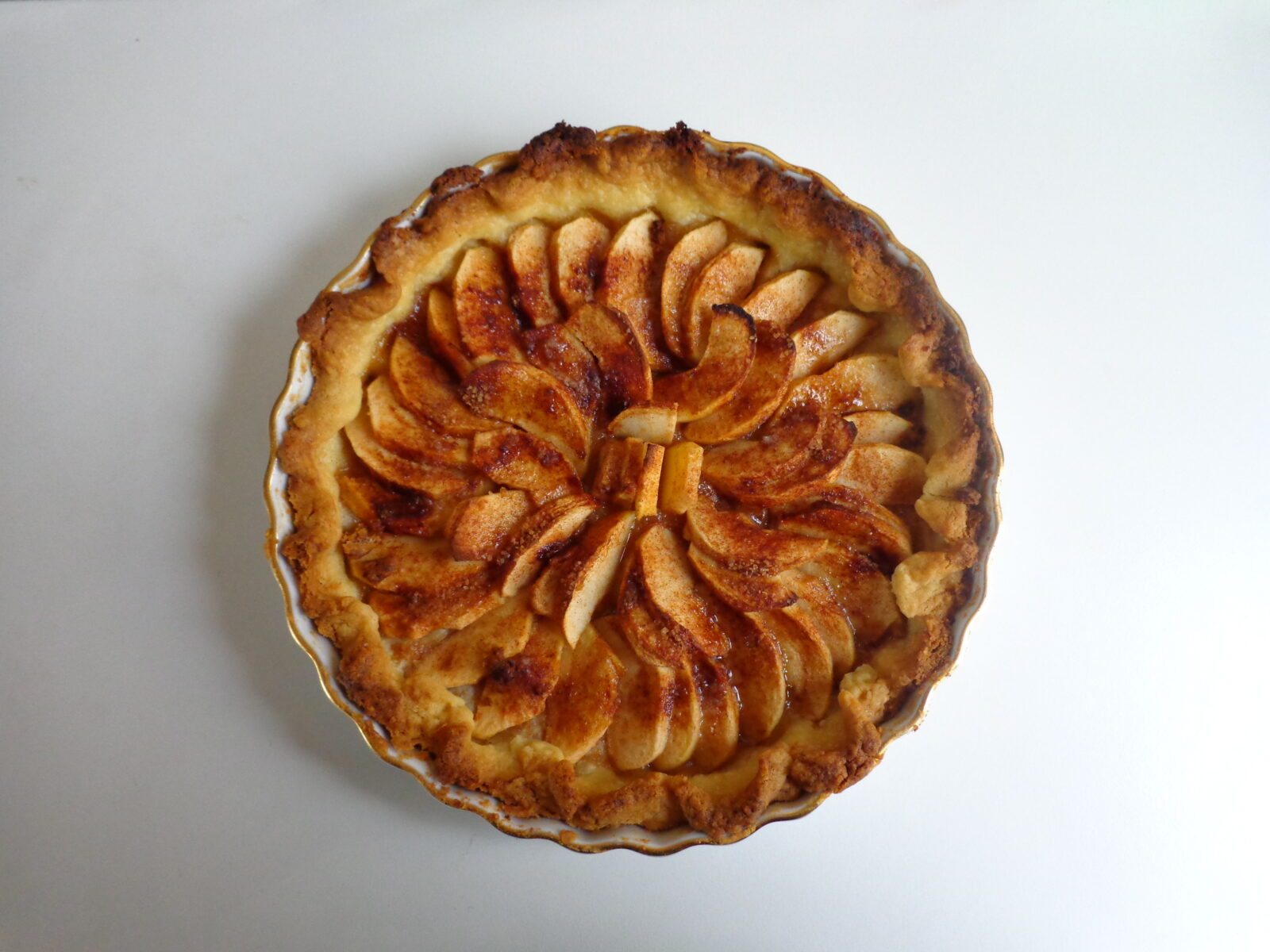
tarte pommes3As American as apple pie? Maybe. But if I was asked to name the dessert I’d choose in a menu that best displays classic French cooking, it would certainly be tarte aux pommes. And as we are at the height of apple season, it’s the right time to offer you this elegant and ultrasimple recipe. Nothing to it. Make the pastry, pat it into your tart pan, peel and slice some apples, arrange them in pretty circles, sprinkle on some sugar, dot with butter, and there you have it. A classic French dessert.

Tarte aux pommes toute simple / French apple tart

Of course, there are many variations on this basic recipe. For example, tarte aux pommes Normande, in which the apples are bathed in a sweet creamy sauce that puffs up and turns golden while backing. Or tarte Tatin, in which the apples are cooked in butter and sugar before being loaded into their crust, and the tart is inverted when it comes out of the oven — it’s an upside-down dessert. You can sprinkle the apples with cinnamon, as shown in the photo above, although this is rarely done in France (I made that tart in a cooking class with Americans who wanted a cinnamon flavor). Or you can mix the apples with other fruit — pears, quinces, blackberries — to create something less typical. On the other hand, you can stick to the classic method and have your tart in the oven in a matter of minutes — five minutes to make the pastry, five minutes to prepare the apples, five minutes to assemble the tart. Once it’s on the table, I can guarantee you that your guests will take less than five minutes to finish off every scrumptious mouthful. Happy cooking!

Posted in Desserts | Tagged , , | Leave a comment

Polenta au parmesan et romarin

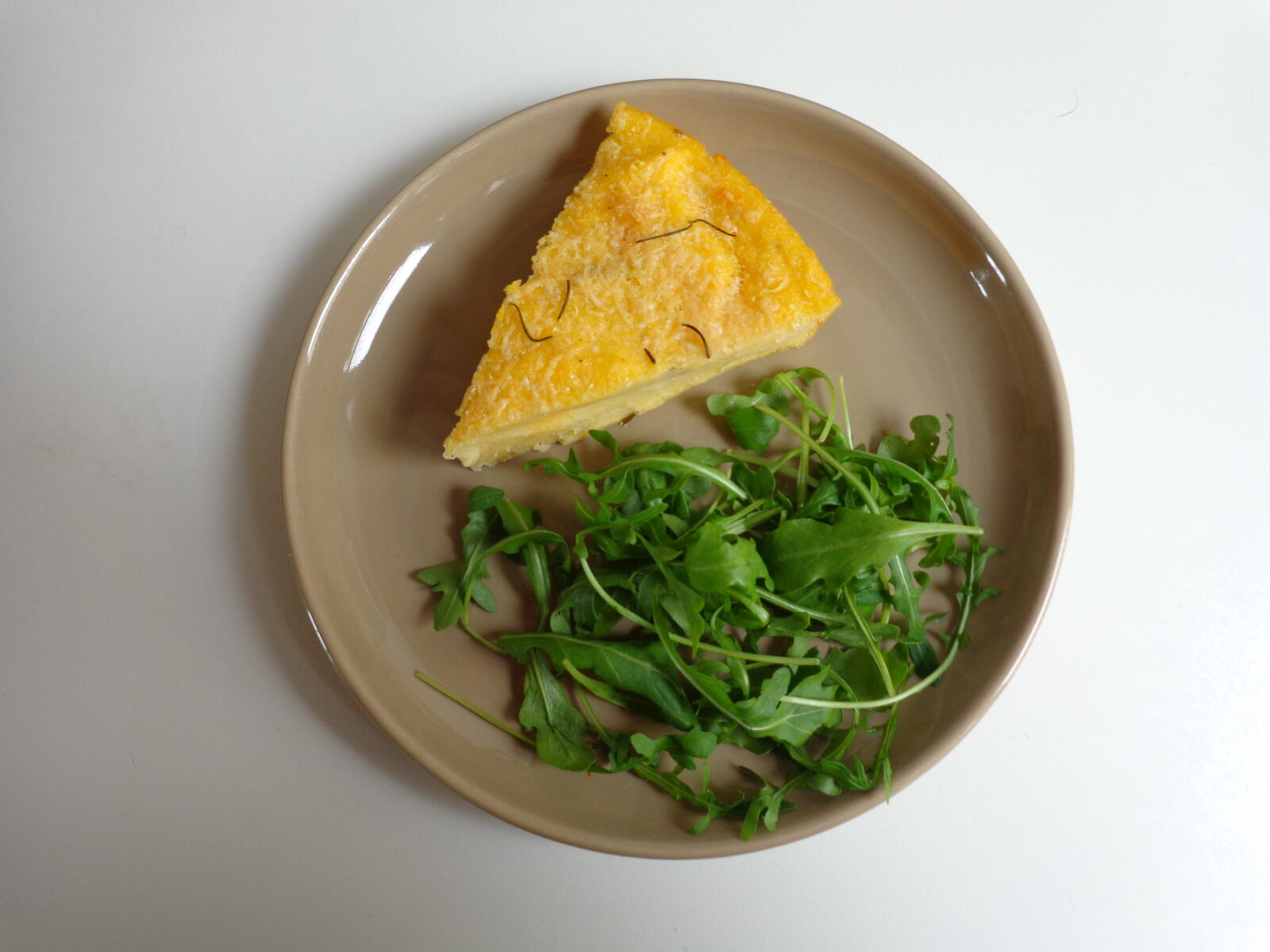
polenta2Crisp on the outside, moist and creamy on the inside, polenta is a perfect comfort food as cool autumn weather sets in. And the addition of parmesan and rosemary adds a bit of personality. I served it with duck breast with cassis the other evening, to much acclaim. Also on the menu (in case you were wondering): sauteed chanterelles with dill, carrot puree with cumin, braised baby artichokes, assorted French cheeses and blue Muscat grapes.

Polenta au parmesan et romarin / Polenta with parmesan and rosemary

But is it French? I was inspired to make polenta by my recent experiments with corn bread, an American dish that has yet to cross the Atlantic. Polenta, on the other hand, now makes the occasional appearance in Paris as the French repertoire expands to embrace dishes from neighboring countries and beyond. Italian favorites include pasta and pizza (of course), but also risotto, osso buco, calamari fritti and many other dishes. Polenta, which like corn bread is made from corn meal, may be served roasted, grilled, baked (as in this recipe) or as a porridge. It marries well with everything from roast chicken and pan-seared sea scallops to grilled meats and roasted veggies. Or even just a nice salad. Happy cooking!

Posted in 9. Pasta, Rice, Grains | Tagged , , , , | Leave a comment

And the winner is…

Christine Griffith1Christine Griffith of Cambridge, New Zealand! That’s a long way from Paris. Christine brought more new followers to The Everyday French Chef than anyone else since my subscription drive started on August 30, making her the winner of the first (and only) prize — a signed copy of Ann Mah’s brand new Mastering the Art of French Eating, which came out last week. Thank you, Christine, and congratulations!

I couldn’t be more delighted at this outcome, for two reasons. First, Christine Griffith is a friend and a wonderful foodie. We met in 2010 when she began attending cooking classes in my Paris kitchen. I was very sorry to see her go last year when she moved first to Australia and then back to her home country, New Zealand. Which is the second reason. It’s halfway round the globe from France, and now quite a few people from that part of the world are tuned into this site, largely thanks to Christine. What a great tribute to the genius of the web — uniting people across the miles.

imagesBut how many miles? Well, the distance between Paris and Auckland is about 11,500 miles, or 18,500 kilometers. And Cambridge lies just south of there, relatively speaking. On the map at right, imagine a tiny dot on the North Island, about even with the wing that juts out to the right. That’s Cambridge, in the Waikito region. Doesn’t that sound exotic? I hope to see it one day. But imagine how long it takes to get there. Well, on Air France you can leave Paris around 1:30 p.m. and, after a seven hour layover in Shanghai, you will reach Auckland at 6:50 a.m. — two days later!

At our cooking class, Christine loved sharing recipes from that part of the world, many of them involving lamb. As it happens, she went to dinner recently at La Cave, a French restaurant and gourmet food shop in Hamilton, which is near Cambridge. If you’re curious about how French cuisine is interpreted in New Zealand, have a look at the menu from that dinner, which she kindly sent along to me. I’m particularly intrigued by the sheep’s milk granita! You will find the menu below.

Meantime, I am happy to report that the number of subscribers to The Everyday French Chef has increased by 20 percent since the contest opened on August 30. Christine wrote to 18 friends and relatives to tell them about this site, and at least 8 of them have already signed up. As we say over here, merci! Thanks to one and all for spreading the word.

— Meg Bortin

New Zealand Menu


Posted in Et cetera | Tagged , , , , | 1 Comment