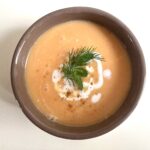
 A nice warm bowl of silky-smooth soup of sweet potato and leek with coconut milk, lime juice and spices might be just what the doctor ordered as we head into December. I came up with this one when a glitch in this year’s Thanksgiving plans left me with an abundance of uncooked sweet potatoes. It was a cinch to make — took less than half an hour — and the result was a very soothing soup with Asian flavors that was both healthy and economical.
Soupe patates douces-poireaux / Spicy sweet potato-leek soup
What do I mean by economical? A single large sweet potato produces enough soup to serve three generously. What do I mean by a cinch? You simply peel and slice the sweet potato, boil it to tenderness with the white part of a single leek, purée it and add the coconut milk, lime juice and spices — coriander, cumin and cayenne. And as for healthy, this soup will receive a seal of approval from vegans and vegetarians as well as omnivores.
Now that we’re past Thanksgiving, I’m starting to think about the end of year festivities, notably Hanukah, Christmas and New Year’s Eve. This year I expect my addition to the Holiday Menus already on the site to be a family Christmas cookie recipe — my Grandma Hilda’s fabulous almond-butter crescents. More on that next time…
In the meantime, if you’re celebrating Hanukah, which begins on the evening of Thursday, December 7, you might want to check out galettes de pomme de terre, the French version of latkes (potato pancakes), which are fun to make and a crowd pleaser. A nice Hanukah menu might begin with these lacy pancakes, follow with roast chicken, roasted winter vegetables and a salad, for example of lamb’s lettuce and beets, and conclude with a non-dairy dessert such as poires au vin et cassis (pears in red wine and black currant liqueur).
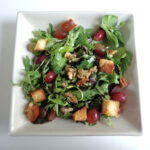 Returning to the sweet potato-leek soup, it may be served at lunchtime, accompanied by sandwiches or a salad, or as a first course for a more elaborate meal. My daughter and I enjoyed it for lunch with salade vigneronne (winemaker’s salad), in which tender greens, walnuts and grapes are bathed in a garlicky balsamic vinaigrette. Herbal salad with hazelnuts would also marry well. At suppertime, you could begin with the soup and follow up with any seasonal main dish.
Happy cooking.
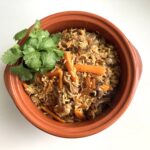 Plov is a rich and spicy rice dish from Central Asia that is traditionally made with lamb, although other meats are sometimes used. The lamb is browned with carrots and onions before being simmered with cumin seeds, paprika and turmeric or saffron. Quince or chickpeas may also be included. A layer of rice studded with whole cloves of garlic is added at the end and steamed to tender perfection to create a festive one-dish meal.
 P.S. With Thanksgiving around the corner, here are some recipes that could lend a French touch to the festivities:
 If you’d like to try your hand at rendering duck fat, you could start out with one of these recipes:
 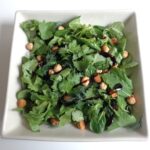 I wanted to make an autumnal salad with hazelnuts and fresh herbs. This, I thought, would be a simple matter. Mais non, mes amis. I made the mistake of starting with hazelnuts still in their peels. Figured it would easy to blanch the nuts and remove the peels. I was wrong. It took me half an hour to rub the peels off just 20 hazelnuts, and the job was imperfect, with stubborn bits clinging on. Then I roasted the nuts, and they burned…
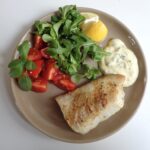 One of the simplest weeknight dinners I know is baked fish, in this case fillets of haddock with homemade tartar sauce, French style. The fish is dusted with salt, pepper and a little cumin — no flour is involved — and drizzled with olive oil before being roasted in a hot oven for 10-15 minutes, depending on the thickness of the fillets. While the fish is cooking you can whip up the tartar sauce, and presto. Dinner is ready in less than half an hour.
 The answer, mes amis, is that they mean ‘smoked haddock’, which is sold here in bright yellow-orange skin-on fillets. But not to panic. This recipe calls not for haddock (pronounced ah-DUCK), but rather for églefin, or ‘fresh haddock’.
 Oddly, the word églefin derives from a Dutch word, schelvisch, which looks more like shellfish to me. But languages evolve in mysterious ways, and somehow over the centuries the word changed to something that sounds far more French — égle evoking aigle, or ‘eagle’, and fin meaning ‘fine’ or ‘thin’…
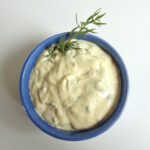 Ok, now on to the sauce. How is French sauce tartare different from the tartar sauce served, say, in the States or in England? Well, for one thing it isn’t sweet. For another it uses capers and can dispense with pickles or pickle relish altogether. This produces a more sophisticated flavor, in my view.
 A savory tart made with pears and Roquefort cheese can be a lovely start to a meal, and with pears now in season this is a perfect time to try it. The tart is best if you make the crust yourself, in this case a pâte brisée — a tender, savory crust. This may be done a day ahead of time, after which preparation is remarkably quick. I had my tart in the oven 15 minutes after getting home with the pears, and 40 minutes later it was ready.
 I first discovered fig jam many summers ago when I spent a few weeks at a country house in the Cévennes region of southern France. The place was idyllic, lush with fruit both cultivated and wild. We picked the figs straight from the tree. Making the jam was easy, as no pitting of the fruit is involved. And, as I learned, fig jam is heavenly. It manages to capture the musty, lusty fragrance of fresh figs — which happen to be in season right now.
 Fig jam is fabulous not only on toast or on buttered baguette, as in the photo, but also on yogurt (which we also made ourselves during that summer in the Cévennes). I usually make this jam with dark purple figs, which lend the jam a beautiful ruby color, but I suspect it would be equally good if made with green figs.
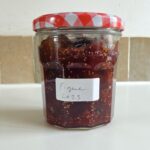 Fig jam didn’t exist in Wisconsin to my knowledge when I was a kid growing up. Nor did fresh figs. The only figs I tasted during childhood were the dried variety that came in Christmas fruit baskets sent by elderly relatives once a year. Then came a summer study program in Avignon. Walking to class one day, I smelled a deiicious aroma. I looked around, and there was a fig tree, heavy with fruit. Well, dear readers, that was an ‘aha’ moment for me.
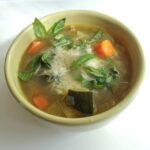 You don’t need to live along the French-Italian Mediterranean rim to enjoy a summer vegetable soup topped with parmesan and fresh basil. This version omits the beans and pasta but is otherwise rather similar to both Italy’s minestrone and Provence’s soupe au pistou. Oh, and did I mention that it also leaves out the tomatoes? It’s an improvisation I came up with one recent sultry day using the ingredients I had on hand in my Paris kitchen.
 A bowl of sliced peaches poached in rosé wine with rosemary makes a light and refreshing dessert for hot summer evenings. You can serve the peaches on their own, as I prefer, or take a page from my daughter’s book and serve them over a luxuriously rich burrata. The recipe is simple — the peaches are slipped out of their skins, sliced and poached in a syrup flavored with the rosé and rosemary. A dash of freshly ground black pepper adds bite.
 Colombo, a spice mix widely used in the French Caribbean, gives its name to this dish of spicy chicken balls in a coconut-curry sauce. The dish is generally served over rice to temper its heat. Start off the meal with
 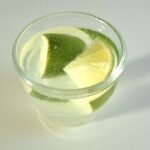 Colombo with chicken balls is both easy and fun to make. You first chop skinless chicken breasts in a food processor with onion, garlic, cilantro, hot pepper, lime juice, salt and pepper. You then shape the mixture into balls and sauté them with the colombo spice mix, coconut milk, more lime juice and a little sugar. This process is even more fun if you have a glass of ti punch handy.


